Why a Closed Hot Water System Needs Room to Grow
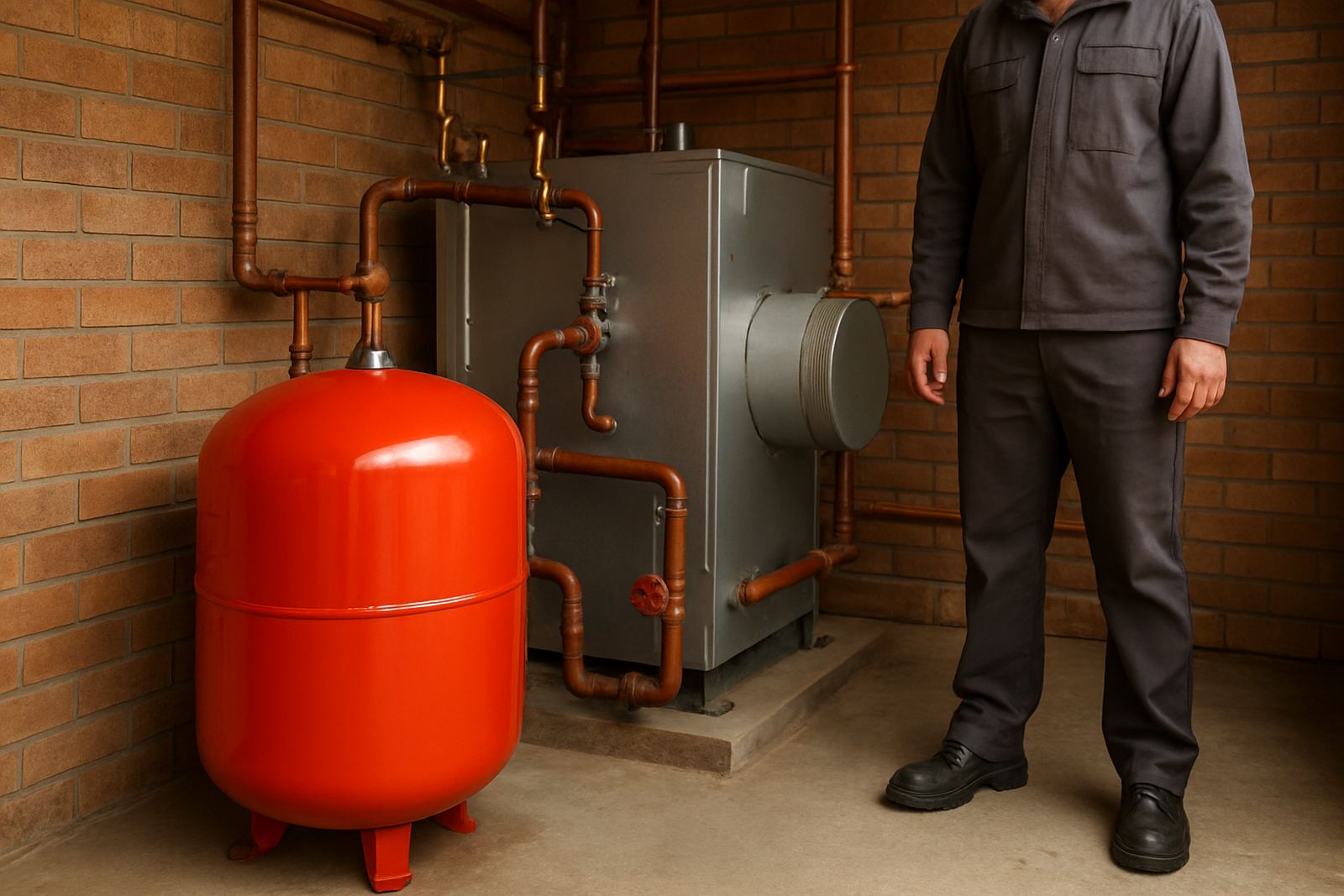
When water heats up, it expands. In a sealed system there is nowhere for that extra volume to go, so pressure climbs quickly. The expansion vessel gives that water a cushion. Inside the vessel is a rubber diaphragm or bladder that separates the water from a pocket of compressed air or nitrogen.
As the system heats, water pushes into the vessel and compresses the gas side. When the system cools, the stored pressure pushes water back out. That simple cycle keeps strain off pumps, pipework, heat exchangers and safety valves. On a busy plant in Boksburg or Midrand, that can mean the difference between a steady shift and a callout at 02:00.
What Happens When the Vessel Starts Failing
Most faults show up as pressure swings. The gauge may rise too high when the boiler fires, then drop too low once the system cools. A vessel that has lost its charge, or a split bladder, can make the relief valve lift and dump water. If the system keeps losing water someone usually keeps topping it up, which brings in oxygen and speeds up corrosion.
- Relief valve discharging on warm-up
- Unstable pressure gauge readings
- Frequent top-ups and air locks
- Radiators or coils heating unevenly
- Rusty water or sludge in strainers
Common Faults We Find on Gauteng Plants
In Gauteng we often see expansion vessels fitted but not checked properly during annual maintenance. The air side pressure may be far too low, or the isolation valve may be closed after work and left that way. In a Jet Park plant serving process hot water, a blocked connection can make the vessel look fine from outside while it does nothing at all.
Coastal sites face another issue, though not the same as the Highveld. Humid air and poor plant-room ventilation can lead to corrosion on fittings, which makes future testing and replacement harder. On older systems the diaphragm can harden with age and heat cycling, especially where water treatment has been neglected.
- Incorrect pre-charge pressure
- Blocked or scaled connection to the vessel
- Corroded valves and unions
- Failed bladder or diaphragm
- Vessel undersized for the actual water content
How to Check the Vessel Before Trouble Starts
Basic checks can be done during planned maintenance, but they must be done with the system isolated and depressurised. A technician should confirm the vessel size, check the air charge against the system cold fill pressure, and inspect the valve arrangement. If the vessel is warm all the time or water comes out of the Schrader valve, the bladder may be damaged.
It also helps to compare the vessel against the system history. If a plant used to run fine and now trips the pressure relief valve every week, the cause may not be the boiler at all. It could be a vessel that has slowly lost its charge over months. Small issues become expensive when nobody logs the pressure readings.
Why Water Treatment and Vessel Health Go Together
Expansion vessel problems do not happen in isolation. If a closed system is repeatedly topped up because of pressure loss, fresh oxygen enters the pipework and that drives internal corrosion. Sludge then settles in low points, restricts circulation and puts extra load on pumps and heat exchangers. That is why water treatment support matters on the same schedule as mechanical checks.
On commercial hot water plants, we often see better results when vessel checks, combustion tuning and water treatment are handled together. You get steadier pressure, cleaner heat transfer and fewer nuisance shutdowns. That matters where hot water supports kitchens, wash bays, laundries or production lines that cannot stop for long.
When to Call for Repair or Replacement
If the vessel is waterlogged, the relief valve keeps lifting, or the system cannot hold pressure after proper testing, replacement is usually the sensible choice. In many cases the new vessel should be sized to the actual system volume, not just matched to the old unit. A larger hot water plant or calorifier bank may need a different layout and a better isolating arrangement as well.
Ai-TEC works on commercial and industrial boilers, calorifiers and inline heaters from our Jet Park base, with service teams across Gauteng and nationally. For plants in Pretoria, Sandton, Germiston or Kempton Park, we support inspections, repairs and planned maintenance so the vessel and the rest of the system are checked as one unit, not piecemeal.
- Emergency callouts for pressure loss or discharge issues
- Annual inspections and maintenance planning
- Plant refurbishment and pressure system upgrades
- Support for boiler, calorifier and heater systems