What a Medical Waste Incinerator Does on Site
A medical waste incinerator is built to reduce regulated clinical waste at high temperature, under controlled air and burn conditions. It is used for waste that cannot go into general disposal streams, such as contaminated packaging, dressings, swabs, sharps containers, pathological waste and selected pharmaceutical waste, subject to the site’s waste management plan and local rules. The aim is to reduce volume, limit handling risk and destroy hazardous material in a closed process.
For South African sites, the practical value is simple: less stored waste, fewer skips moving through clean areas, and better control where municipal collection is irregular or the waste mix is sensitive to moisture, smell or pests. In coastal towns, or where generators and control panels sit in humid rooms, correct steel selection and enclosure protection matter just as much as burner capacity.
Ai-TEC works with facilities that need a unit sized for daily collections or batch loads, from smaller clinic volumes to busy hospital streams. We also assist with refractory condition, flue paths, combustion settings and operating checks so the plant keeps burning evenly instead of running hot in one zone and cold in another.
Sizes, Chamber Layouts and Capacity Options
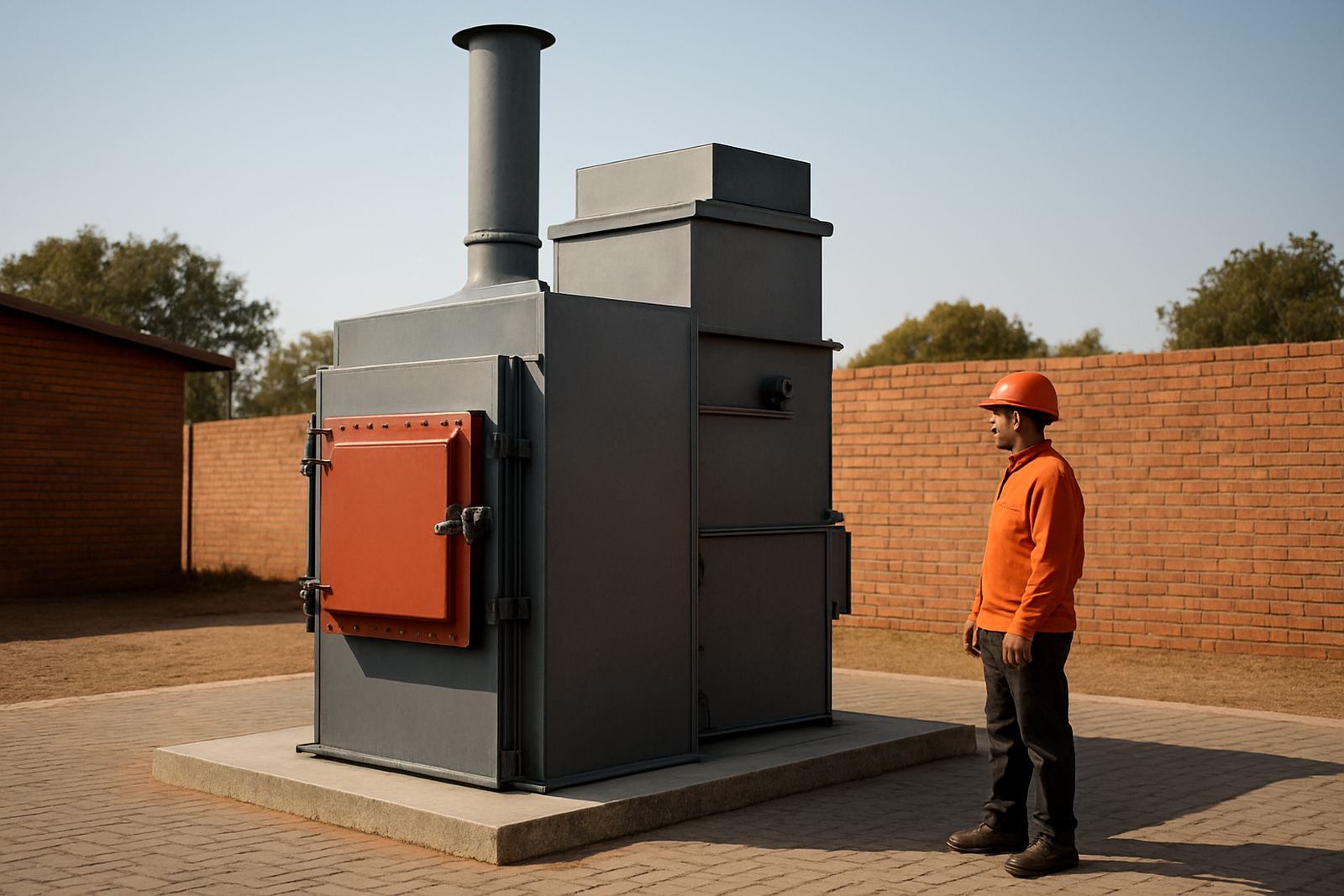
Medical waste incinerators are selected around waste type, load size and the hours available for burning. A compact unit may suit a day clinic, lab or veterinary site with moderate waste output, while a larger twin chamber system is more suitable for a hospital, regional treatment plant or industrial health facility that needs regular throughput. The chamber size, loading door opening, ash removal access and stack height all affect how easy the unit is to run.
- Small batch units for lower daily waste volumes
- Medium units for hospitals, labs and treatment rooms
- Larger plant for higher throughput or longer operating runs
- Single chamber and afterburner style layouts
- Twin chamber systems for better secondary burn control
- Fixed skid or packaged plant options for faster installation
Typical operating temperatures depend on waste stream and design, but medical waste incinerators generally need a primary chamber in the region of 800 to 900 degrees C and a secondary chamber above that for cleaner destruction of gases. As a guide, chamber volumes can range from about 0.3 m3 for smaller sites up to several cubic metres for regional facilities. Final selection is usually driven by tonnes per day, not just bin count.
Where These Units Suit Best
These systems suit sites that produce controlled waste every day and need a dependable disposal process on site. That includes private hospitals, public healthcare facilities, pathology labs, mortuaries, research centres, dental groups, pharmaceutical stores and veterinary practices. Some industrial sites also use incinerators for special waste streams, provided the feed material is clearly defined and the plant is designed for it.
The best results come where the waste stream is sorted properly before loading. If plastics, sharps, paper, tissue and liquid contamination are all being mixed together without control, the operator ends up fighting poor combustion and high fuel use. A good feed schedule and trained staff make a real difference, especially during load-shedding periods when restart cycles can be a nuisance and every extra ignition burns diesel or gas unnecessarily.
We often see sites in Gauteng looking for a solution that can work with limited floor space, controlled access and air handling around a service yard. In busy areas like Boksburg, Kempton Park, Germiston, Midrand, Sandton and Pretoria, the plant needs to be practical for deliveries, ash removal and maintenance access, not just compliant on paper.
Installation, Utilities and Site Readiness
Installing a medical waste incinerator needs more than placing the unit on a slab. The floor loading, stack route, access for waste trolleys, burner fuel line, electrical supply and ventilation all need to be checked before the unit arrives. If the plant is outdoors or in a partially enclosed yard, weather protection and corrosion control should also be part of the plan.
Most units are set up for either diesel, LPG or natural gas where available. Electrical power is usually needed for control panels, fans, damper actuators and instrumentation, even where the main heat input is fuel-fired. Sites with unstable power should allow for proper shutdown logic and restart procedures, because repeated interruptions can stress refractory, valves and igniters. A backup generator can help, but the load must be matched to the burner train and controls.
- Level concrete base with access for maintenance
- Suitable fuel supply and isolation valves
- Power feed for controls, fans and ignition
- Stack height and discharge path checked for local approval
- Fresh air and service clearance around the plant
- Water for washdown or quench support where specified
We also check whether the site has space for ash handling, filter cleaning and safe storage of spent consumables. In many facilities the weak point is not the incinerator itself but the service area around it.
Care, Servicing and Burner Tuning
A medical waste incinerator needs regular care if it is going to stay consistent. The main items are burner condition, flame shape, chamber lining, door seals, thermocouples, draft settings and the build-up of ash or clinker. If the unit is left to run with poor air balance, it can smoke, use more fuel and leave unburnt residue. That is expensive and it can trigger unnecessary downtime.
Ai-TEC supports boiler and combustion equipment across Gauteng and we treat incinerators with the same practical approach. We carry out combustion tuning, refractory relining, annual inspections, emergency callouts and plant refurbishment where needed. For coastal or high-humidity sites, we also look closely at corrosion around panels, burner housings and exposed steelwork. A minor fault picked up early is far easier to fix than a failed chamber lining or warped door frame.
Routine service should include checks on safety interlocks, pressure readings, fuel train condition and stack performance. If the unit is used daily, weekly visual checks and logged temperatures are sensible. The operator should also watch for unusual smell, delayed ignition or ash that looks glassy instead of dry and grey, because these are often signs the burn profile has drifted.
What to Check Before You Order
Before ordering a medical waste incinerator, it helps to define the waste clearly and measure the real site conditions. That means knowing the average daily load, the peak load, whether any liquids or pressurised containers are included, and whether the waste contains chlorinated plastics or other items that need tighter control. It also helps to know if the unit must fit through an existing gate or into a restricted plant room.
- Waste type and average daily tonnage
- Required chamber temperature and burn time
- Fuel available on site
- Space for loading, ash removal and maintenance
- Stack route and emission control requirements
- Power supply and backup arrangements
Ask for the chamber dimensions, expected burn rate, refractory specification, control panel layout and service access points. If you need future expansion, say so at the start. It is cheaper to allow for a larger loading door or stronger base now than to rebuild the site later. We can assist with plant refurbishment and changeover work where an existing incinerator needs new burners, repaired lining or improved controls.
Key facts
| Product type | Controlled high-temperature medical waste incinerator |
|---|---|
| Typical waste streams | Clinical waste, contaminated consumables, sharps containers, selected pharmaceutical waste |
| Operating temperature | Primary chamber 800 to 900 degrees C, secondary chamber above that depending on design |
| Fuel options | Diesel, LPG or natural gas where available |
| Capacity range | Approx 0.3 m3 to multi-cubic-metre chamber volumes, sized to waste load |
| Service support | Installation, combustion tuning, refractory relining, annual inspections and emergency callouts |