What a deaerator tank does in a steam plant
A deaerator tank heats incoming feedwater and strips out dissolved gases that would otherwise attack pipework, boiler tubes and valves. In a plant that runs daily, even a small amount of oxygen can mean pitting, rusty condensate lines and shorter equipment life. The tank also gives you a steady feedwater reservoir, which helps the boiler handle changing loads without hunting at the level controls.
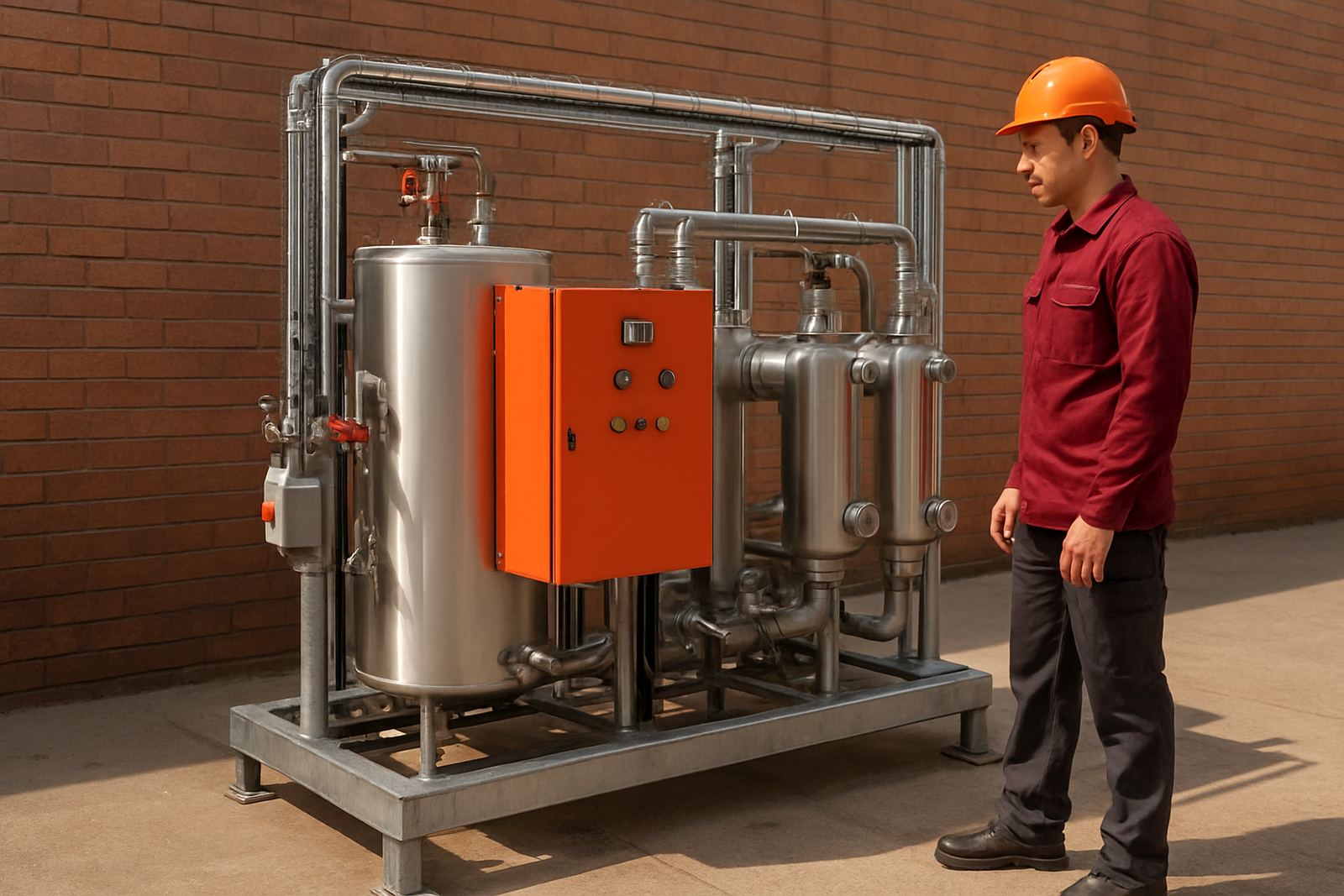
Most systems use a spray, tray or combined arrangement inside the vessel. The incoming water is broken up, heated close to saturation temperature and then held in the tank long enough for gases to vent away. On many Gauteng sites we see the best results where the deaerator works together with chemical dosing and a proper condensate return system, rather than trying to solve feedwater quality on its own.
If your plant runs on coal, gas or electricity, the deaerator still matters. Load-shedding, poor make-up water, and erratic plant starts can all put extra stress on the boiler. A well set deaerator helps keep that stress under control.
Sizes, layouts and tank options
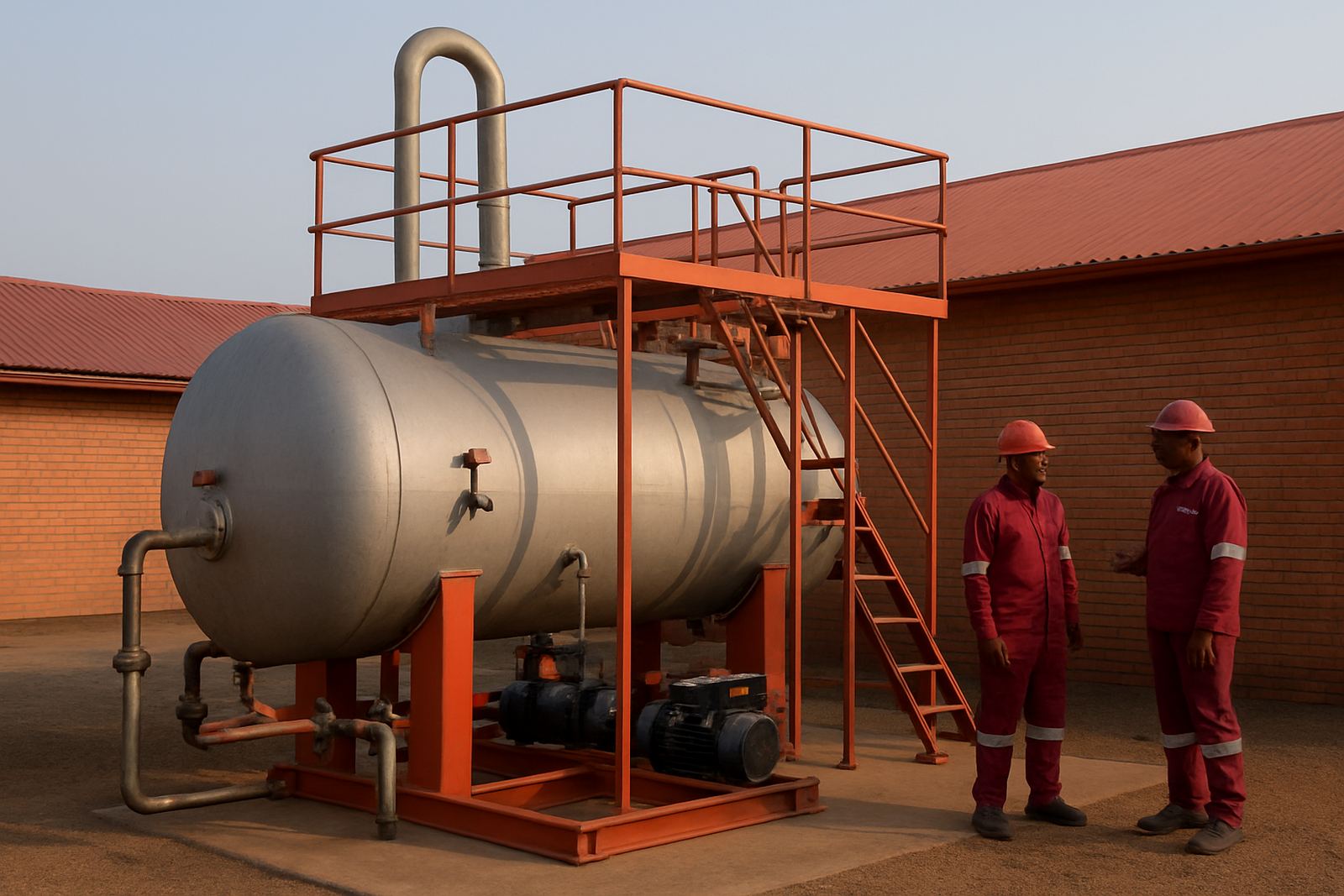
Deaerator tanks are selected to suit the boiler house and the steam demand, not just by looking at the boiler rating. We supply compact units for smaller commercial plants and larger fabricated tanks for industrial sites with higher continuous demand. The right choice depends on condensate return, make-up water percentage, operating pressure and the number of boilers tied into the system.
- Horizontal or vertical tank layouts
- Atmospheric or pressurised deaerator arrangements
- Integrated storage section for stable feedwater supply
- Shell sizes matched to plant flow and space available
- Custom nozzles for make-up water, return lines and venting
Typical vessel capacities range from about 1 000 L for smaller installations to 20 000 L and more for larger plants. Tank materials are normally carbon steel for the main shell, with internal components selected for steam duty. Where corrosion or water quality is a concern, we can advise on added protection, access manways and support details that make later inspection easier.
Where deaerator tanks suit best
These tanks suit any site where a boiler is expected to run consistently and where water quality needs to stay under control. That includes laundries, hospitals, food plants, abattoirs, mills, breweries, printing plants, mines and large complexes with central steam systems. They are also a good fit where hot condensate is returned to the boiler house and the client wants to save on water and energy.
In Gauteng, we often specify deaerators for plants in Boksburg, Germiston, Kempton Park, Pretoria, Midrand and Sandton where there is limited space and a need to keep steam on line during peak periods. Coastal sites can benefit too because humidity and salty air can accelerate corrosion around open water systems, fittings and support steel if the plant is not set up properly.
They are less useful where the boiler only runs occasionally and the system is too small to justify the extra equipment. In those cases, a simpler feedwater arrangement may be better, and we will say so upfront rather than overselling a unit that will sit underused.
Installation, steam and utility requirements
A deaerator tank needs correct piping, venting and support if it is going to do the job properly. The tank is usually installed on a steel frame or concrete plinth, with access around the inspection points and valves. We allow for condensate return, make-up water, overflow, vent, pump suction and boiler feed connections, plus the instruments needed to monitor level and temperature.
Steam is required for heating the water to deaeration temperature. That steam can come from the boiler plant itself or from another plant utility, depending on the site design. Power is needed for pumps, level controls and any associated control panel. If the area has unreliable electricity, we can plan the control side so the plant comes back cleanly after an outage instead of tripping on every restart.
For gas-fired systems, the deaerator does not change the burner setup directly, but it does affect how the boiler responds when demand swings. A stable feedwater temperature makes combustion tuning easier and reduces thermal shock in the boiler shell.
- Allow clear lifting access for installation and future maintenance
- Provide safe drainage for blowdown and overflow points
- Fit isolation valves so the tank can be taken out without shutting the whole plant
- Check municipal discharge rules before routing vent or drain lines
Care, servicing and water treatment support
Like all pressure plant support equipment, a deaerator tank needs routine checks. We usually look at vents, spray nozzles or trays, level controls, pump seals, insulation, support steel and signs of internal corrosion. If the tank is losing heat or carrying too much entrained air, the boiler will show it in the feedwater, the blowdown and the steam system performance.
Our service teams handle annual inspections, refractory relining where associated heater systems need it, plant refurbishment and emergency callouts. For deaerators, the most common maintenance issues are blocked vents, leaking gaskets, scaled internals and worn instrumentation. Water treatment support also matters because poor chemistry can undo the benefit of the tank and lead to scale or flash corrosion downstream.
We recommend planned shutdown checks instead of waiting for the first sign of trouble. A one day service visit is often enough to pick up a small fault before it becomes a pump failure or a cracked pipe joint.
What to check before you order
Before ordering a deaerator tank, gather enough plant data so the unit matches real site conditions. The most useful information is boiler capacity, steam pressure, condensate return percentage, make-up water temperature, available floor space and how many hours per day the plant runs. If the system is being expanded later, tell us that too so the connections and supports can be planned for growth.
- Boiler size and number of boilers on site
- Feedwater flow rate and peak steam demand
- Condensate return ratio and make-up water quality
- Available headroom, footprint and access route into the plant room
- Power supply, steam source and drain points
- Any special rules from the client, insurer or municipal authority
If you are unsure, send the existing plant details to engineering@ai-tec.co.za and we will work through the options with you. Ai-TEC has been serving commercial and industrial steam plant clients since 2009 from our Jet Park, Boksburg base, with service support in Boksburg, Kempton Park, Germiston, Pretoria, Midrand and Sandton, plus national teams for sites further afield.
Key facts
| Product type | Feedwater conditioning tank for boiler plants |
|---|---|
| Typical capacities | About 1 000 L to 20 000 L plus, depending on duty |
| Operating arrangement | Atmospheric or pressurised deaerator systems |
| Construction | Fabricated steel shell with internal deaerating components |
| Utilities required | Steam, electrical power for controls and pumps, drain and vent connections |
| Common applications | Commercial and industrial boiler rooms, steam plants and central utility systems |