How Duct Air Heaters Work in Plant Air Systems
A duct air heater sits in a duct run or air handling section and heats the moving air before it reaches the point of use. It is a practical choice where floor space is tight, the building needs even heat distribution, or process work needs a set air temperature instead of open flame heating.
In a production space, these units are often used for drying, pre-heating fresh air, tempering cold incoming air, or taking the edge off winter conditions in large bays. They are also useful where doors open often and the air changes quickly, because the heater can respond to demand without having to heat the full building mass first.
We work with electric and gas-fired arrangements depending on the site, available power, gas supply, air volume and the temperature rise needed. On colder mornings in Pretoria, the Highveld wind can pull heat out of a building fast, so correct sizing matters. In coastal plants, humid air and salty conditions can affect controls and casing finish, so the installation detail needs proper attention.
Sizes, Capacities and Build Options
Duct air heaters are specified by air volume, temperature rise, duct size and duty cycle. A small unit for a service workshop will not suit a higher output line in a food, plastics or packaging plant. We size units to the actual airflow and the expected inlet temperature, rather than guessing from floor area alone.
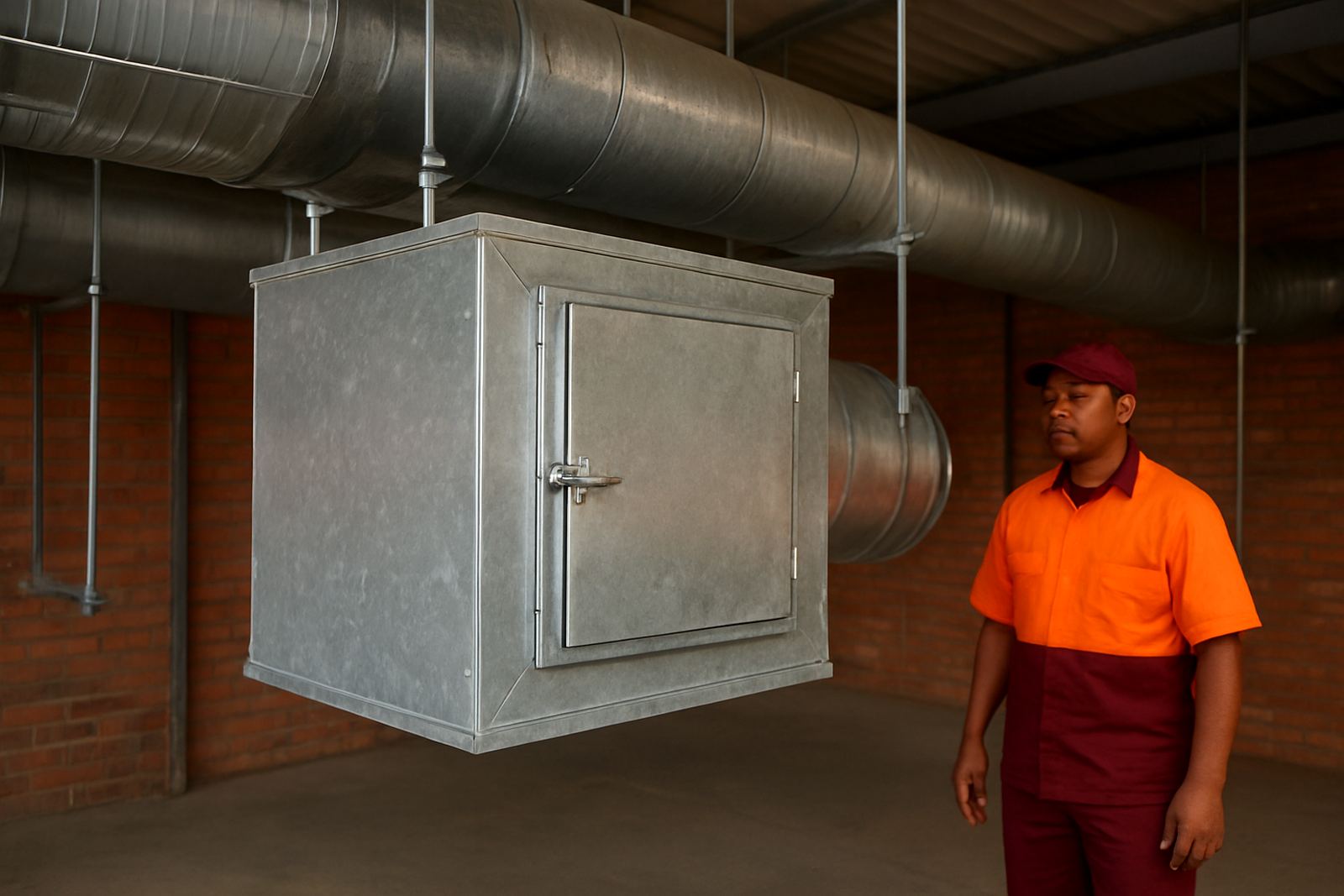
Typical options include flange-mounted or inline units, single or multi-stage heating, duct-mounted thermostats, airflow proving, over-temperature protection and temperature control panels. Units can be supplied for horizontal or vertical duct runs, and casing materials can be selected for indoor plant rooms or harsher environments. Where access is limited, we can work around the existing ductwork and space constraints, though a clean install always makes future servicing easier.
- Small workshop units for localised warm air supply
- Medium duty heaters for production bays and packing areas
- Higher output units for process pre-heating and large air volumes
- Electric or gas-fired heating sections, based on site supply
- Manual, staged or automatic temperature control options
Where These Heaters Suit Best
These units suit factories, warehouses, loading areas, fabrication shops, wash bays, printing spaces and light industrial premises where a ducted air system is already in place or is being upgraded. They are also used in plant rooms, curing areas and rooms where the process depends on controlled warm air rather than spot heating.
A good application is one where warm air needs to travel a distance and be mixed properly before it reaches the work zone. That helps avoid hot and cold spots, and it gives more even conditions for staff and equipment. In older buildings, especially around Germiston, Boksburg and Kempton Park, duct work often needs inspection before a heater is added, because poor air flow can lead to over-heating and nuisance trips.
- Production lines needing stable ambient temperatures
- Large bays where doors open through the day
- Sites with cold morning start-up conditions
- Areas where direct flame heating is not suitable
- Operations that need heat only during certain shifts
Installation Requirements and Utilities
Correct installation starts with checking the duct size, airflow rate, support points, clearances, access panels and control position. The heater must be installed where the air stream is stable, and the duct should be strong enough to carry the added weight without sagging. If the unit is added to an existing line, we inspect the condition of the ducting, insulation and seals first.
Power needs depend on whether the heater is electric or gas-fired. Electric units may require dedicated supply, isolator protection and suitable cable sizing. Gas-fired units need compliant gas supply, regulators, shut-off valves and safe venting where applicable. In both cases, controls and safety interlocks should be wired so that the heater cannot run without airflow. Municipal and site safety rules also need to be followed, especially where a modification changes the original installation layout.
We handle installations on live industrial sites and plan around shutdown windows, shift changes and access restrictions. In Gauteng that often means early starts, loader traffic and tight shutdown periods, so the job needs to be staged properly or the whole day can be lost.
Servicing, Cleaning and Ongoing Care
Duct air heaters last longer when the airflow stays clean and the safety devices are kept in good order. Dust build-up, poor combustion settings, loose terminals and blocked filters can all reduce performance. On sites with woodworking, textile fibre, powder handling or heavy dust, inspection intervals should be shorter.
We look at burner operation, heater elements, airflow proving switches, thermostats, control wiring, casing condition and duct seals. For gas units, combustion tuning is important because a heater that is slightly out of tune can waste energy and put stress on the plant. For electric units, damaged elements or poor connections can become a real issue during winter peak use, especially when load-shedding forces repeated restarts.
- Check air filters and upstream dust conditions regularly
- Inspect safety cut-outs and control settings before winter
- Keep access panels clear for yearly inspections
- Tighten electrical connections during planned maintenance
- Test airflow switches after any ductwork change
Ai-TEC can include duct heaters in an annual maintenance plan together with boilers, calorifiers, inline heaters and related plant. That helps sites avoid surprise downtime when cold weather arrives or when a production line is pushed harder than usual.
What To Check Before You Order
Before ordering, it helps to gather the duct dimensions, airflow rate, desired outlet temperature, available power or gas supply, and the hours of use per day. Also note whether the heater is for fresh air tempering, recirculated air or process heating. Those details change the final selection quite a bit.
You should also check the installation space, access for service, whether the duct run needs reinforcement, and if temperature control has to be integrated into an existing panel. If the unit is for a coastal site, ask for suitable protection against corrosion. If the building has strict fire or insurance rules, those must be considered from the start, not after the equipment is already on site.
When we quote, we can work from drawings, site photos, old unit details or a site visit. If the plant is in Pretoria, Sandton, Midrand or further out, we can still coordinate the assessment and practical follow-up. The better the information upfront, the better the heater fits first time.
Why Ai-TEC For Duct Air Heaters
Ai-TEC has been working with industrial heat plant since 2009, with a base in Jet Park, Boksburg and service support across Gauteng and nationally. Our team includes project, fabrication, service and operations staff who understand the realities of industrial sites, from shutdown pressure to spare parts lead times and weekend callouts.
We do not treat duct air heaters as a stand-alone item. We look at the whole system, from the air path and controls through to maintenance access and future service needs. That approach saves time later and gives the client a unit that can be checked, repaired and kept in service properly.
If you need a new duct heater, an upgrade to an older unit, or fault-finding on an existing installation, we can assist with supply, fabrication, installation and maintenance. Email engineering@ai-tec.co.za for site-specific advice and a practical recommendation based on your air volume and duty.
Key facts
| Product type | Industrial duct air heater |
|---|---|
| Heat source options | Electric or gas-fired |
| Typical duty | Warm air supply, air tempering, process pre-heating |
| Installation formats | Inline or flange-mounted duct sections |
| Control options | Manual, staged or automatic temperature control |
| Service areas | Gauteng and national site support |