How a condensate return unit works on site
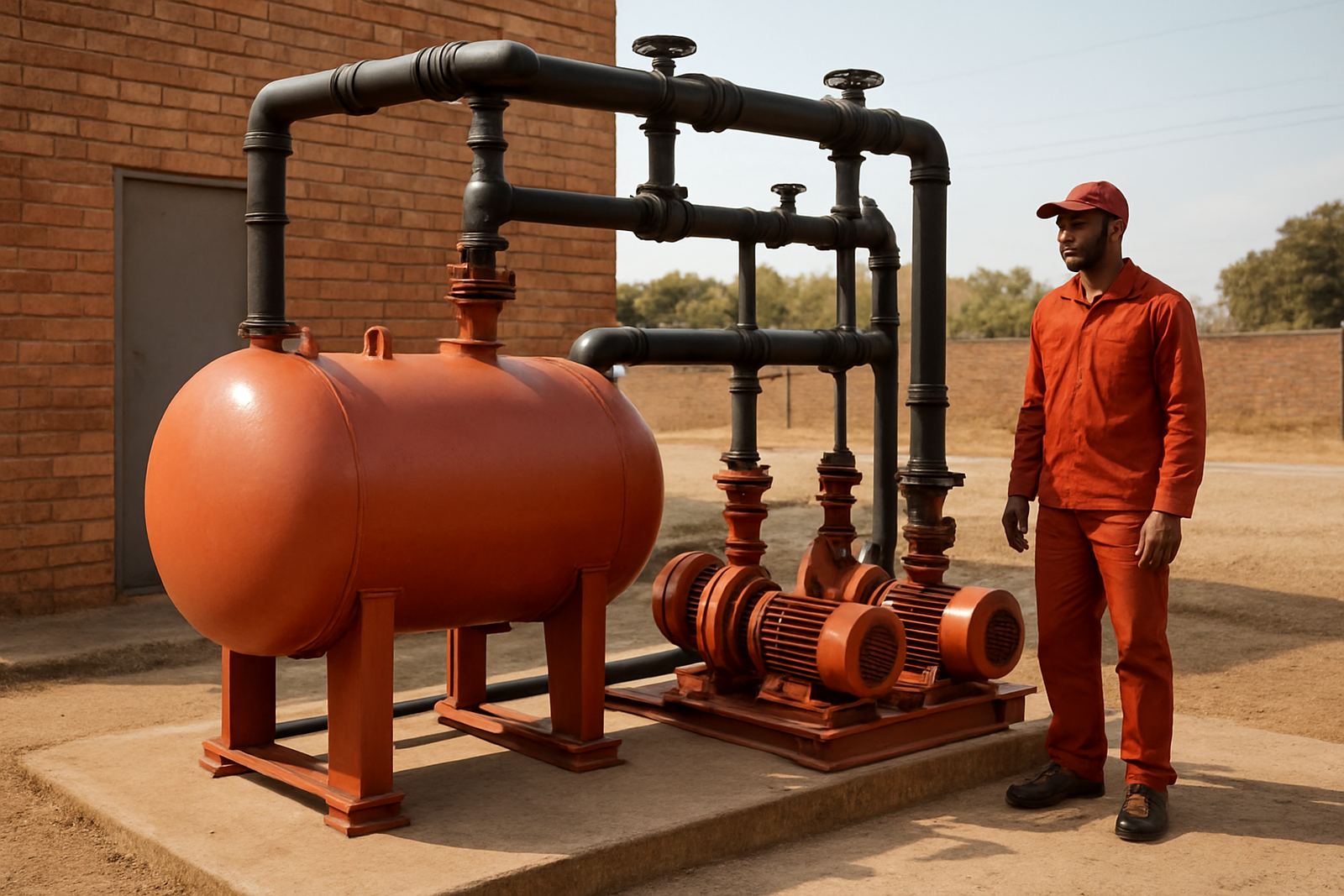
A condensate return unit sits at the low points of a steam system and receives the hot water that runs back after steam gives up its heat. Instead of letting that water go to drain, the unit stores it in a receiver tank and pumps it back to the boiler feed tank or directly into the feed line, depending on the plant layout.
In practical terms, that means less fresh water entering the system and less energy spent on heating water from cold every cycle. On plants in Gauteng that run long hours, the savings add up fast. In wet or coastal areas, the benefit is even stronger because good return control also helps reduce oxygen ingress and corrosion in the feed system.
These units are used on boiler houses, laundries, food plants, hospitals, factories, abattoirs and any site where steam traps discharge usable hot condensate. They are also useful where municipal water is costly or supply is unreliable, because every litre recovered is one less litre bought, treated and heated.
Sizes, tank options and pump arrangements
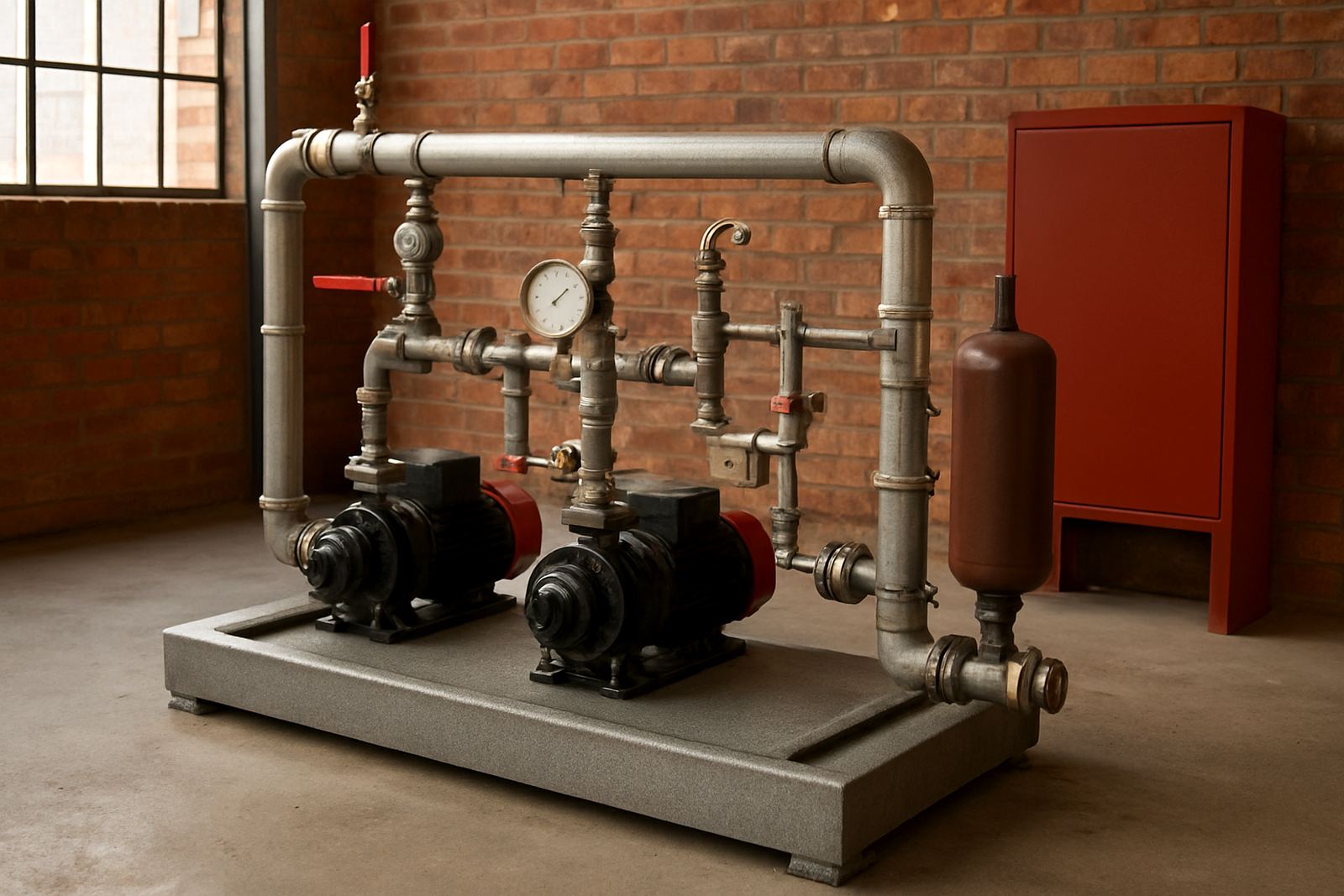
Condensate return units are supplied in a range of receiver sizes and pump capacities to suit small utility boilers through to multi-boiler industrial plants. Typical receiver volumes start at about 100 litres for compact installations and can go well past 1 000 litres for heavier duty use. Pump sets are matched to the required flow rate and discharge head so the unit can move condensate back over distance, height and pressure losses.
- Single pump units for simpler duty or intermittent return
- Dual pump units for standby cover, higher duty cycles or maintenance flexibility
- Open vented receivers for standard atmospheric return
- Closed or sealed arrangements where the plant design needs pressure control
- High temperature receivers for hotter condensate and flash steam management
Tank material and internals are selected for the service conditions. In hot, humid or chemically treated plants, it is worth specifying materials and fittings that handle corrosion, scale and temperature swings. Sight glasses, level switches, strainers and non-return valves can be added to suit the site. On busy plants, a properly sized unit prevents pump short cycling, which usually causes the first round of breakdowns.
Where condensate return units suit best
These units suit any site that sends out steam for heating, sterilising, washing or process work. They are common on boiler rooms serving laundry plants, bakeries, dairies, textile operations, hospitals, packaging lines and heating systems in commercial buildings. If the plant has several steam traps and a long return run, a condensate return unit often pays for itself sooner than expected.
They are especially useful where the boiler house is separated from the process area, or where the return line has to travel over distance and up a floor. In older industrial sites around Boksburg, Kempton Park, Germiston and Pretoria, return lines are often undersized or patched over the years. A correctly specified unit helps recover usable hot water even where the original pipework is not ideal.
For sites affected by load shedding, it is sensible to choose a unit with simple controls, reliable level management and a pump motor arrangement that starts cleanly when supply returns. Where a generator is used, the starting load and running amperage must be checked before installation. A unit that runs well on paper but trips the generator is no help to the plant manager at 2 am.
- Boiler houses with long steam distribution lines
- Plants with high make-up water use
- Facilities that want lower chemical dosing and lower blowdown losses
- Operations needing heat recovery without changing the whole boiler plant
Installation needs and site checks before fitment
Installation starts with a survey of the condensate return points, the highest discharge point, the boiler feed arrangement and the available electrical supply. The unit must sit where condensate can drain in by gravity and where maintenance staff can reach the pumps, isolations and controls without working in a cramped corner. Leave space for the receiver lid to open and for future pump removal.
Power requirements depend on pump size and control gear. Smaller units may run on standard single-phase supply, while larger industrial packages generally need three-phase power. If the site uses a generator or has unstable supply during outages, that must be included in the selection. Where condensate is very hot, flash steam release needs to be considered so the receiver is not over-pressurised. In some plants a vent pipe or flash vessel is added to manage this correctly.
The discharge line must be sized to suit the pump head, pipe length and return pressure. Poor pipe sizing causes noise, cavitation and low delivery. If the plant uses treated boiler water, the return arrangement should also support chemical control and sampling, not just pumping. A good installation is not only about placing the tank and pump, it is about making sure the whole loop works day after day.
Care, servicing and fault prevention
Condensate return units need regular checks because they work in hot, wet conditions and often run many times a day. The receiver should be inspected for scale, sludge and oil contamination. Float controls, level probes and pump seals should be checked for wear. Strainers and non-return valves need cleaning so the system does not lose flow or back-feed into the receiver.
On some plants, poor steam trap performance sends live steam into the return line. That wastes energy and can overload the receiver. Regular trap testing and line inspections reduce this risk. If the condensate is carrying grit, rust or treatment residue, the pump and valves will wear faster. It is usually cheaper to service the return system early than to replace a pump after it seizes and takes the boiler feed schedule down with it.
Ai-TEC supports boiler houses with servicing, annual inspections, water treatment support and emergency callouts. Our team can check the return unit, confirm pump operation, inspect the pipework and look for losses around traps, valves and drains. We also handle related plant work such as boiler servicing, calorifier maintenance, inline heater repairs, incinerator servicing and plant refurbishment from our Jet Park, Boksburg base.
What to check before you order
Before ordering, gather the main site details so the unit is matched correctly. The wrong pump head or receiver size can create headaches later, especially on larger plants where the condensate volume changes through the day. If you are replacing an old unit, photograph the nameplate, pipe connections and control panel so the new set can be compared against the existing layout.
- Condensate volume per hour and peak return flow
- Distance and height back to the feed tank or boiler
- Single-phase or three-phase power available on site
- Condensate temperature and whether flash steam is present
- Space available for installation and maintenance access
- Any generator, control or alarm requirements
If you are unsure, send the site details and current plant photos to engineering@ai-tec.co.za. We work from Gauteng with service teams nationally, and we regularly support sites in Boksburg, Kempton Park, Germiston, Pretoria, Midrand and Sandton. A short review up front usually avoids the wrong tank size, the wrong pump duty, or a unit that looks fine but cannot keep up when the plant is under pressure.
Key facts
| Typical receiver sizes | 100 litres to 1 000+ litres, depending on return volume and duty |
|---|---|
| Pump configuration | Single pump or dual pump sets with automatic level control |
| Power supply | Single-phase or three-phase, subject to pump size and site conditions |
| Discharge capability | Sized for return head, pipe length and feed tank pressure |
| Operating temperature | Suitable for hot condensate service and flash steam conditions |
| Common applications | Boiler houses, laundries, food plants, hospitals, factories and process lines |