What a container boiler plant includes
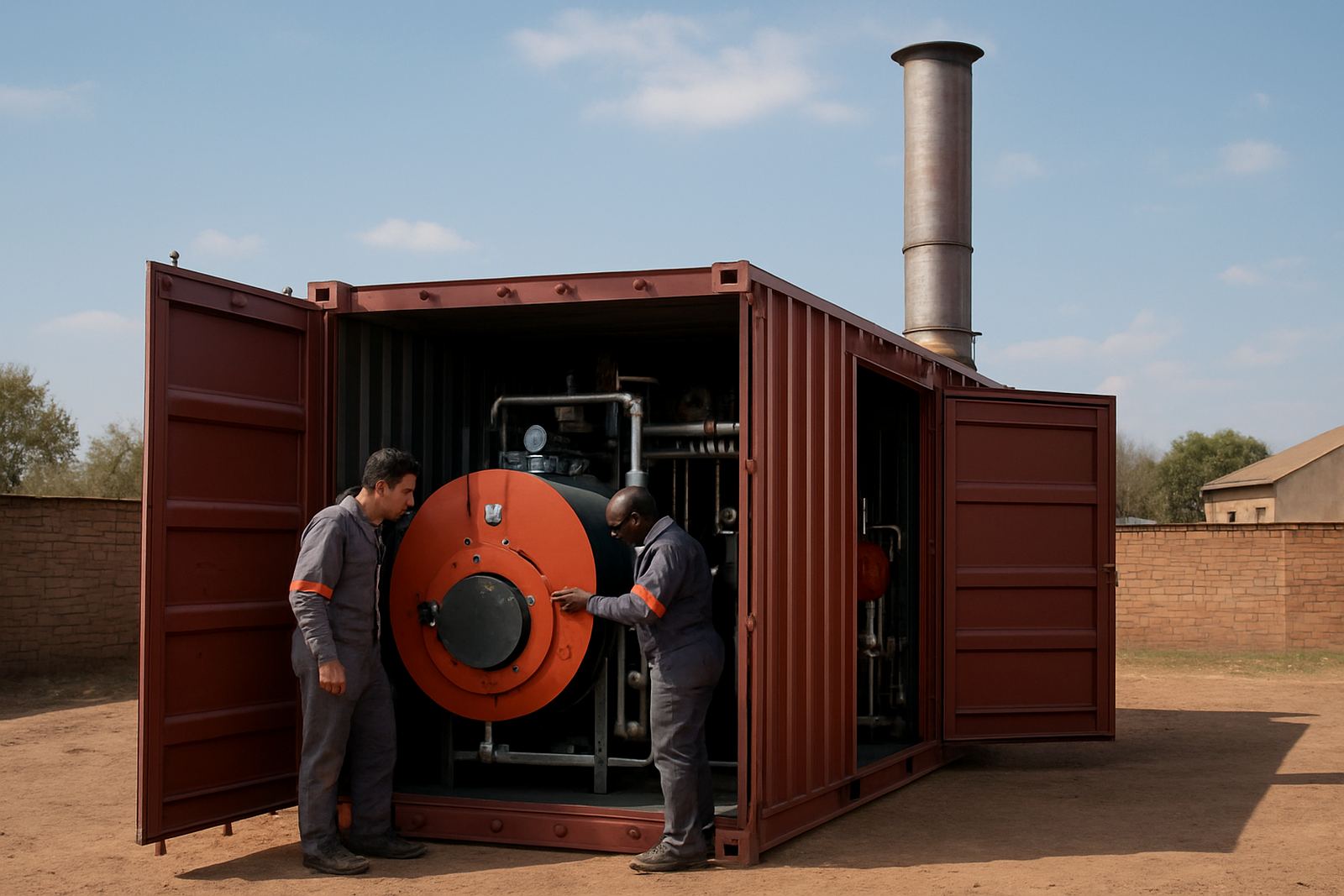
A container boiler plant is a complete boiler room built inside a steel shipping container or custom skid enclosure. It can house the boiler, pumps, feedwater set, chemical dosing, control panel, expansion equipment, flue system and insulated pipework in one enclosed unit. For many Gauteng sites it is the quickest way to add steam or hot water without building a full plant room.
The enclosure protects the equipment from rain, dust and theft, which helps on open industrial yards, temporary production sites and remote facilities. It also keeps the plant neat and easier to move when the job changes. If your operation needs temporary capacity during a shutdown, extra output during winter or a backup boiler during maintanence, this format is often the practical choice.
- Container sizes can be matched to the boiler duty and room for service access
- Single boiler or twin boiler layouts are available
- Skids can be fitted for feed pumps, softeners and water treatment dosing
- Can be designed for steam or hot water applications
Sizes and configuration options for South African sites
Container boiler plants are usually sized from compact single-boiler units right up to larger multi-boiler packages for steady industrial demand. Common configurations include 6 metre and 12 metre containers, though longer custom units can be built when the plant needs extra clearance for pipework, chemical tanks or service walkways. The final layout depends on the boiler output, fuel type, access route and the amount of maintenance space needed around the shell and burners.
For site planning, we look at the duty in kW or kg/h of steam, the pressure required, the temperature range and whether the unit must travel by side-loader, flatbed or crane. In coastal areas we also allow for corrosion control and better louvre protection. In Gauteng, where load-shedding can affect pumps and controls, standby power and automatic restart logic are often included.
- Typical duties range from small temporary loads to industrial process demand
- Steam pressures and hot water temperatures are set to suit the process, not a standard guess
- Options include manual or automatic blowdown, softening, return tank and PLC control
- Units can be built for diesel, gas, dual fuel or electric support systems
Where container boiler plants work best
This type of boiler package is well suited to mines, food plants, laundries, hospitals, washing facilities, breweries, farms, construction sites and plant shutdown support. It is also useful where municipal approvals or permanent building work would delay a fixed boiler house. A container plant gives you a controlled environment and a known footprint, which helps when space is limited in an existing yard or where access routes are tight.
Temporary capacity is another common reason to choose one. When a plant expands, a container boiler can keep production moving while the main system is repaired or replaced. It is also used as a backup boiler for high value processes where a few hours without steam would mean waste, rework or product loss. On remote sites outside towns like Rustenburg, Secunda, Krugersdorp and Pretoria North, the ability to deliver a complete unit by road is a major advantage.
- Ideal for temporary production increases and planned shutdown cover
- Useful where no boiler room exists yet or space is being reconfigured
- Suitable for remote sites with limited building services
- Practical for seasonal demand, pilot plants and standby duty
Installation, fuel and power requirements
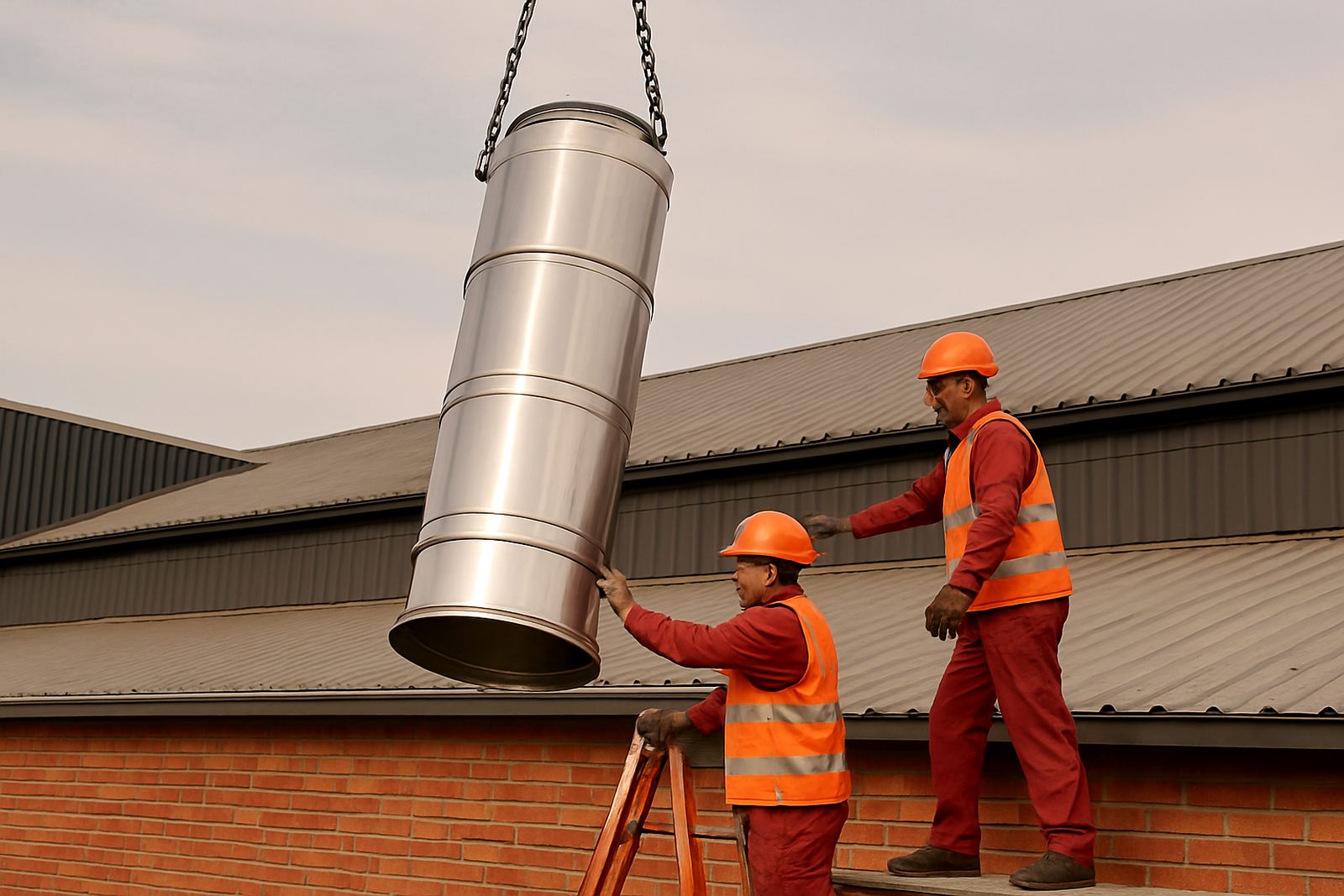
Installation starts with a level base, clear access for lifting and enough space for flue routing, fuel lines and service doors. The container must be placed where condensate drainage, ventilation and maintenance access can be managed properly. If the boiler is producing steam, the steam main and condensate return need to be routed with correct support and insulation. For hot water systems, pump head and return temperature are checked before final handover.
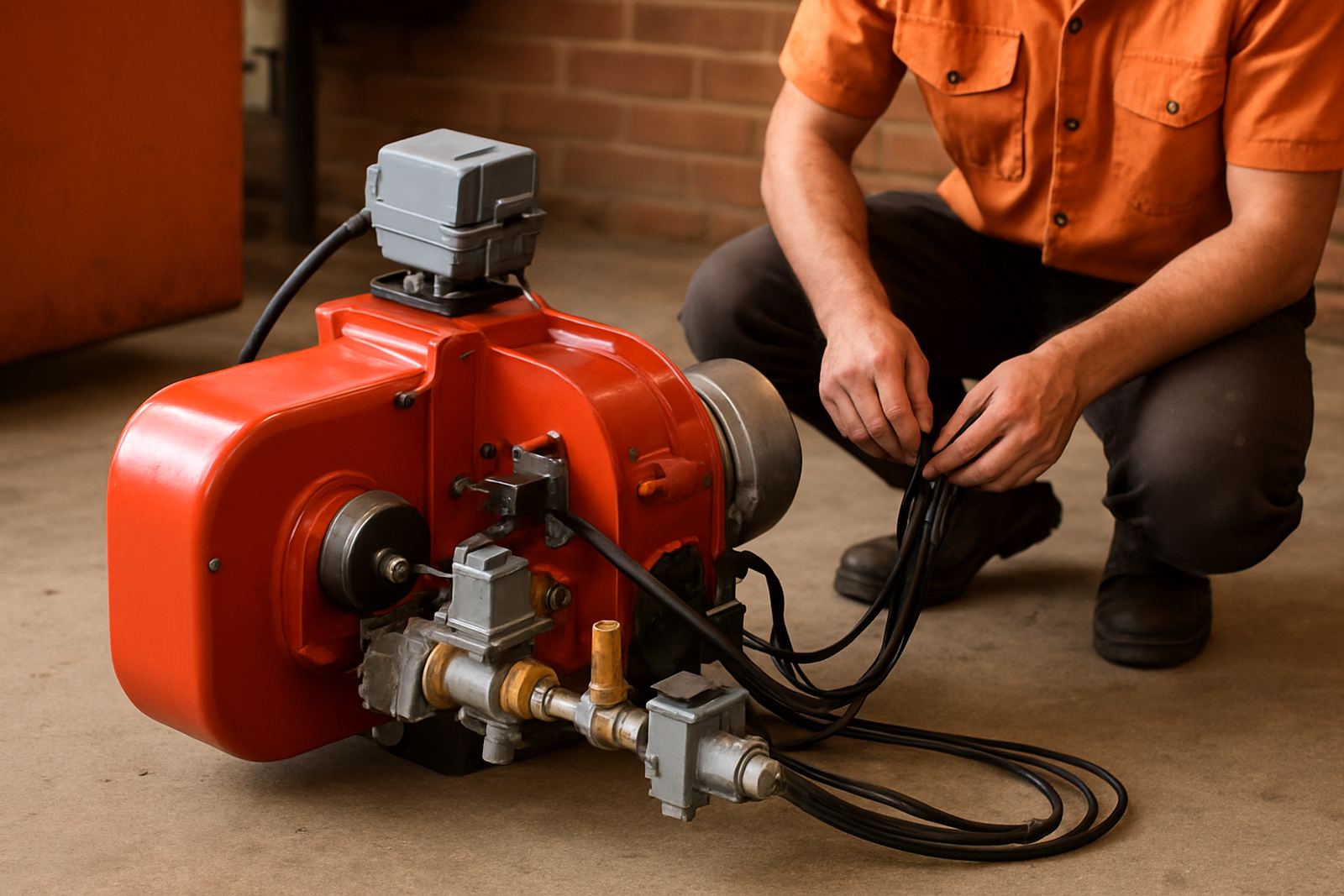
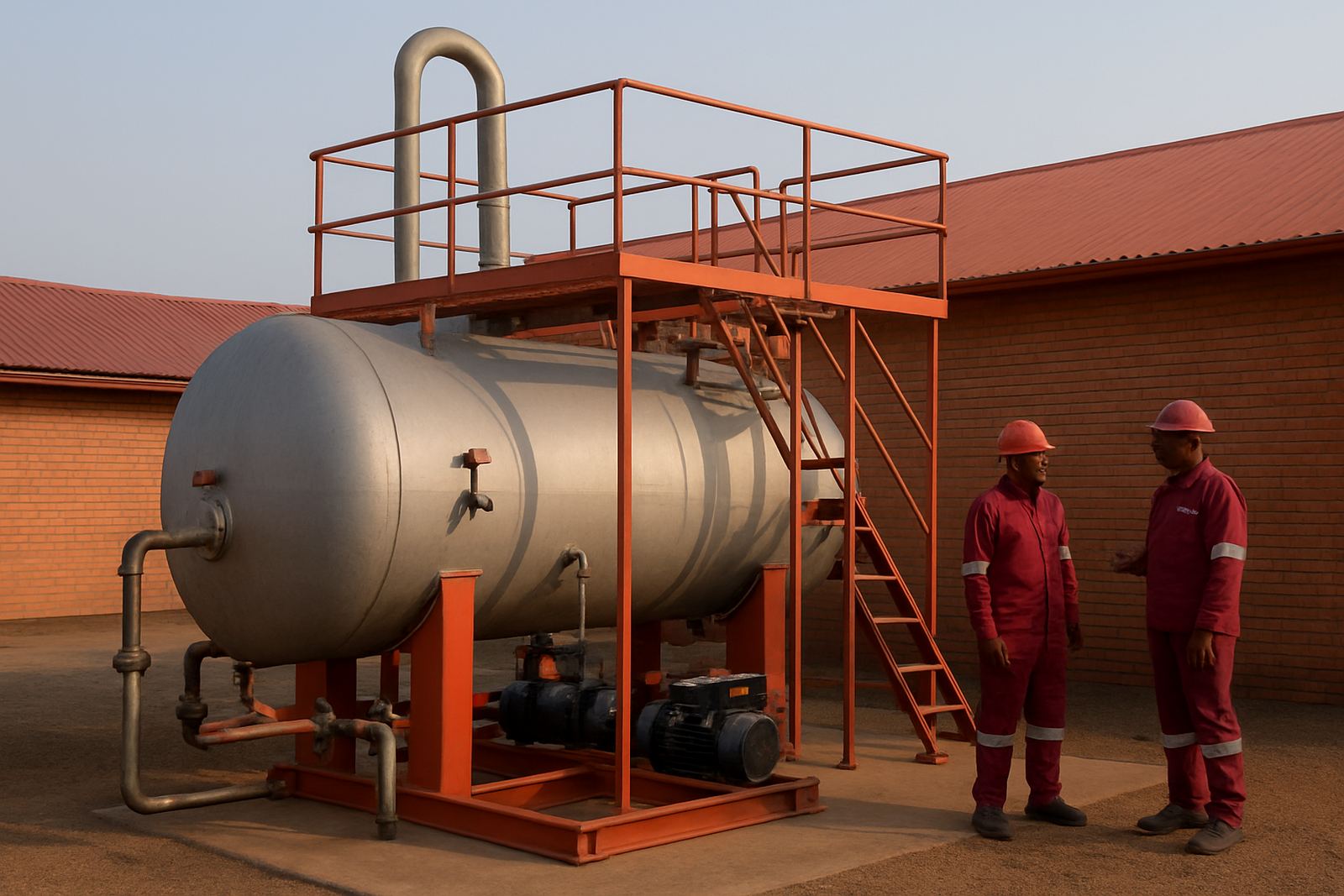
Fuel and power needs depend on the boiler design. Diesel units need tank storage, filtration and compliant bunding. Gas units need safe regulator arrangements, leak testing and compliance with site gas rules. Electric units need sufficient supply capacity and control protection. Where the site uses generators or suffers frequent power cuts, we recommend checking start-up current, control continuity and whether essential pumps should be backed up. A good installation plan prevents nuisance trips and keeps the plant running when the rest of the site is under pressure.
- Base slab or sleeper support must be level and able to carry the full operating mass
- Ventilation and louvre sizing must suit combustion air and heat release
- Fuel storage, gas train and electrical isolation points should be clearly accessible
- Flue height and discharge position should meet site and local authority requirements
Care, servicing and ongoing compliance
Like any pressure plant, a container boiler needs routine service work if you want steady output and safe operation. The enclosed layout makes it easier to protect the equipment, but it does not remove the need for cleaning, testing and inspection. Burner tuning, water treatment checks, blowdown monitoring and safety valve testing all remain important. In practice, the plant often stays in better condition when a service team can reach the whole package without working around a busy boiler room.
For Gauteng facilities, annual inspections and documented maintanence records are often part of internal safety procedures and insurer requirements. We also recommend checking refractory, flue joints, pumps, controls, fuel filters and combustion settings before winter demand starts. If the unit is standing in a coastal or dusty environment, corrosion and grit can shorten component life unless filters, seals and paintwork are kept in good order.
- Service intervals should match duty cycle and water quality
- Water treatment support helps reduce scale, carryover and tube stress
- Combustion tuning saves fuel and keeps emissions in check
- Emergency callouts are worth planning for sites that cannot stop production
What to check before you order a container boiler plant
Before placing an order, it helps to confirm the process demand, site conditions and transport limits. We usually ask for the required steam or hot water duty, operating pressure, fuel type, available electrical supply and the physical space for delivery. It is also worth checking whether the plant must fit through a gate, under overhead services or onto a prepared concrete base. Small access issues can add days to a job if they are found too late.
For buyers, the main decision points are output, footprint, future expansion and service access. If the unit may need to move later, container dimensions and lifting points matter just as much as boiler size. If the plant will run continuously, then parts access, water treatment and spare capacity should be built in from the start. Ai-TEC supplies, fabricates and maintains container boiler plants from the Jet Park base in Boksburg, with teams supporting sites across Gauteng and nationally.
- Required output in steam kg/h or hot water kW
- Fuel type and available utility connections
- Site access for delivery, craneage and maintenance
- Need for standby capacity, redundancy or future expansion
Key facts
| Boiler types | Steam or hot water container packages |
|---|---|
| Typical container sizes | 6 metre, 12 metre or custom-built lengths |
| Fuel options | Diesel, gas, dual fuel or electric support |
| Operating range | Sized to site duty, pressure and temperature needs |
| Mobility | Road transportable with lifting points and base frame |
| Support | Installation, commissioning, servicing and emergency callouts |