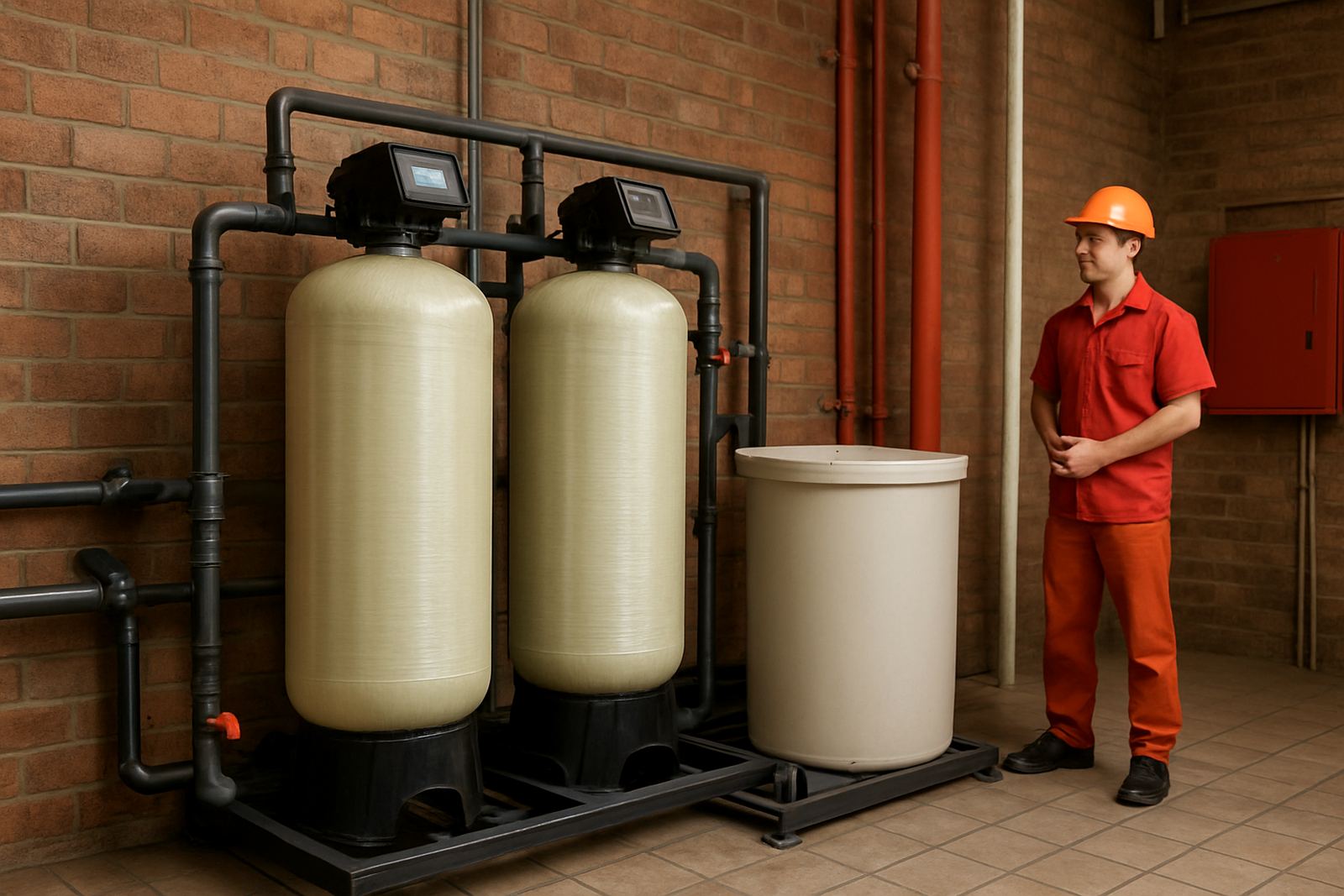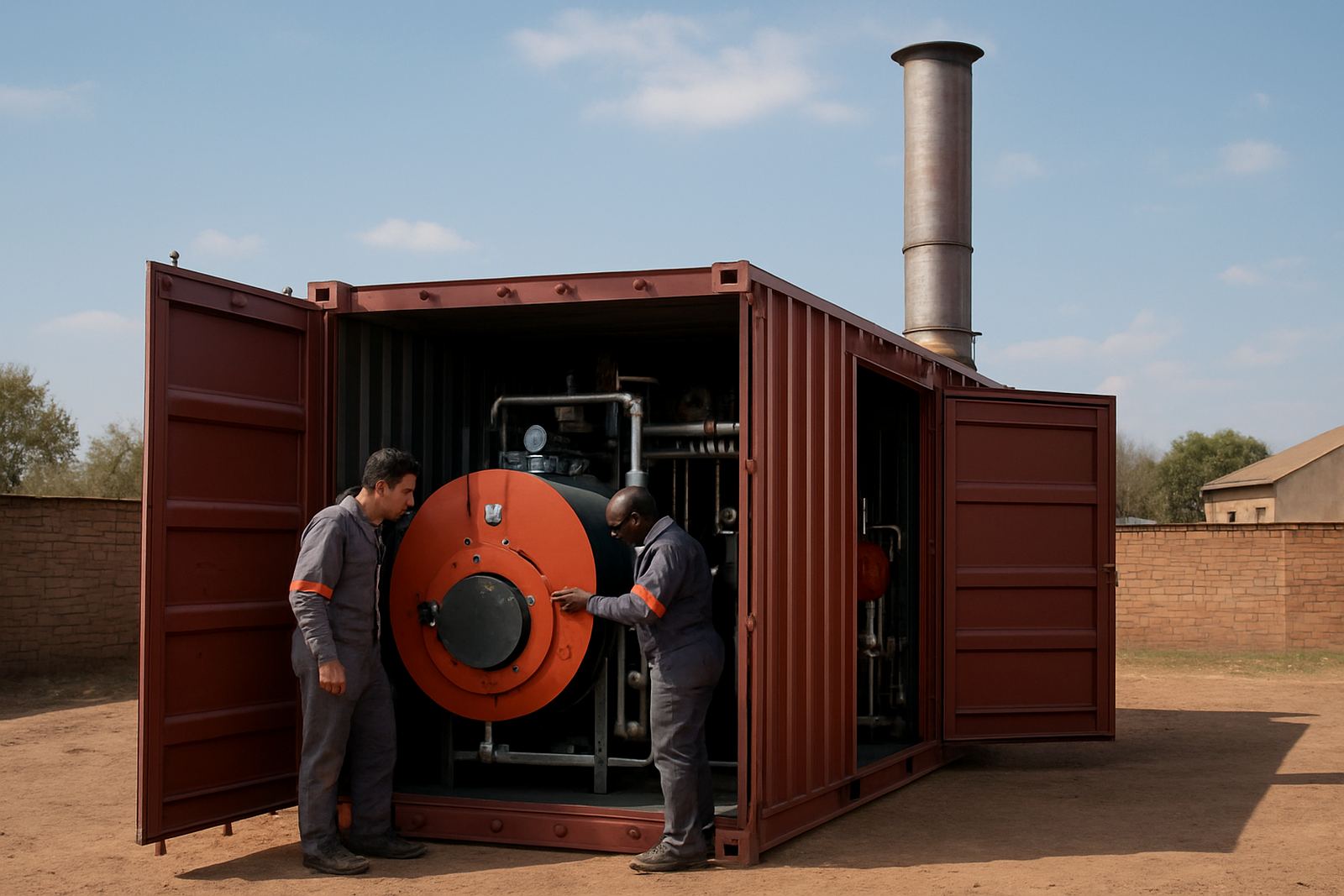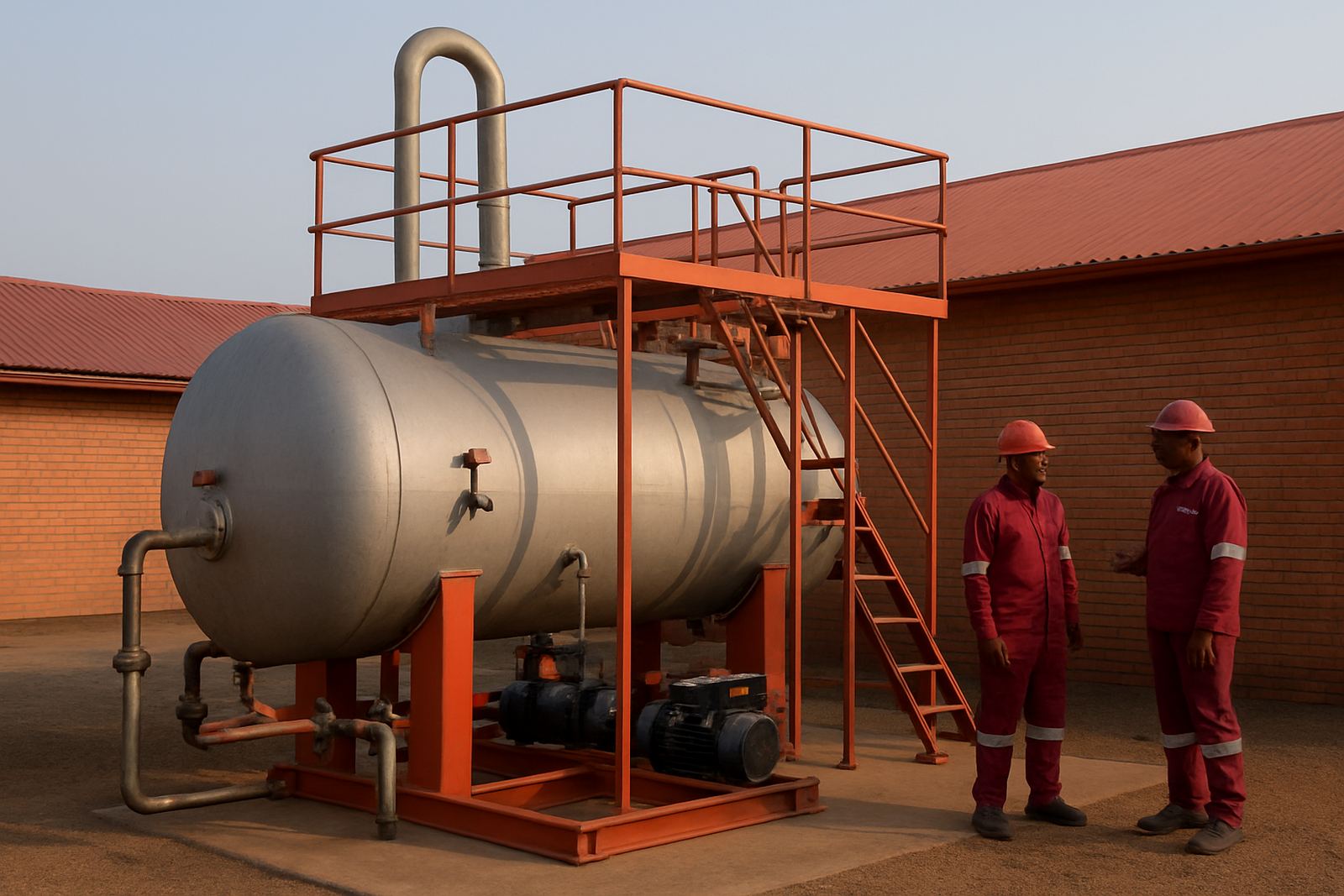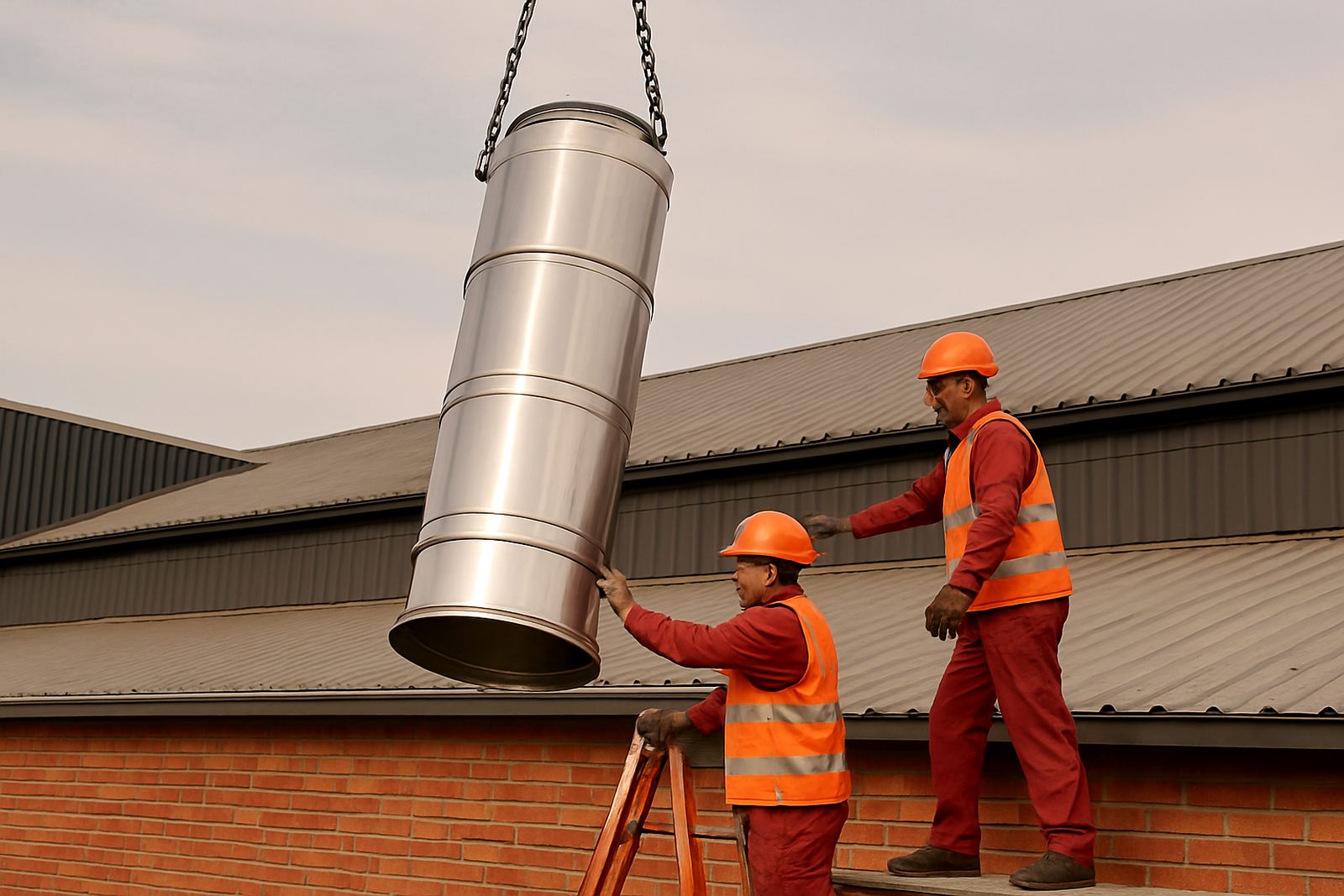
What A Chimney System Does On Site
A chimney system carries flue gases safely away from the appliance and helps the plant run at the right draft. If the stack is too small, too long, badly insulated or put together with poor joints, the unit can smoke, trip on pressure faults or run at poor efficiency. That often shows up as heat loss, soot build-up and more callouts than expected.
For boilers, calorifiers, inline heaters and similar equipment, we match the chimney to the combustion load and the discharge point. The system can include single-wall sections, insulated double-wall sections, support frames, weather cowls, access doors, condensate drains and expansion joints. On coastal jobs we also look closely at corrosion and salt carry-over, while in Gauteng the bigger issues are dust, power cuts and poor maintenance on older plant.
Sizes, Materials And Build Options
Chimney systems are built to suit the plant, not the other way round. Common internal diameters range from 150 mm to 1200 mm and beyond, depending on the duty. Straight vertical runs are preferred where the site allows it, but offsets, roof penetrations and parapet clearances are often needed in factories, hospitals and commercial buildings.
- Mild steel for dry internal service and lower-cost plant rooms
- Stainless steel for wetter flue conditions, coastal exposure or higher corrosion risk
- Insulated twin-wall sections for reduced heat loss and safer surface temperatures
- Modular flanges, clamps and brackets for easier assembly and future access
- Custom fabricated bends, branches and transitions to suit existing plant
We also supply the support steelwork, roof flashing and termination items needed for a proper installation. If the plant room is tight on space, our fabrication team can build to site dimensions so the stack does not interfere with maintenance access or municipal fire rules.
Where Chimney Systems Work Best
These systems suit boiler houses, laundries, food plants, lodges, abattoirs, chemical sites, hospitals, schools and industrial workshops. They are commonly used where a gas, diesel, light oil or solid fuel appliance needs controlled discharge and a reliable draft path. They also suit plant rooms with limited roof access where a prefabricated flue is faster to install than a fully site-built stack.
On older sites, a new chimney can improve the way an existing burner behaves without changing the main heat source. We often find that poor flue design is part of the reason a boiler keeps sooting up or a heater never seems to hold its setpoint. A correctly sized stack can help stabilise the system, especially during load shedding when plant is started and stopped more often than usual.
- Commercial boiler rooms and steam plants
- Hot water generation and calorifier banks
- Process heaters and inline heating lines
- Incinerator discharge systems with high temperature duty
- Retrofits where the old stack is rusted, undersized or unsafe
Installation, Power And Gas Requirements
Most chimney systems do not need electrical power themselves, but they must be installed around the plant's fuel and control layout. We check the burner position, flue outlet height, available route and the need for combustion air. Where gas-fired equipment is involved, the flue design must work with the gas train, burner type and available make-up air so the appliance does not pull back or stall on start-up.
Our teams handle survey, fabrication, delivery, lifting, assembly and final alignment. On larger jobs we plan for weekend shutdowns or staged tie-ins so production is not held up. Roof work is done with the right access gear and sealing, because a small leak around a penetration can become a big issue after the first summer storm. If the site has municipal or insurer requirements for stack height, fire separation or access, we work to those conditions from the start.
Care, Inspection And Servicing
A chimney system needs regular checks, not just a once-off install. Heat cycling, vibration and soot can loosen joints over time. On steel systems, surface rust, failed insulation jackets and damaged seals need attention before they turn into expensive downtime. In areas with heavy dust or coastal humidity, inspection intervals should be tighter.
Our service team can include chimney checks during boiler servicing, combustion tuning and annual inspections. We look at support brackets, welds, liner condition, condensate drainage, access doors and termination points. If the plant has been shut down for long periods, we also check for nesting, blocked sections and water ingress. A quick service visit now usually costs far less than replacing a badly corroded stack later.
- Visual inspection for cracks, corrosion and loose fixings
- Cleaning of soot, ash and internal deposits where needed
- Checking insulation, joints and expansion movement
- Confirming safe exit height and clearances at roof level
- Testing after burner service or plant refurbishment
What To Confirm When You Order
To size and quote the right chimney system, we need a few basic details. The more accurate the information, the better the fit on site and the less time is lost during installation. If drawings are not available, we can still work from photos, site measurements and a plant list.
- Appliance type, make and heat input or output rating
- Fuel type and expected flue gas temperature
- Flue outlet size and position on the equipment
- Required height, roof type and route through the building
- Indoor or outdoor installation, plus exposure to wind or salt air
- Any existing problems such as poor draft, soot, back pressure or leaks
If the system is going into a live plant room, tell us about access hours, shutdown windows and lifting limits. For sites in Germiston, Kempton Park, Midrand, Pretoria or Sandton, we can usually plan a visit quickly. For regional work, our service teams travel nationally and can support the install, then return for follow-up checks if needed.
Key facts
| Internal diameters | 150 mm to 1200 mm plus custom sizes |
|---|---|
| Material options | Mild steel, stainless steel and insulated twin-wall |
| Typical use | Boilers, calorifiers, inline heaters and incinerators |
| Temperature range | Built to suit low, medium and high temperature flue duty |
| Support methods | Wall brackets, roof frames, hangers and base supports |
| Service cover | Supply, fabrication, installation and maintenance from Gauteng nationwide |