What a Water Softener Skid Does On Site
A water softener skid removes the calcium and magnesium that cause scale inside boilers, calorifiers and hot water lines. In a plant with hard water, even a thin layer of scale can slow heat transfer, push up gas or diesel use and shorten the life of tubes, elements and vessel surfaces. That is why softening is not just a water treatment extra, it is part of keeping the heating plant steady.
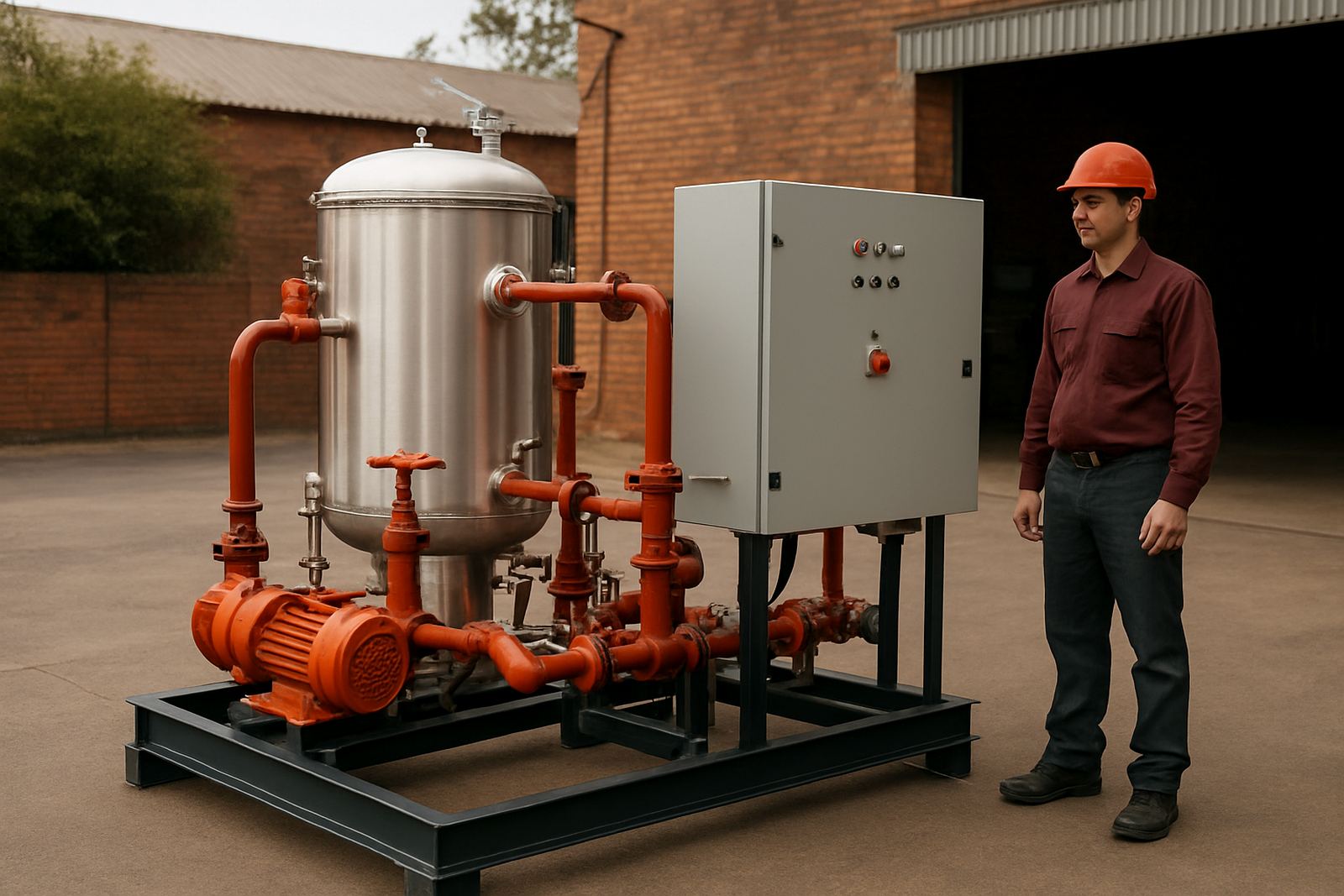
We supply skid mounted systems that arrive assembled on a steel base frame for easier placement beside the plant room, pump room or service yard. The layout is neat and practical, with valves, piping, resin vessels, controls and bypass points arranged for day to day use. On busy sites this helps reduce installation time and keeps maintenance work straightforward.
- Suitable for boiler feed water, calorifier make up water and hot water systems
- Helps reduce scale on heat exchange surfaces and inside pipework
- Can be supplied with duty and standby vessels for continuous service
- Works well where water hardness changes between municipal supply and borehole water
Sizes, Flow Rates And Skid Options
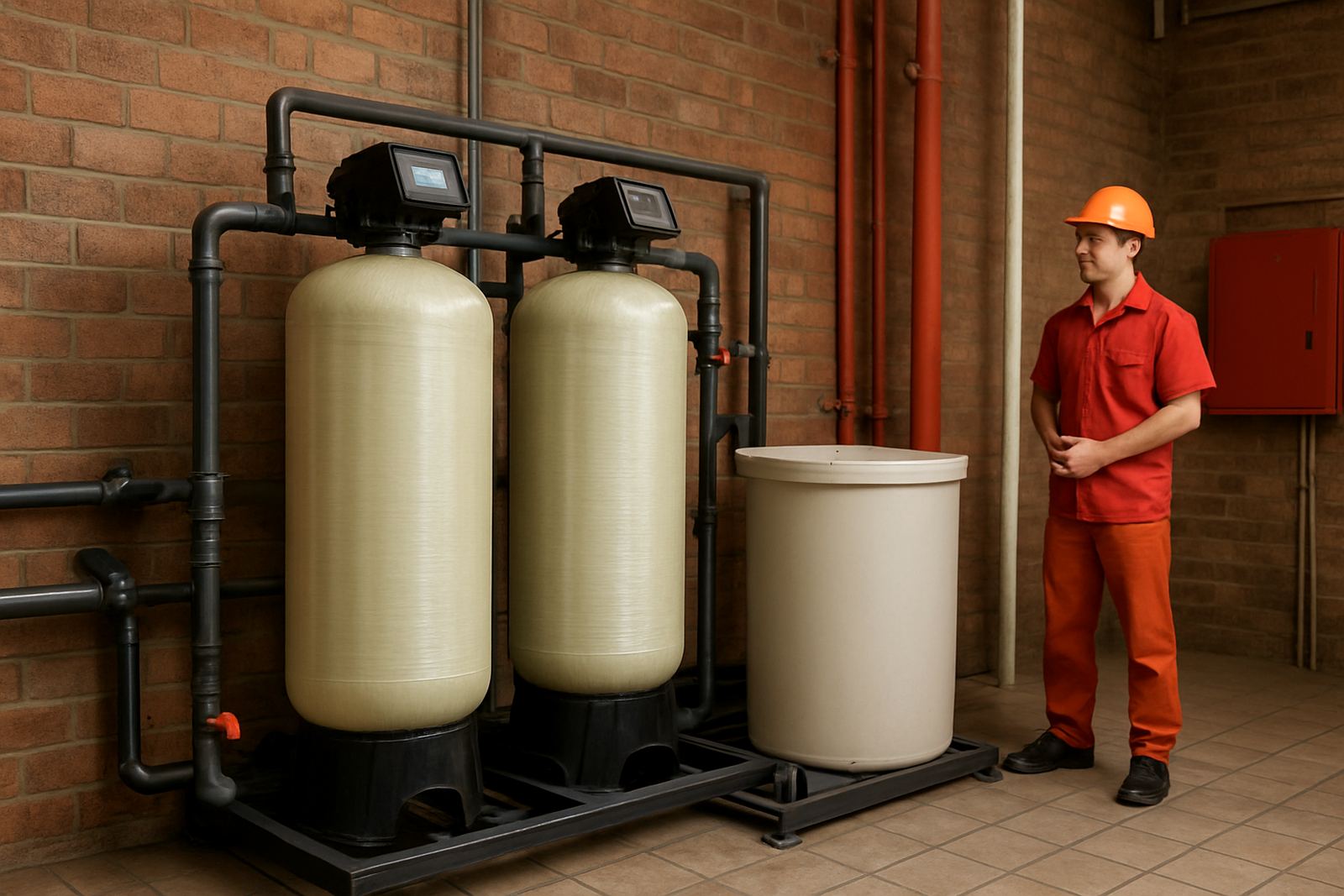
Softener skids are selected to match the water demand of the site, not only the size of the boiler. A small laundry, kitchen or body corporate plant may need a compact single vessel skid, while a factory, hospital or commercial complex often needs twin vessels so softened water is always available during regeneration. For larger industrial plants we can configure higher flow systems with parallel duty lines and manual or automatic changeover.
Common options include simplex skids, duplex skids and twin tank arrangements with automatic control valves. Vessel size, resin volume and pipe size are chosen around peak flow, daily water use and the hardness level of the raw supply. If your plant has load-shedding backup and the boiler must come back online fast, a correctly sized softener avoids waiting for make up water to recover after shutdown.
- Compact skids for plant rooms with limited floor space
- Twin vessel systems for uninterrupted softened water supply
- Manual or automatic regeneration control
- Carbon steel frame with corrosion protection for South African site conditions
- Optional pre-filtration where silt, rust or borehole sediment is present
Where Softener Skids Are A Good Fit
These units suit any site where hard water is shortening the life of heating equipment. That includes factories in Boksburg and Germiston, hospitals in Pretoria, commercial buildings in Sandton and Midrand, laundries, food plants, schools, hotels and residential estates. In coastal conditions a softener still matters because saline air and higher humidity increase the upkeep burden on plant rooms, but the bigger issue remains scale from untreated water.
We also see strong value where steam or hot water systems run for long hours and shutdowns are expensive. If a boiler feeds production lines, sterilisation, laundry or domestic hot water, scale can cause uneven heating, nuisance trips and higher maintenance. On some sites the make up water quality changes from week to week, so a skid that is easy to monitor and service makes a real difference.
- Boiler houses and calorifier rooms
- Hotels, lodges and guest facilities
- Factories and process plants
- Education and healthcare sites
- Residential estates and high use hot water systems
Installation, Utilities And Site Requirements
Installation is usually simple, but the site still needs the right connections and space. A softener skid must sit level on a firm surface with enough clearance for salt refilling, valve access and resin service. Most systems need a cold water feed, softened water outlet, drain for regeneration waste and a power supply for automatic controls where fitted. If the plant already has a bypass line or booster pump arrangement, we will work around that to keep downtime low.
For order planning, check the available inlet pressure, flow rate and drain position before we start. In some plant rooms the drain route is the deciding factor, especially where municipal rules limit waste discharge or where the nearest drain is too small. Where pressure is low, an upstream pump may be needed, and where the water is dirty, a sediment filter should be installed before the softener. That small extra step saves grief later, and the plant runs better from day one.
- Level base, safe access and clear pipe routing
- Power for control head where automatic regeneration is used
- Drain line sized for regeneration discharge
- Bypass valves recommended for maintenance and emergency use
- Pre-filtering advised for borehole water and older municipal lines
Care, Salt Use And Servicing Intervals
A water softener skid needs regular attention if it is going to protect the boiler properly. The resin bed should be checked for fouling, the control valve should cycle correctly and the brine tank must be kept topped up with the correct salt. On poor quality water, iron contamination or silt can reduce resin life, so service checks become more important. If the skid is left to run dry on salt or the regeneration settings are wrong, hardness will pass through and scale will build up again.
Our service teams handle inspection, cleaning, calibration and resin assessment as part of wider boiler maintenance. We also check whether the softener is keeping up with real plant demand, because a system that was sized for 500 litres an hour can struggle once the site expands. Planned servicing is easier than dealing with a scaled calorifier or a boiler that has lost heat transfer. It sounds basic, but it saves a lot of callouts.
- Check salt level weekly on high use sites
- Inspect hardness leakage and regeneration timing monthly
- Test raw water and softened water hardness at set intervals
- Service valves, injectors and strainers during planned shutdowns
What To Check Before You Order
To size a water softener skid correctly, start with the daily water demand, the peak hourly flow and the hardness of the incoming supply. Then confirm whether the plant needs continuous softened water or can tolerate short regeneration breaks. If you are feeding both a boiler and a calorifier, or several vessels across the same site, we will allow for that combined load in the design.
It also helps to know the available space, the power supply, the drain point and whether the water source is municipal, borehole or mixed. A few details at the start prevent rework later. If you are replacing an older unit, send us the existing vessel size, valve type and any past service issues, because that tells us where the real bottlenecks are. We can then recommend the right skid, the right resin quantity and the right service plan.
- Water hardness in ppm or mg/l
- Peak flow rate and daily water use
- Source water type and pressure
- Available space and drain location
- Power supply and control preference
- Whether a single or duplex system is needed
Key facts
| Product type | Skid-mounted water softener for boiler and calorifier protection |
|---|---|
| Typical capacities | Compact single vessel units to multi vessel industrial skids |
| Flow range | Sized to suit site demand from small plant rooms to high use process lines |
| Materials | Steel skid frame, resin vessels, pipework, valves and controls |
| Control options | Manual or automatic regeneration, simplex or duplex arrangements |
| Common applications | Boilers, calorifiers, hot water systems, laundries, factories and estates |