A planned shutdown with no room for lost output
The client was a light industrial manufacturer in Kempton Park that had already booked a major maintenance window on its own plant. The boiler had to come out for repair work, but the rest of the site still needed steam and hot water for cleaning, process heating and shift start-up. With customer orders lined up and labour already on site, the brief was simple: keep the factory running while the main boiler was offline.
We were brought in early so the hire package could match the real load on site, not a rough guess. That mattered because the plant sits in a busy part of Ekurhuleni where access is tight, deliveries have to be timed around traffic, and any delay can push into overtime costs. We also had to work around the client’s safety file, permit process and isolation plan. On sites like this, a temporary boiler is only useful if it can be connected cleanly and operated without creating extra admin for the maintenance team.
What the site needed and the limits we worked within
The shutdown was scheduled for two weeks, but the repair window could shift if inspections found extra wear. That meant the temporary system had to be stable for a short hire period, yet capable of running for longer if the mechanical work took more time. The client wanted a unit that could start quickly, cope with early-morning demand, and hold pressure through the day without constant attention from their staff.
We also had to deal with practical constraints common around Gauteng industrial sites. Space beside the boiler house was limited, the yard surface had to take delivery loads, and the existing pipe route crossed an area where staff and forklifts moved all day. Because the site had experienced voltage dips during load-shedding, we supplied a setup that would restart cleanly after outages and protect controls from unnecessary trips. For a plant that runs on schedule, a temporary boiler is not just about heat output, it is about predictability.
- Planned shutdown period: 2 weeks
- Temporary heat demand covered: process steam and hot water duties
- Site access: restricted industrial yard with live operations nearby
- Power risk: load-shedding and voltage fluctuation had to be factored in
Temporary boiler hire and hook-up supplied by Ai-TEC
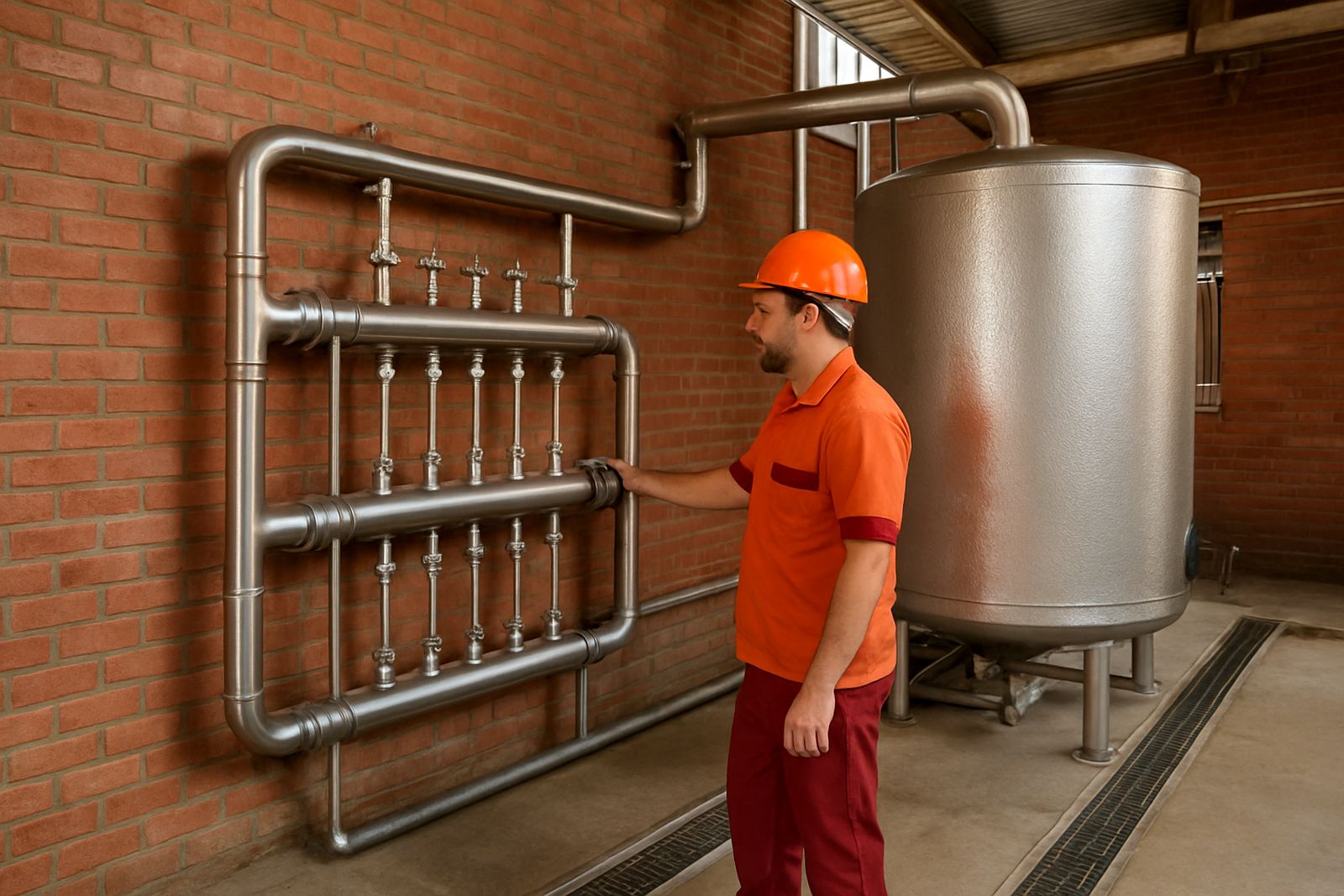
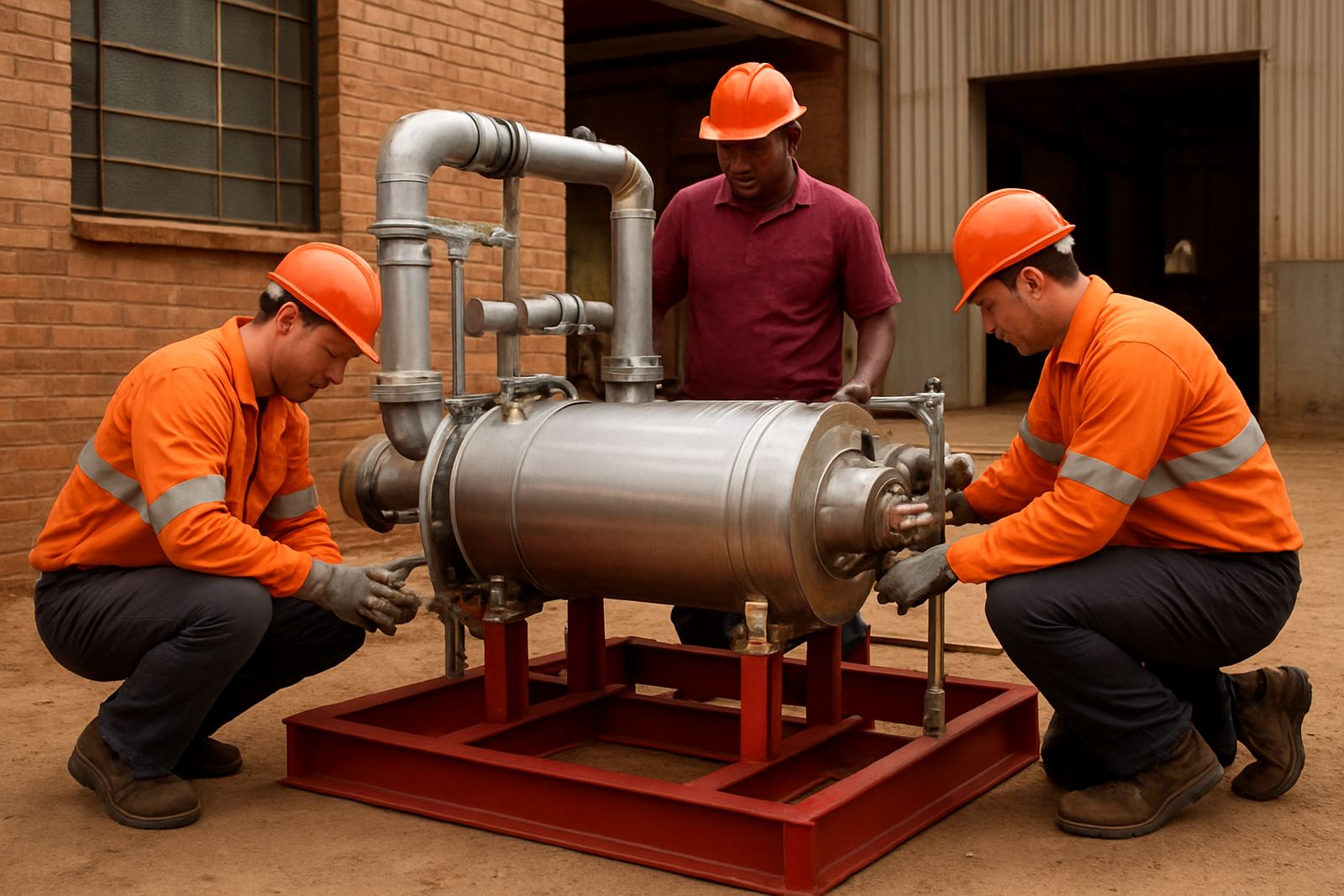
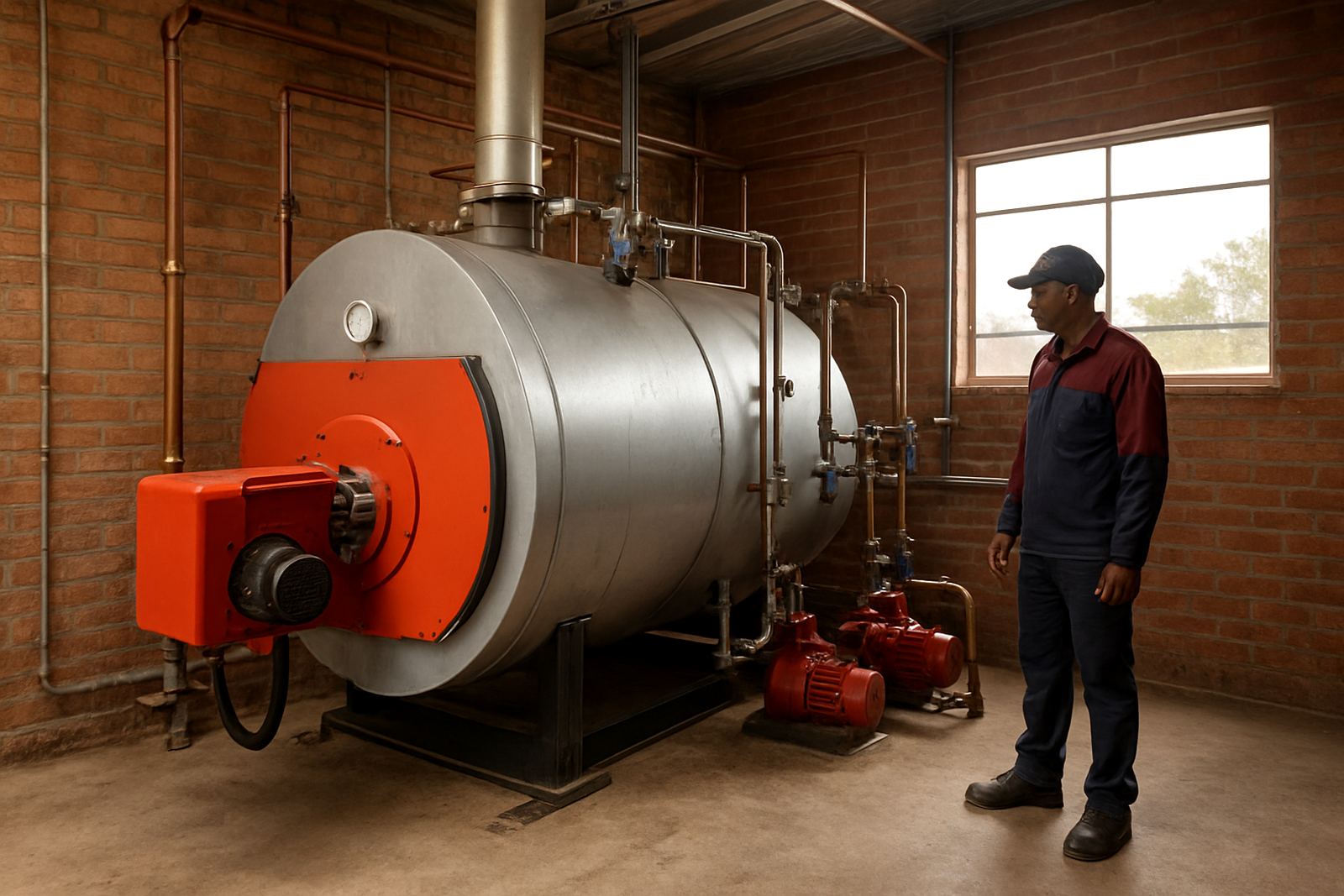
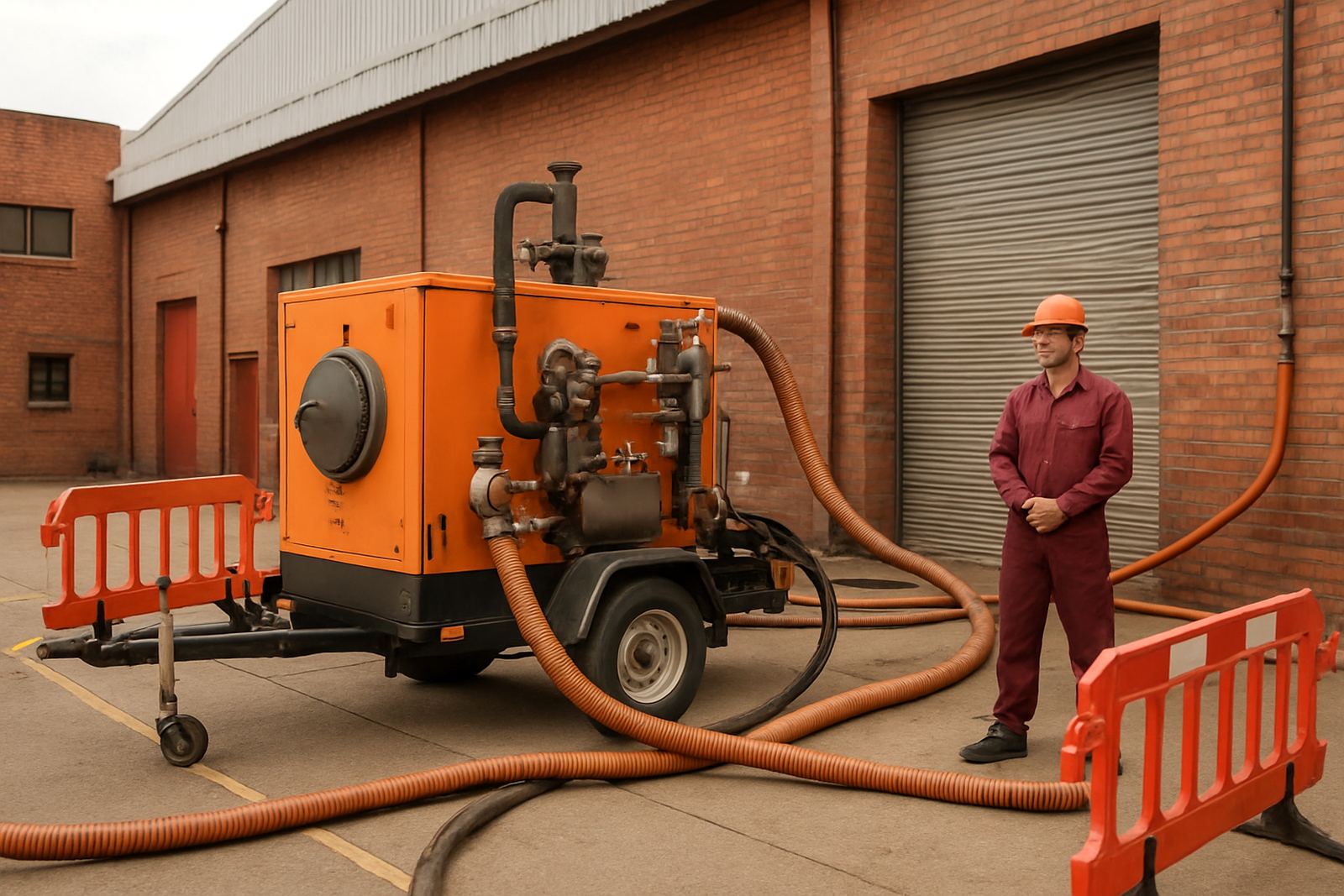
We supplied a packaged temporary boiler plant sized to suit the duty on site, together with the required ancillaries for a controlled hire period. The hire solution included the boiler unit, feedwater support, pipework connections, valves, flexible links where needed and the control gear to let the client’s maintenance team monitor operation easily. Our team handled delivery from the Jet Park base, offloading, positioning and mechanical connection, then worked with the plant staff on a safe start-up sequence.
Before commissioning, we checked the existing water side conditions and made sure the feed system was prepared for steady operation. That included flushing where required, confirming isolation points, checking return lines and setting the boiler up to run within the client’s operating range. Once live, we carried out combustion tuning so the unit burned efficiently, held stable pressure and used fuel properly. On temporary work, a boiler that is overshooting or short cycling can create avoidable cost very quickly, so tuning is part of the job not an extra.
- Packaged boiler hire unit supplied with controls and ancillaries
- Mechanical hook-up completed on site by Ai-TEC technicians
- Combustion tuning done after commissioning
- Water side checks and start-up support included
How the two-week installation and support plan ran
Week one was used for delivery, placement, hook-up and commissioning. Our service coordinator scheduled the transport to fit the site’s access times, and our boiler technician stayed involved through first firing to make sure the system settled properly. The client’s shutdown team then moved onto the permanent repairs while the hire boiler carried the load. During this period we checked the plant daily, looked at water treatment readings, and kept an eye on pressure stability and burner performance.
In week two, the permanent boiler work took longer than first planned because extra wear was found in a section of the plant. That is common in industrial equipment, especially where the site has been running hard and the water quality has not always been perfect. The hire unit stayed in service without interruption, which gave the client room to finish the repair properly rather than rushing the return to production. We also kept emergency callout cover in place after hours, just in case the client needed a fast response during start-up or shutdown changes.
The handover back to the permanent boiler was managed in stages so there was no sudden drop in heat supply. Once the main plant had been checked, cleaned and tested, we isolated the temporary system, removed the hire package and left the boiler house in a clean, workable state. That final part matters more than people think. On a busy site, the best temporary job is the one that disappears without creating another problem.
Results for the Kempton Park plant
The main result was that production carried on through the shutdown window without the client having to stop the line or move work to another site. The temporary boiler covered the process demand, helped the maintenance team complete the repair properly, and gave operations staff a stable supply during a period that could have caused lost hours and missed dispatches. There were no unplanned production stoppages linked to the temporary system.
The client also benefited from lower stress on their own team. Instead of juggling boiler faults, water issues and repair coordination at the same time, they had one contact point and a system that was actively supported. Fuel use stayed within the expected range after tuning, and the water treatment checks helped reduce scale risk while the hire boiler was on load. For a short-term hire, that level of control is what keeps the arrangement cost-effective.
- Production maintained throughout the shutdown window
- No unplanned stoppages caused by the temporary boiler
- Permanent repairs completed without pressure to rush
- Fuel use kept sensible after combustion tuning
What we would do again on a similar project
We would approach a similar Kempton Park hire the same way: survey the site early, match the boiler size to the real duty, and plan the hook-up around plant access and shift times. That early planning avoids unnecessary crane time, rushed pipework and last-minute permit changes. We would also keep a water treatment plan in place from day one, because short-term hire systems can still foul quickly if the feed water is poor or the site is recovering from maintenance work.
If the client expects load-shedding or unstable supply during the hire period, we would again allow for restart management and control protection so the boiler can pick up without drama after an outage. For sites in Kempton Park, Boksburg, Germiston and the rest of Gauteng, that is often the difference between a serviceable hire and a real production tool. Ai-TEC keeps the process practical: correct sizing, proper commissioning and technicians who stay involved until the permanent plant is ready to take over.
Key facts
| Project location | Kempton Park, Gauteng |
|---|---|
| Client type | Light industrial manufacturing plant |
| Hire period | 2 weeks |
| Temporary duty | Steam and hot water support during shutdown |
| Services used | Boiler hire, installation, combustion tuning, water treatment support |
| Support coverage | Commissioning, daily checks and emergency callout cover |