Randburg plant room with a tired heater and growing risk
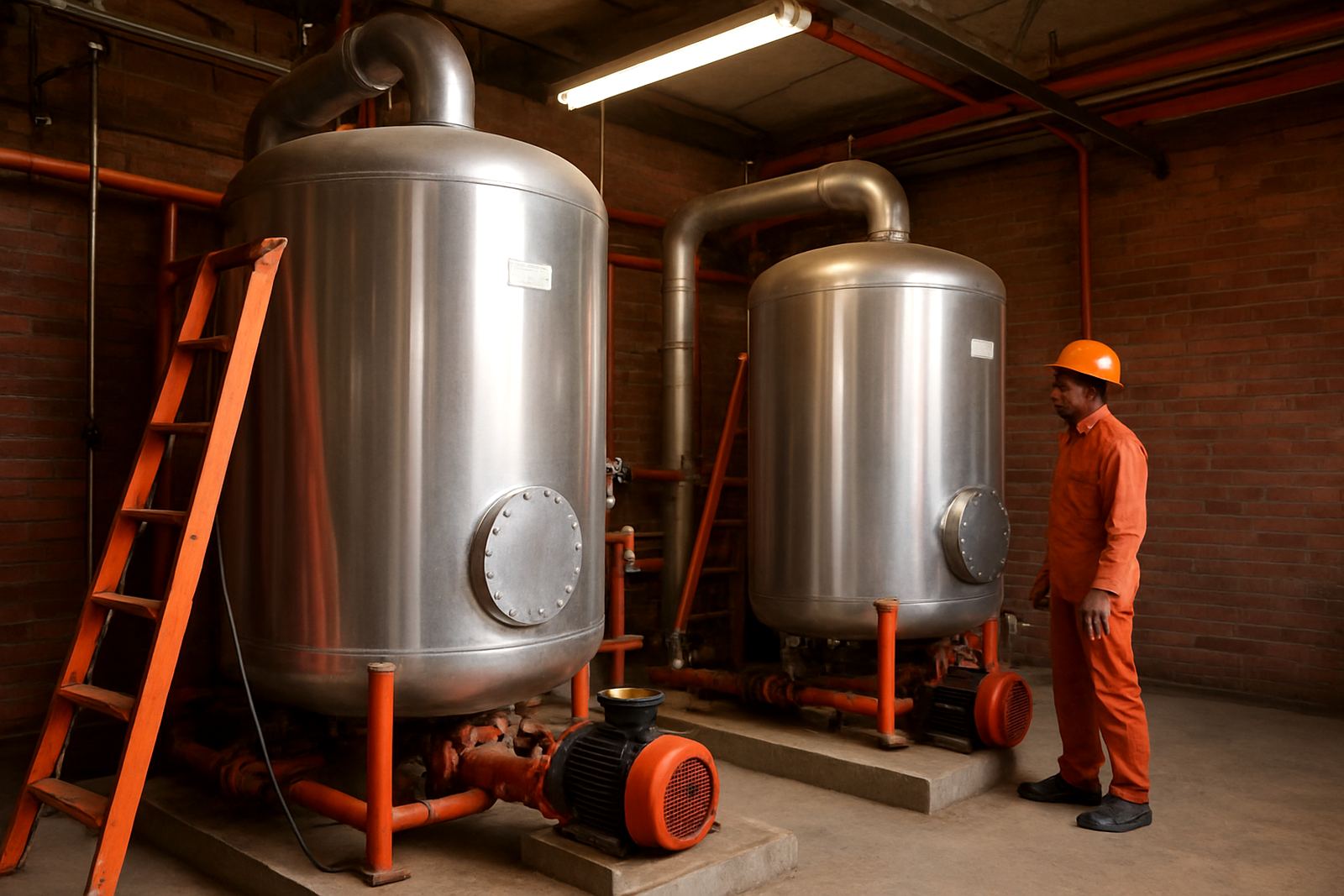
The client was a mixed-use commercial property in Randburg with a hot water demand that had outgrown the original inline heater. The unit was still running, but it had become difficult to hold temperature, slow to recover after peak draw-off, and expensive to keep in service. The plant team also had repeated burner faults and signs of scaling inside the heat exchanger, which is common where water treatment has slipped and hard water builds up over time.
The brief was plain: replace the heater with something safer, easier to control and practical for a busy building. The site needed hot water for tenant use, washdown points and back-of-house operations, and it could not afford long outages. The plant room was tight, with limited access for removal and no room for major civil work. We also had to plan around load-shedding, because any changeover window had to be short and dependable.
What the client needed and what stood in the way
The old setup had three main issues. First, the controls were dated and gave very little visibility on operating temperature and burner cycles. Second, maintenance access was awkward, so small faults took too long to inspect. Third, the unit had no proper spare capacity for future growth, which meant the building was always running close to the edge during busy periods.
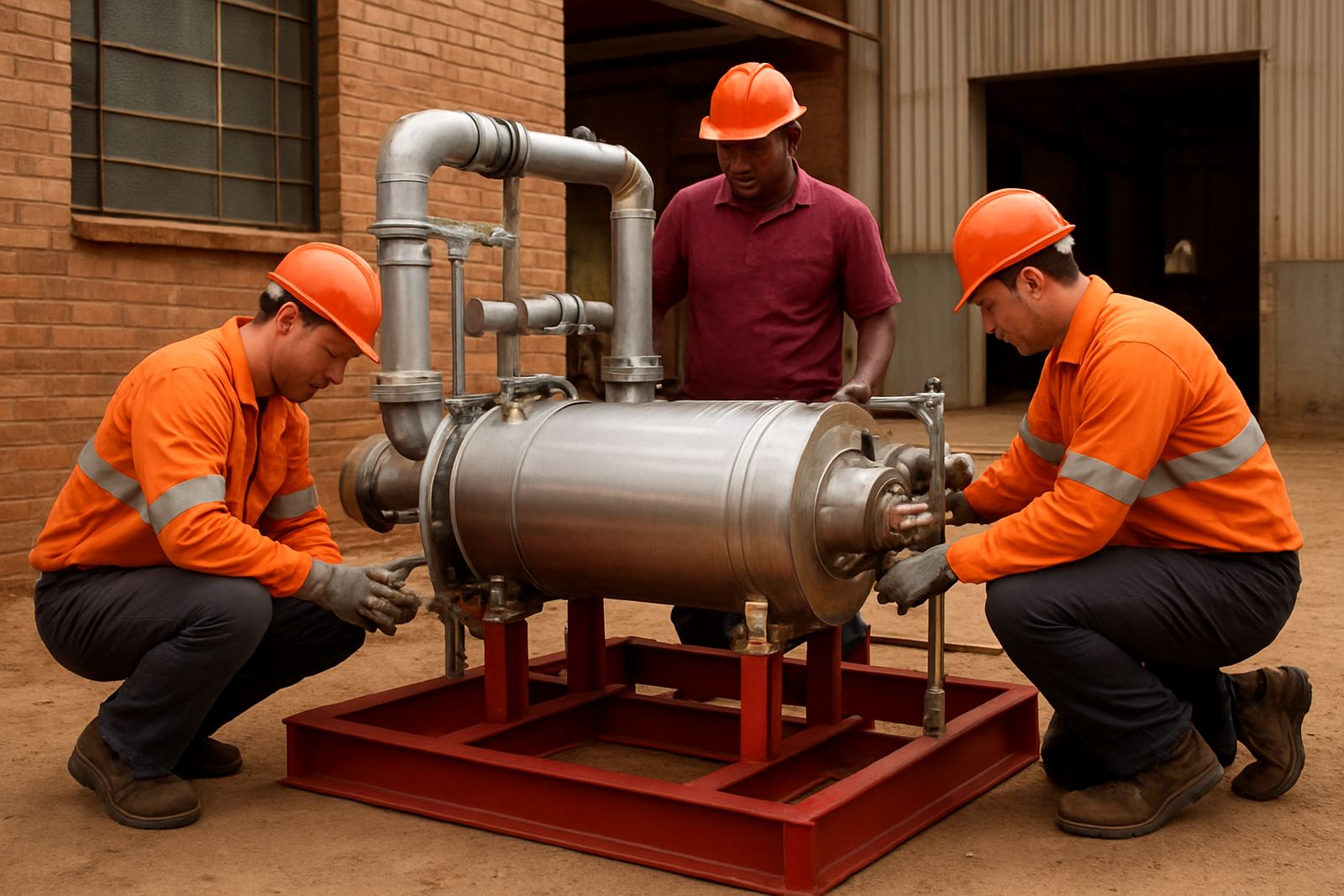
There were also practical constraints that matter on local sites. The plant room sat in a part of the building that had restricted delivery access, so the new equipment had to be broken down for transport and assembled on site. Noise also needed to be kept down because the room bordered occupied areas. We measured the footprint carefully, checked flue routing and confirmed electrical isolation points before we touched anything. That made the changeover smoother, and it reduced the chance of a delay once the old heater came out.
- Live commercial site with limited shutdown time
- Restricted access for removal and installation
- Need for better temperature control and fault visibility
- Existing scaling and burner wear from age and water quality
Packaged heater supplied and fitted for safer operation
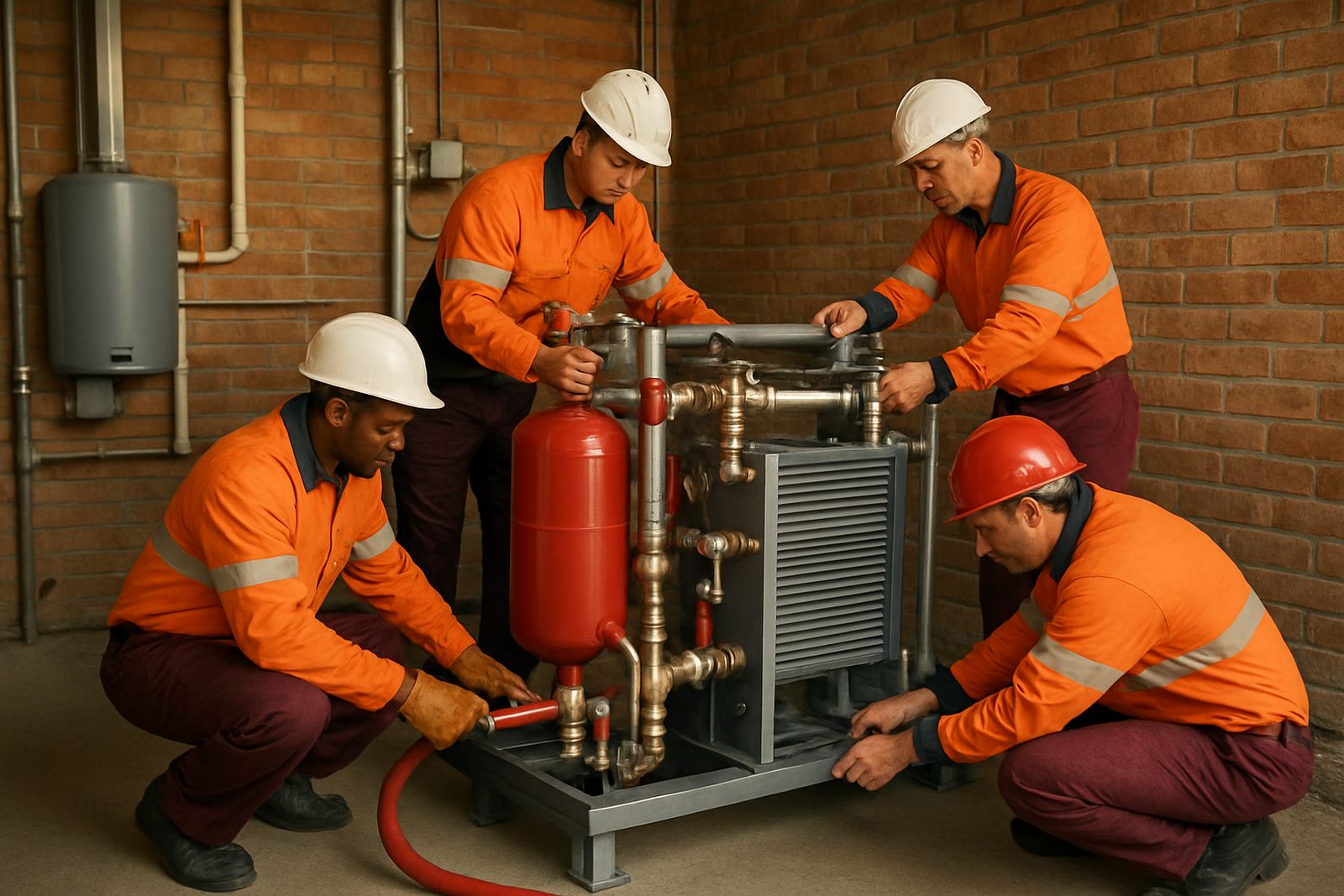
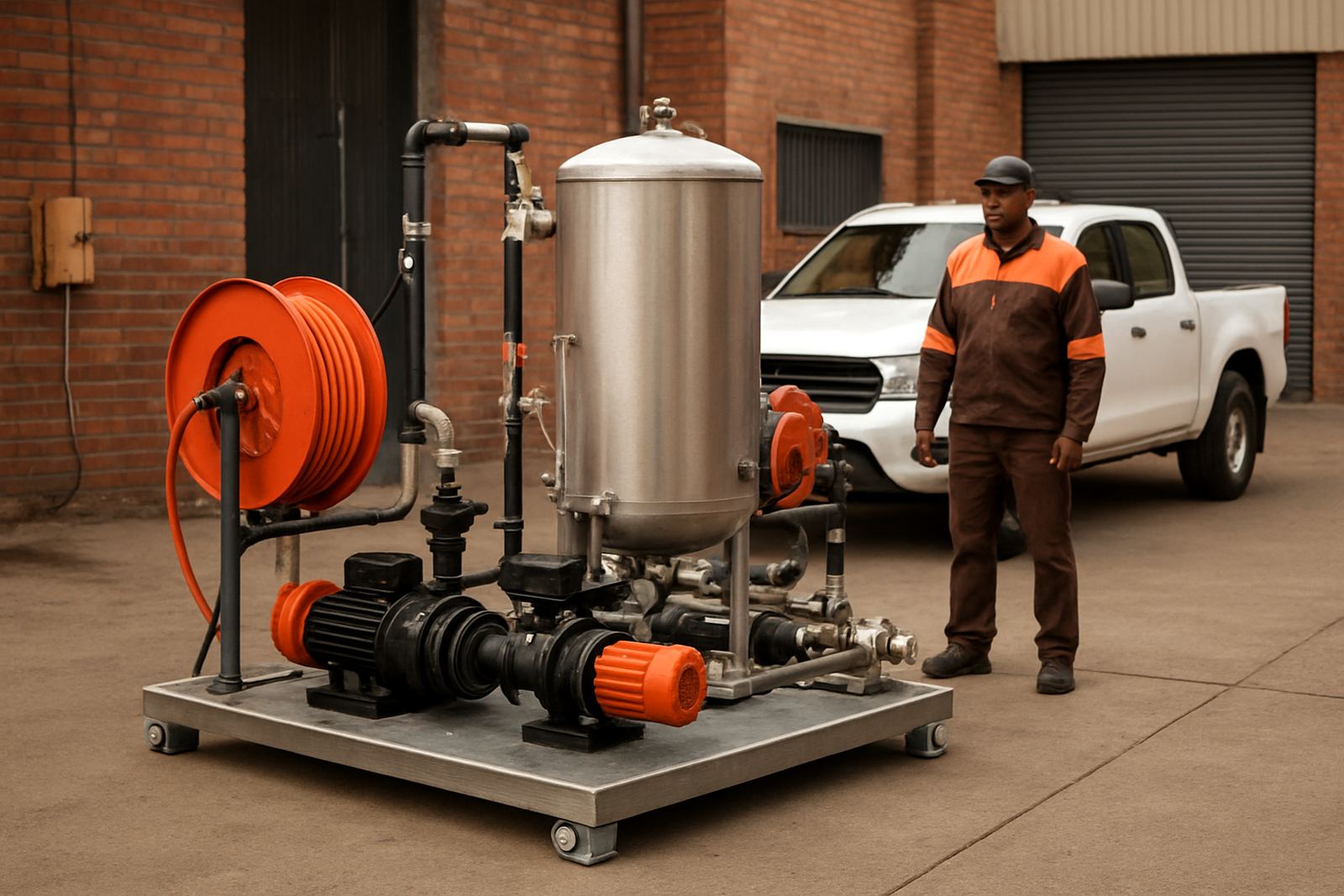
We supplied a packaged inline heating unit sized to match the site demand and the available plant room space. The unit was arranged with accessible inspection points, improved controls and serviceable components so that future maintenance would be quicker. We also included a new circulation arrangement, isolation valves, proper temperature sensing and a control panel that gave the client clearer day-to-day operation.
The installation was completed by our Gauteng service team with project support from our engineering staff in Jet Park, Boksburg. The old heater was isolated, drained and removed, and the new package was set, connected and commissioned in stages. We checked flow direction, pump performance, burner setup and safety controls before handing it back. The flue and condensate arrangement were adjusted to suit the existing plant room conditions, and all joints were tested for leaks under working pressure. It was not a cosmetic job, it was a proper plant upgrade.
- New packaged inline heater with improved control logic
- Temperature sensing and safety cut-outs reconfigured for the site
- Isolation valves and service access improved
- Commissioning included flow, burner and safety testing
Timeline, shutdown planning and handover
The project ran over three weeks from first site measure to final handover. Week one covered inspection, sizing checks and shutdown planning. Week two covered fabrication prep, assembly and delivery scheduling. Week three was the removal, installation, commissioning and training handover. We kept the shutdown window short so the client could resume normal operation as quickly as possible.
Because the building stayed partially occupied, we worked with a staged isolation plan. Where possible, we retained hot water service to unaffected areas while the main line was changed over. That required close coordination with the client’s facilities team, plus a clear call plan for after-hours work. Zanele from our service office kept the schedule moving, and Musa handled the final burner checks on site. The result was a calm handover rather than a scramble at the end of the day.
- Week 1: site survey, measurements and shutdown plan
- Week 2: equipment prep and fabrication checks
- Week 3: removal, fitment, commissioning and handover
- After-hours work used where practical to reduce disruption
Results after the replacement
Once the new heater was in service, the site saw steadier hot water temperatures and faster recovery during peak use. The controls were easier for the client to understand, which meant fewer callouts for minor adjustments. The maintenance team also gained better access to the unit, so routine servicing became simpler and less time consuming.
Energy use improved because the old heater was no longer cycling inefficiently around poor control settings and internal scale build-up. In simple terms, the plant stopped working harder than it needed to. The client also liked having a safer arrangement with clearer isolation and a more sensible maintenance layout. That matters in busy Randburg properties where a fault can affect tenants quickly and create pressure on the facilities team.
We also gave the client practical notes on water treatment, service intervals and what to watch for during future inspections. In Gauteng, where water quality can vary from one site to the next, that kind of follow-up helps extend equipment life and cuts down on repeat problems.
What we would repeat on the next heater change
If we were doing the same job again, we would still start with a full plant room check before any equipment was ordered. That saved time on this project and it avoids expensive changes later. We would also keep the shutdown plan short and keep the client’s facilities team involved from day one, because practical input from the people who run the building is worth a lot on a live site.
For heater replacement work in Randburg, Sandton, Midrand or Pretoria, the main lesson is the same every time: measure properly, check the access route, confirm the load-shedding backup plan and make sure the control gear suits the way the building is actually used. A good installation should be easy to live with, easy to service and hard to catch you out on a Monday morning.
- Measure the plant room and access route before ordering
- Keep the shutdown window realistic and short
- Match controls to actual hot water demand
- Plan for maintenance access, not only first fitment
Key facts
| Project location | Randburg, Gauteng |
|---|---|
| Client type | Commercial property with live tenant occupancy |
| Scope | Replace ageing inline heater with packaged unit |
| Timeline | 3 weeks from survey to handover |
| Key upgrade | Improved temperature control and safer isolation |
| Service coverage | Gauteng base with national support teams |