Campus hot water faults in Pretoria
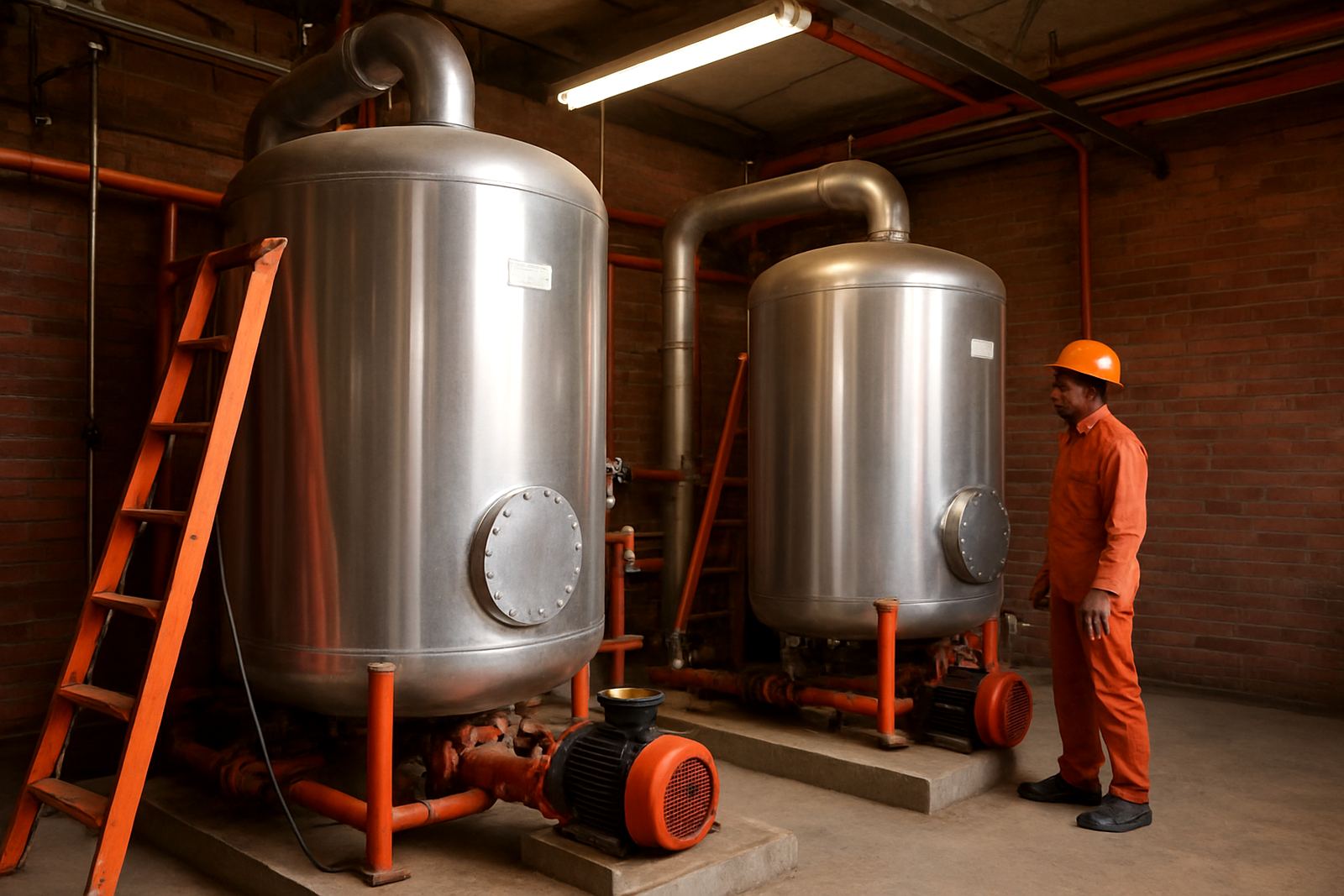
The client was a tertiary campus in Pretoria with a mixed-use block serving student ablutions, staff wash areas and light catering points. The twin calorifiers had become unreliable, with uneven temperatures, long recovery times and frequent complaints during morning peaks. Some wings had hot water while other points ran lukewarm, and the maintenance team was starting to rely on temporary workarounds that were costing time and water.
Our first task was to work out whether the problem sat with the vessels, the circulation arrangement, or the controls. On inspection we found scale build-up on the water side, tired thermostatic components, a circulation imbalance between the two units and poor insulation on exposed sections. The plant room was also tight, with limited lift access and a live campus around it, so every step had to be planned for safe isolation and quick re-commissioning.
Brief, constraints and access planning
The brief was simple on paper: restore reliable domestic hot water without shutting the entire block for days. In practice that meant working around class changes, saving the client from bottled water arrangements and keeping risk low in a plant room that could not be left open overnight. We also had to account for Pretoria water quality, which can leave scale in heat exchange surfaces faster than many teams expect, especially where treatment has been inconsistent.
- Keep at least partial hot water service available during the works.
- Limit disruption to peak use periods between 06:00 and 09:00.
- Replace worn parts with readily serviceable items, not special order bits that hold up future maintenance.
- Allow for safe access, isolation and lock-out in a busy campus setting.
The client also asked that we document the condition of both calorifiers so the facilities team could budget properly for the next service cycle. That shaped the job from the start, because once the plant was opened up we wanted a clear record, not just a quick fix and hope for the best.
What we supplied and restored
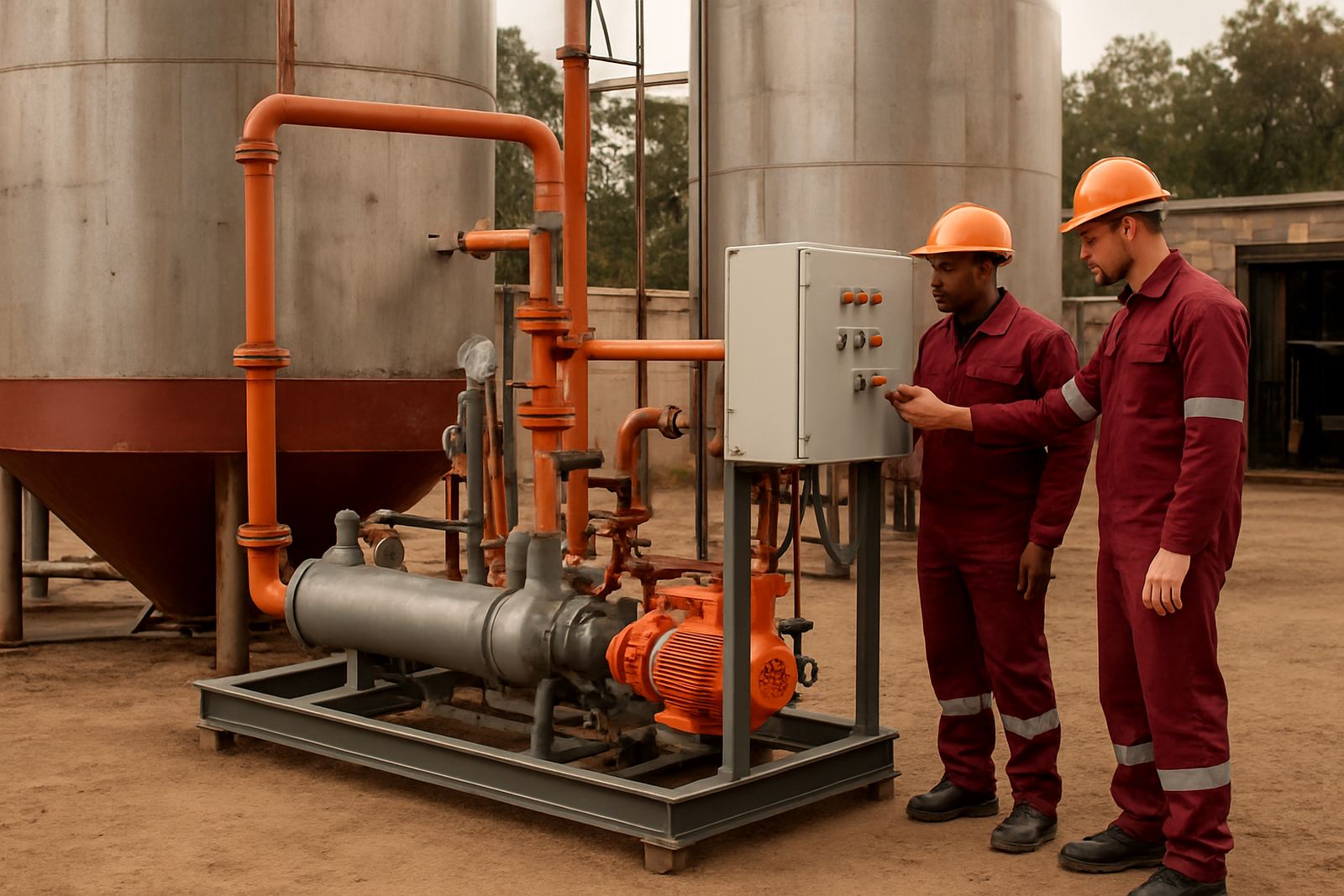
We supplied the labour, replacement components and site supervision needed to bring both calorifiers back into line. The work included opening the vessels, descaling critical surfaces, replacing worn gaskets and valves, checking the immersion and control hardware where fitted, and reinstating the circulation arrangement so the two units shared load properly. We also cleaned and reworked the adjoining pipe sections, then insulated exposed runs that had been shedding heat into the plant room.
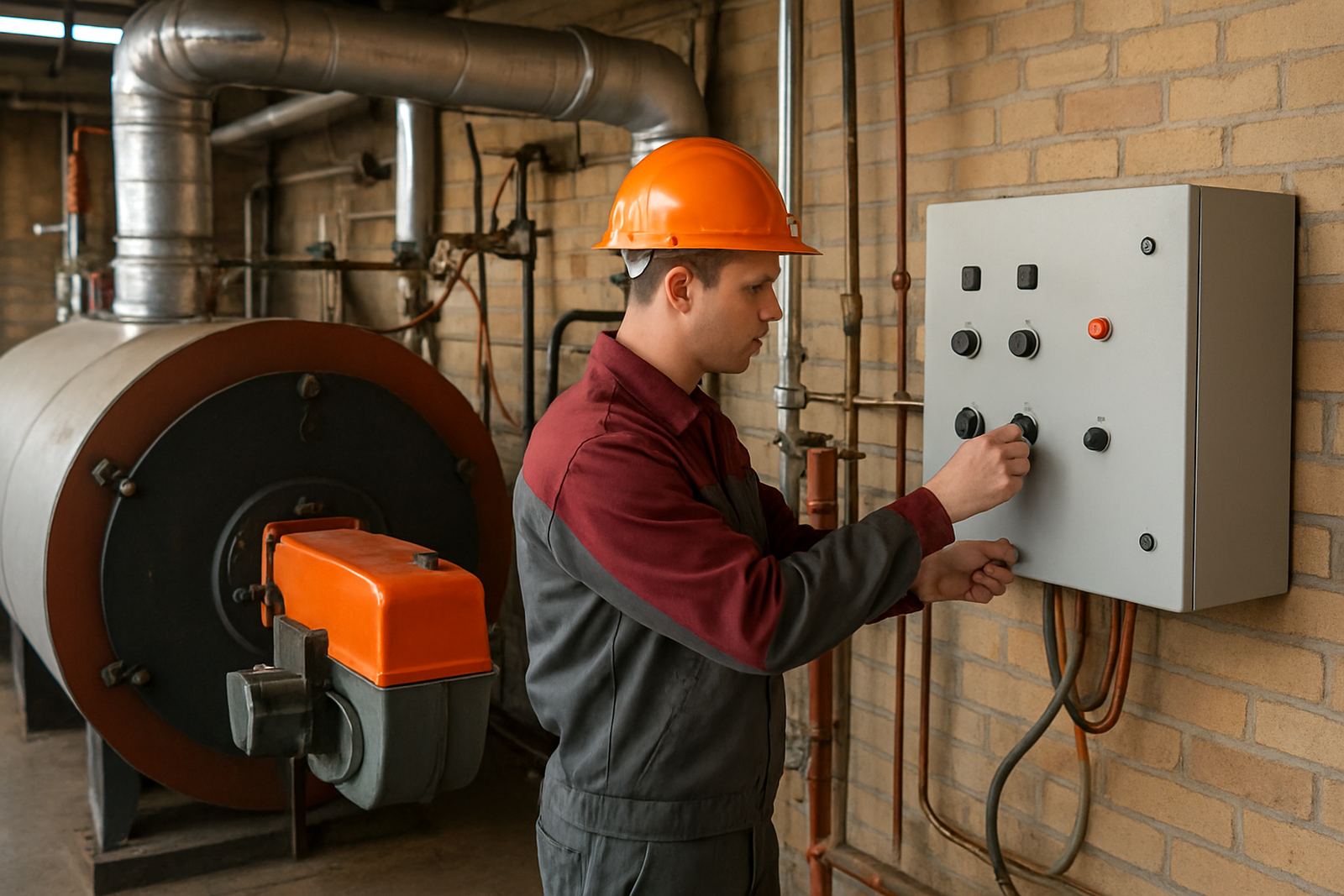
On the controls side, we tested thermostatic settings, set the operating range to suit actual demand and checked the temperature drop across the system. A few sensors were reading off target, so we corrected those and rebalanced the plant to stop one calorifier doing all the work while the other sat half idle. The campus team was especially concerned about consistent shower temperatures in the early morning, and that was the main point we held our work against.
- Twin calorifiers recommissioned and load balanced.
- Scale removed from heat transfer surfaces.
- Control settings reset for steady outlet temperatures.
- Pipe insulation repaired on exposed sections.
- Plant room cleaned down and labelled for easier future servicing.
Timeline and method over two weeks
The project ran over two weeks, with the first week used for inspection, isolation planning and the heavier mechanical work, and the second week used for recommissioning, monitoring and fine-tuning. We kept the client updated each day so their facilities staff knew which areas would have full service and which points would be on temporary rotation. That made a big difference because a campus does not stop for maintenance, it just keeps moving around it.
Once the units were opened, our team worked through one calorifier at a time so the block never lost all hot water at once. After the first unit was cleaned and tested, it was brought back online while the second unit was completed. This staggered method reduced downtime and gave us a live comparison between the two units before handover. There were a few unexpected delays from old flanges that needed careful attention, but nothing that changed the overall programme.
Results at the taps and in the plant room
By the end of the job, the block had stable domestic hot water again, with faster recovery and far fewer complaints from users. Temperature variation at outlet points was reduced, circulation improved and the maintenance team had a cleaner, better labelled plant to work from. The client also cut back on wasted run time, because the system no longer needed to be cycled and nudged through the day to keep showers and wash basins usable.
The bigger gain was predictability. When a campus has regular demand spikes, even a small fault can become a daily nuisance. After recommissioning, the hot water supply held steady through the morning rush and the plant responded better to afternoon demand. The facilities manager told us the block went from being a constant worry to something they could plan around again, which is really what these jobs should deliver.
- Stable hot water restored across the block.
- Recovery time improved after cleaning and rebalancing.
- Heat loss reduced with repaired insulation.
- Campus complaints about lukewarm water dropped sharply.
What we would repeat on a similar site
On a site like this, we would repeat the same staged approach and bring in early condition reporting before any major shutdown. With campus buildings, the hidden cost is often the time lost when teams wait too long to intervene. A short inspection window can save a much longer outage later, especially where water quality, load-shedding and ageing controls all play a part.
We would also keep the emphasis on serviceable parts and practical access. In a busy public building, the plant room should not become a puzzle for the next technician. Clear labelling, simple set points and good insulation are small things that pay back every month. If the system is left easier to read, it is easier to maintain, and that keeps costs under control.
For Pretoria campuses and similar sites across Gauteng, the aim is not just to get hot water back for today. It is to leave behind a system that behaves properly in winter, copes with morning peaks and can be maintained without drama. That is the standard we worked to here, and it is the standard we bring to future calorifier projects as well.
Key facts
| Project location | Pretoria campus block, Gauteng |
|---|---|
| System type | Twin domestic hot water calorifiers |
| Scope | Restoration, recommissioning, controls checks and pipe insulation repairs |
| Timeline | 2 weeks |
| Service outcome | Stable hot water supply restored across the block |
| Key constraints | Live campus access, peak morning demand and limited plant room space |