Batch Line Heating for a Brakpan Plant
The client was a light industrial manufacturer in Brakpan running a batch process that depended on repeatable heat at transfer and hold points. Their existing arrangement struggled to keep temperature stable when product volumes changed, and the operators were spending too much time chasing setpoints instead of keeping the line moving.
We were asked to provide a compact heater skid that could circulate product safely, bring it up to temperature quickly, and hold it there without creating hot spots. The plant needed a practical solution that would fit inside the existing service bay, work with local power availability, and keep maintenance simple for the in-house team.
What the Client Needed to Fix
The brief was clear: improve temperature control, reduce heat-up time, and cut the amount of manual adjustment during the shift. The process also had to stay within the plant’s municipal and internal safety rules, including isolation points, access around the vessel, and proper documentation for pressure and electrical sign-off.
- Stable circulation heating for a batch production line
- Compact skid footprint for a tight plant room
- Simple controls for shift operators
- Reliable restart after load-shedding and utility interruptions
- Materials suited to warm washdown areas and humid conditions
There was also a practical concern around energy use. The plant wanted better heat recovery and less waste from long preheat cycles, because every extra minute on the heater pushed up operating cost. We designed the skid to get the product into range faster, then hold temperature with controlled cycling rather than constant full demand.
Skid Design, Fabrication and Controls
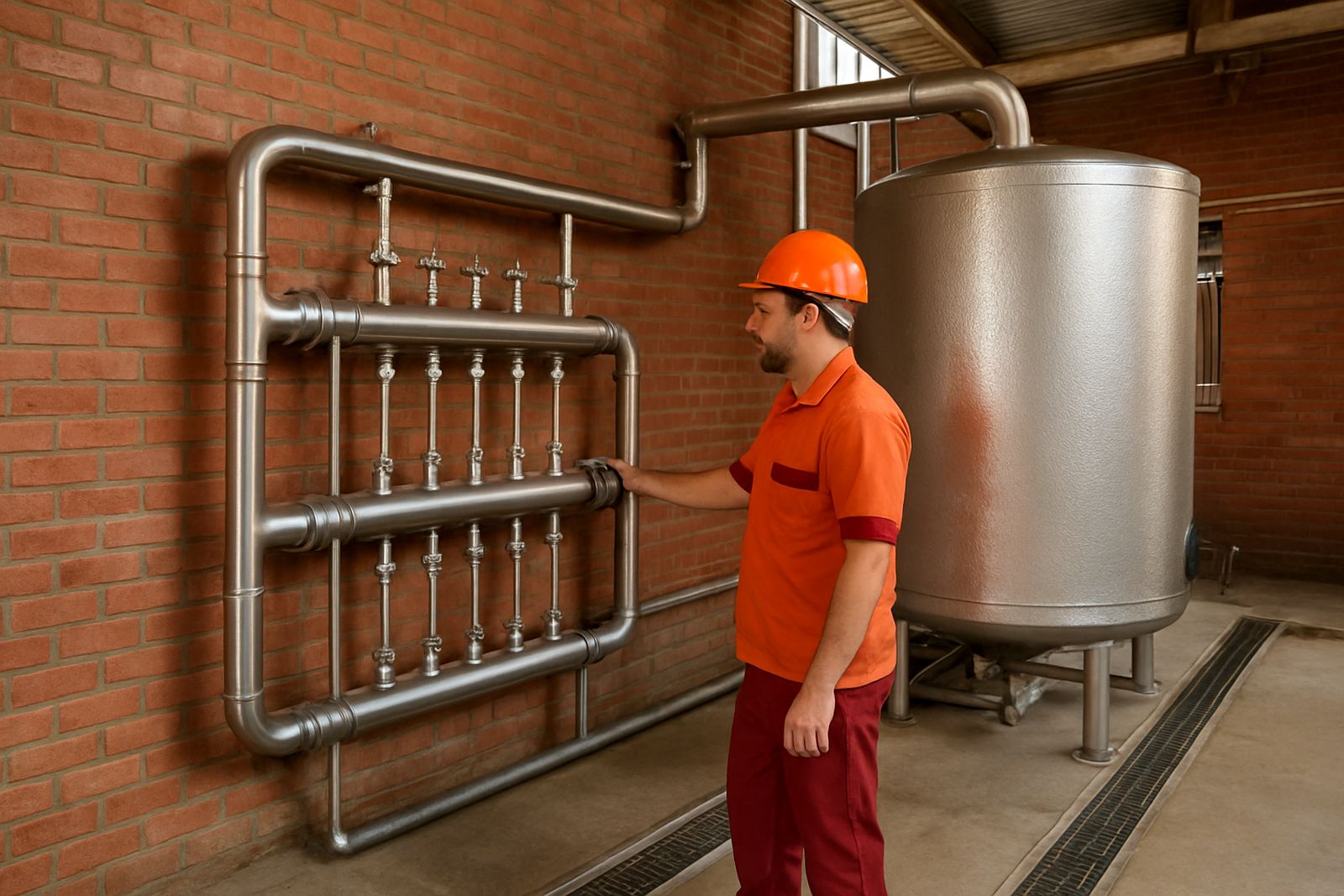
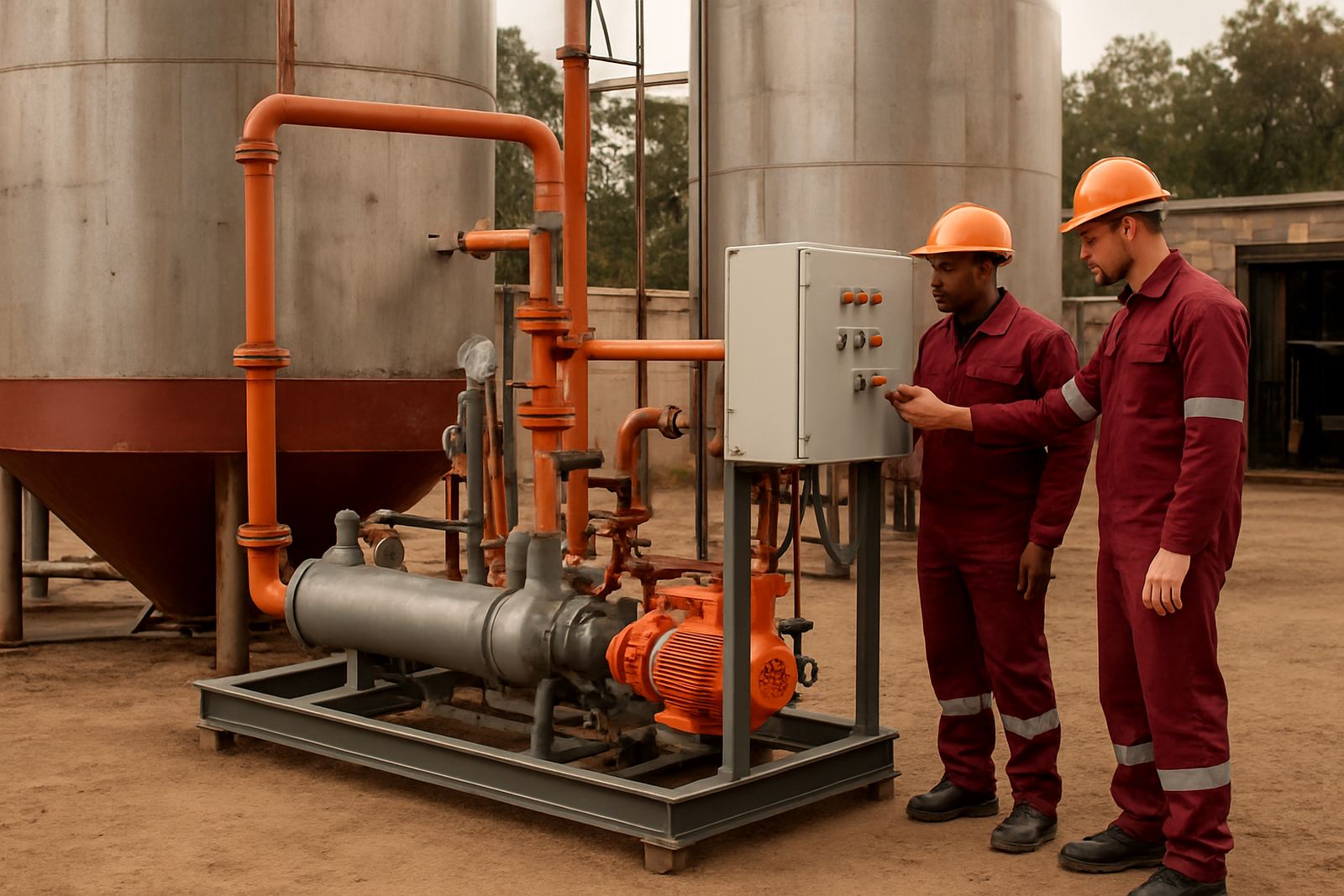
Ai-TEC handled the supply, fabrication and commissioning as one package. Our team designed a circulation heater skid with a welded steel base frame, process pump set, control panel, heating circuit, valves, safety devices and local isolation. The arrangement was built for service access from the front and side, so the operator could inspect strainers, check the pump and reach the instruments without dismantling half the plant.
The heater section was sized for the process duty after we reviewed the production rate, temperature rise required and available electrical capacity. We included temperature sensors on the inlet and outlet, high limit protection, and a control sequence that prevents dry firing or deadheading. The panel was labelled for quick fault finding, which matters when a line is down and everybody wants answers at once.
- Skid-mounted circulation heater package
- Integrated pump set with isolation valves and strainers
- Control panel with temperature display and safety interlocks
- Instrument points for commissioning and future checks
- Fabricated for indoor industrial service in Gauteng conditions
Site Constraints and Installation Conditions
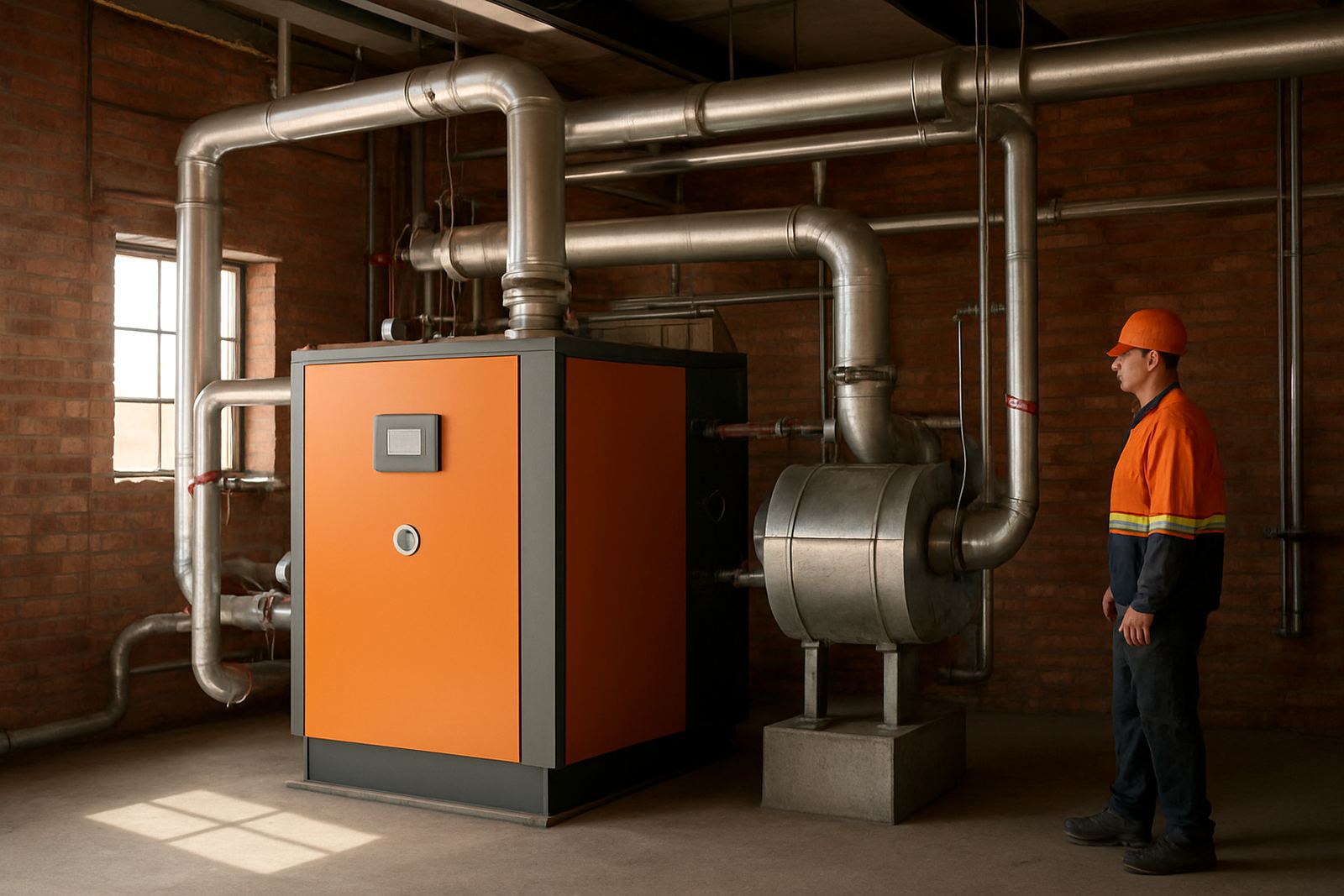
Space was one of the biggest constraints. The plant room had a narrow access route and limited lifting room, so the skid had to arrive in one piece and go into position with minimal disruption. We planned the measurements carefully, checking door widths, floor loading and pipe entry points before fabrication started. That saved time on site and avoided expensive changes later.
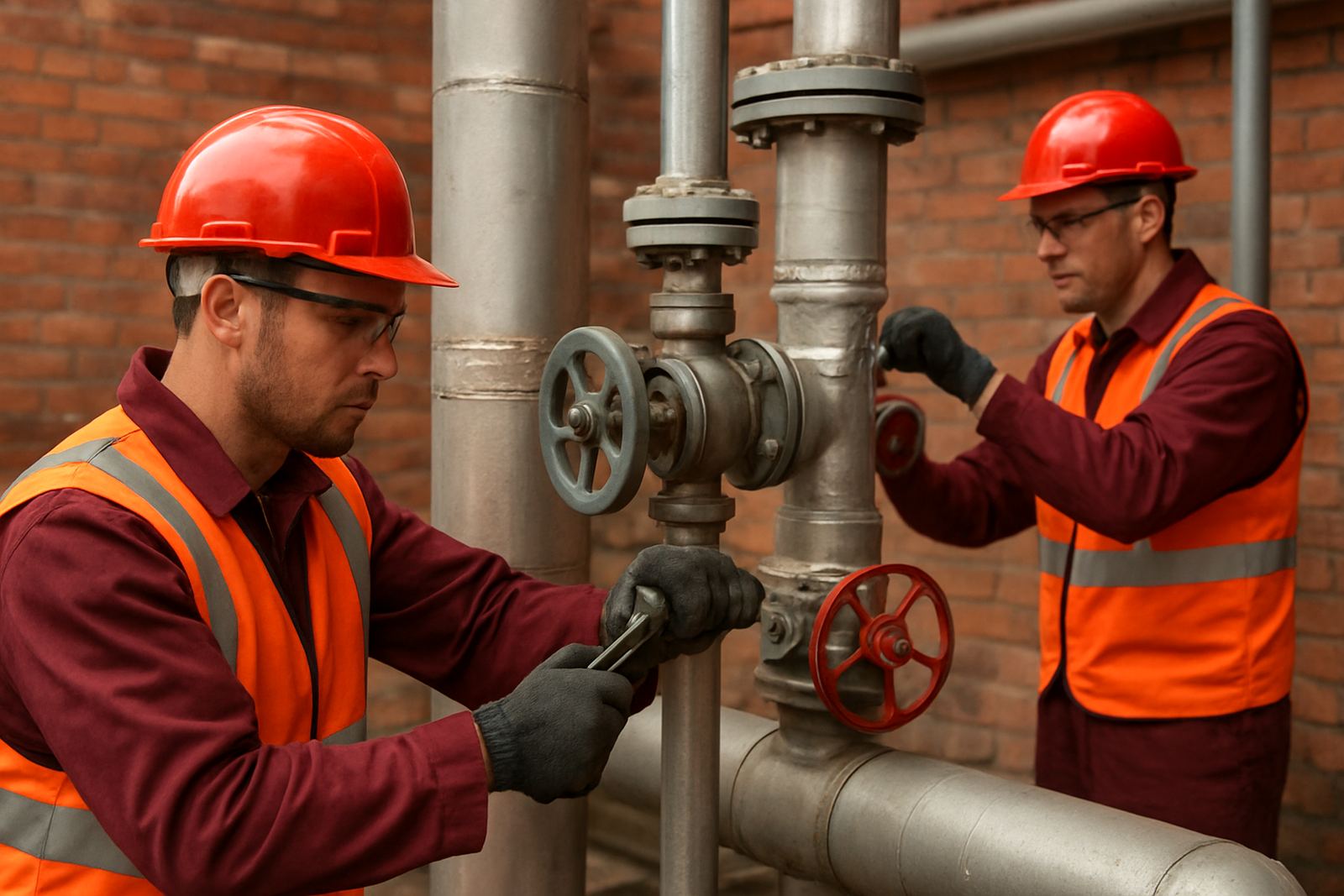
The customer also needed the heater to sit neatly around existing pipework without forcing a full rework of the line. We coordinated the tie-ins so the shutdown window stayed short, and we scheduled the installation around production demand. In Brakpan, like many industrial areas around Ekurhuleni, that meant working around noise limits, shift handovers and the usual pressure to keep the line moving.
Because the site had seen voltage dips during load-shedding, we added restart logic that brings the system back in a controlled way after power returns. That keeps the heater from tripping repeatedly and gives the operators a predictable sequence instead of a sudden surge. Small detail, but it prevents a lot of frustration during a bad week.
Timeline, Commissioning and Handover
The full job ran over 6 weeks from site survey to handover. Week 1 covered the assessment, measurements and duty review. Weeks 2 and 3 were fabrication and panel assembly in our Jet Park base. Week 4 was dry-fit verification and controls testing. Week 5 covered delivery, installation and pipe tie-ins. Week 6 was commissioning, operator familiarisation and final sign-off.
Commissioning included temperature calibration, circulation checks, safety trips, and a live run on product. We tested the response at different batch sizes so the client could see how the system behaved in real conditions. The team received a simple operating sequence, maintenance notes and a fault checklist so they could deal with routine issues without waiting on outside support for every small thing.
Results on the Production Floor
Once the skid was in service, the batch line held temperature far more consistently. Heat-up time came down, product variation reduced, and the operators had less need to trim the setpoint during a run. The customer reported fewer stoppages during changeovers, especially after power interruptions, because the system came back online in a more controlled manner.
The maintenance team also gained easier access to the pump, instruments and isolation valves, which made checks quicker. That matters in a plant where preventative maintenance often gets squeezed between orders. By building the system with service in mind, we reduced the chance of the kind of small fault that turns into a full shift delay.
- More stable process temperature across batch cycles
- Shorter warm-up period before production starts
- Lower operator intervention during the shift
- Cleaner maintenance access for routine inspection
What We Would Repeat on the Next Skid
If we were doing the same type of heater skid again, we would keep the same approach: measure first, size properly, and build for the site rather than forcing the site to fit the equipment. That means paying attention to access, available power, pipe routing and the realities of local production schedules from the beginning.
We would also keep the same control strategy with clear alarms and simple operation. A heating system in a busy plant should not require a specialist every time the batch changes. With the right design, the line stays predictable, the energy use stays under control, and the maintenance burden stays manageable.
Ai-TEC continues to support industrial heating plant from our Jet Park, Boksburg base, with service teams available across Gauteng and nationally where needed. For batch production sites in Brakpan and the wider East Rand, that local response is often the difference between a short interruption and a lost day.
Key facts
| Project type | Circulation heater skid for batch production line |
|---|---|
| Location | Brakpan, Gauteng |
| Timeline | 6 weeks from survey to handover |
| Main equipment | Skid frame, circulation pump set, heater section, control panel, valves and safety devices |
| Control features | Temperature sensors, high limit protection, restart logic after power loss |
| Service support | Jet Park base with Gauteng and national response |