Why the control gear matters more than the burner alone
An inline heater can look simple from the outside, but the control gear is what keeps water, oil or process fluid within a safe band. If the temperature probe is slow, the flow switch is sticky, or the limit thermostat has drifted, the heater starts cycling badly and operators blame the burner when the real issue is control drift.
In Gauteng plants we often see this after a few hot summers, dusty months and a couple of load-shedding resets. The heater may still fire, but it does not know when to stop cleanly. That is when energy use climbs and nuisance trips start.
The sensors that do the day to day work
Sensors are the eyes and ears of an inline heater. They tell the controller what is happening inside the line, and if one of them is out by even a small margin the whole sequence goes off. A good check starts with physical condition, then wiring, then actual readings against a trusted instrument.
- Temperature probe for process temperature and control band
- High limit sensor for overheat protection
- Flow switch or flow proving device
- Pressure switch where the heater is tied into a pressurised line
- Water level or low-water protection on systems with storage or feed tanks
On sites with hard water, scale can insulate the probe and delay the reading. On coastal jobs the issue is often moisture in junction boxes and corrosion on terminals, especially where plant rooms breathe in humid air at night.
Safeties that stop a small fault becoming a shutdown
Safeties should not be treated like nuisance parts. They are there to shut the heater down before a faulty condition damages tubes, elements, pumps or pipework. If staff keep bypassing them to get production moving, the heater becomes a risk instead of an asset.
- High temperature cut-out
- Low flow trip
- Flame failure protection where combustion is involved
- Overpressure relief and related interlocks
- Emergency stop that is easy to reach and clearly marked
During an inspection we check whether the safety chain actually breaks the circuit as intended. A switch that looks fine but has been bypassed with a loose link is not a safety, it is a problem waiting for a callout at 11 pm.
What stable heater control looks like on site
Stable control means the heater reaches setpoint without overshooting, holds within a sensible band, and responds properly when demand changes. You should not see repeated rapid cycling, long recoveries after every draw-off, or unexplained trips when the process load increases.
A sandblasting workshop in Kempton Park had an inline heater feeding wash water for cleaning parts. The operator kept turning the setpoint up because the water arrived cooler after shift changes. The real issue was a lazy flow switch and a sensor pocket packed with scale. Once those were cleaned and the control band reset, the heater held temperature through the full morning run and the fuel bill settled down.
Simple checks that help between service visits
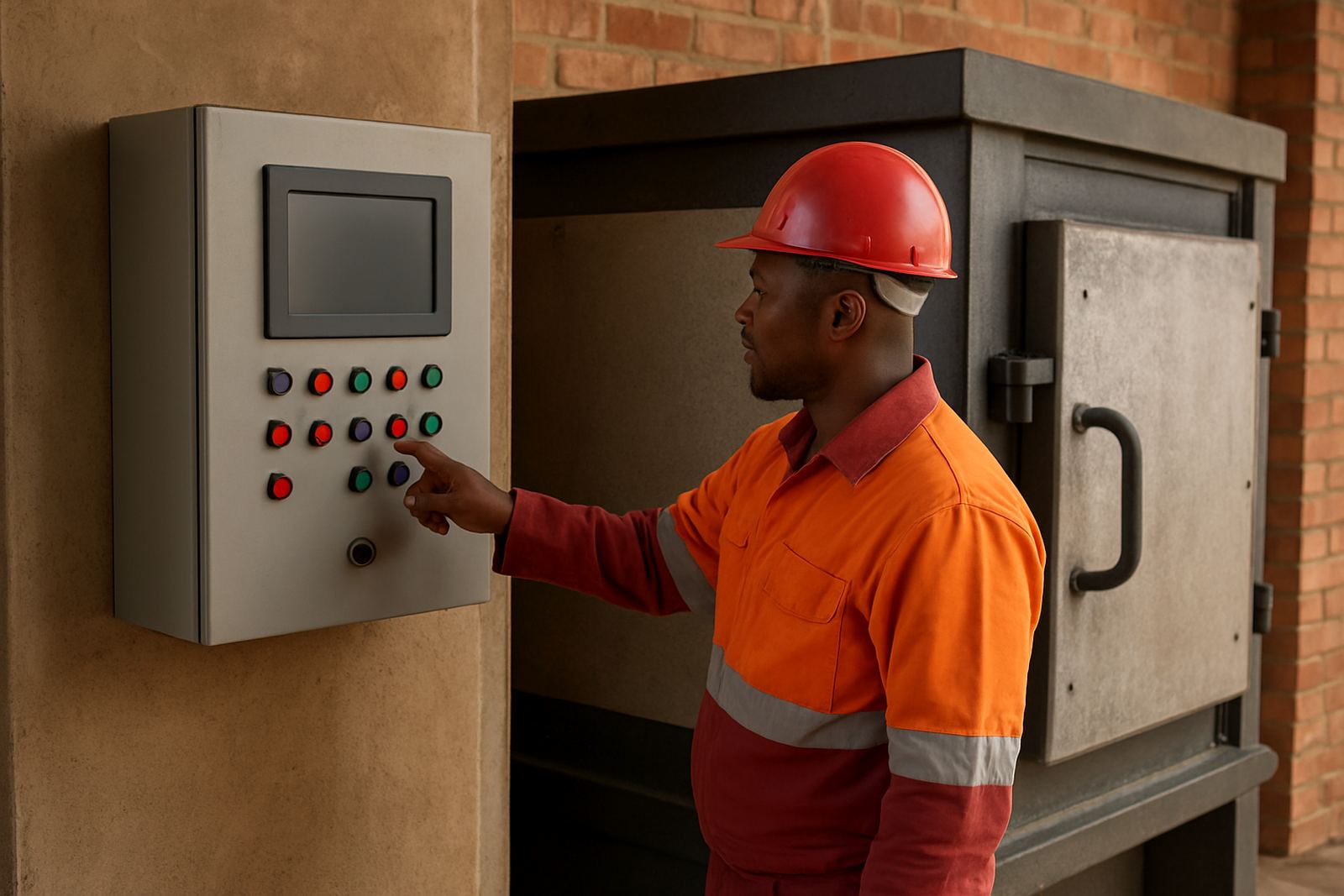
Operators do not need to open panels or start testing live circuits, but there are a few checks that help a lot. Keep the area dry, watch for vibration, and log any unusual trips with the time and the exact alarm text. That gives the service team something real to work with instead of a vague complaint that the heater is acting up.
- Check for slow warm-up or temperature drift
- Look for leaks at flanges, unions and sensor pockets
- Keep strainers clean so flow remains steady
- Confirm that alarms are visible and not silenced permanently
- Record resets after load-shedding or power dips
If the heater trips often after power returns, ask for a control cabinet check. Cheap relays, weak contactors and tired power supplies can all show faults only when the plant is under load again.
When maintenance should move from checks to repair
Some symptoms mean the controls need proper attention, not another quick reset. If temperature is unstable after a fresh service, if the display disagrees with the process, or if a safety has tripped more than once in a week, the unit should be examined as a system. That usually means sensors, control settings, wiring, flow proving and the heat source all get checked together.
For plants in Johannesburg, Pretoria and across the East Rand, we often plan this work around production shifts so the line is down for the shortest possible time. On municipal sites and food plants there may also be inspection records, permit conditions or water quality rules that have to be kept up to date, so proper records matter as much as the repair itself.
How Ai-TEC supports inline heater controls
Ai-TEC services inline heaters from our Jet Park base with teams working in Boksburg, Kempton Park, Germiston, Pretoria, Midrand and Sandton, plus national support when a site needs it. We handle fault finding, combustion tuning where required, control checks, annual inspections and plant refurbishment work for commercial and industrial systems.
If your heater is overshooting, tripping or just becoming hard to manage, the controls need a proper look before the damage spreads. A clean sensor signal and a tested safety chain will usually do more for performance than a bigger burner ever will.