Start with the right fuel volume for your daily demand
The first question is simple: how many hours or days of operation must your site carry without a delivery? A laundry in Kempton Park, for example, may run a steady steam load through the day, while a food plant in Germiston can see sharp peaks when shifts change. If the tank is too small, the site is always chasing fuel and paying emergency delivery rates. If it is oversized without proper controls, you can end up with stale fuel, more condensation risk and a bigger safety burden.
For most commercial and industrial plants, storage should be linked to actual burn rate, delivery lead time and any period when access may be restricted. At a minimum, plan around weekends, public holidays and the odd supplier delay. In winter, when hot water demand rises and municipal issues can slow external services, extra cover on site often saves the week.
Keep tanks, valves and pipe runs easy to inspect
Fuel storage should never be hidden away where nobody can get a torch on it and see what is happening. Tanks, isolation valves, bunds, vents and gauges need clear access for routine checks. This matters even more in older boiler rooms where pipework has grown over time and no one is sure which line feeds what.
- Leave space around fill points so delivery hoses can connect safely.
- Mark all valves and lines clearly, especially if diesel and heavier fuel are both on site.
- Keep fill caps, breathers and level gauges visible from standing height.
- Allow enough room for maintenance staff to clean up a spill and test fittings.
In Jet Park and other industrial areas near freight routes, trucks often arrive under pressure to turn quickly. A cramped site slows the driver down, increases mistakes and puts more strain on the team handling the transfer.
Protect the fuel from water, dirt and coastal corrosion
Water is one of the biggest problems in stored fuel. It enters through poor seals, condensation and damaged pipework, then settles in the tank and moves into burners, pumps and strainers. Dirt does the rest. The result is blocked nozzles, unstable flames and more frequent shutdowns. If the plant is close to the coast or exposed to damp air, corrosion also becomes a real issue on lids, vents and supports.
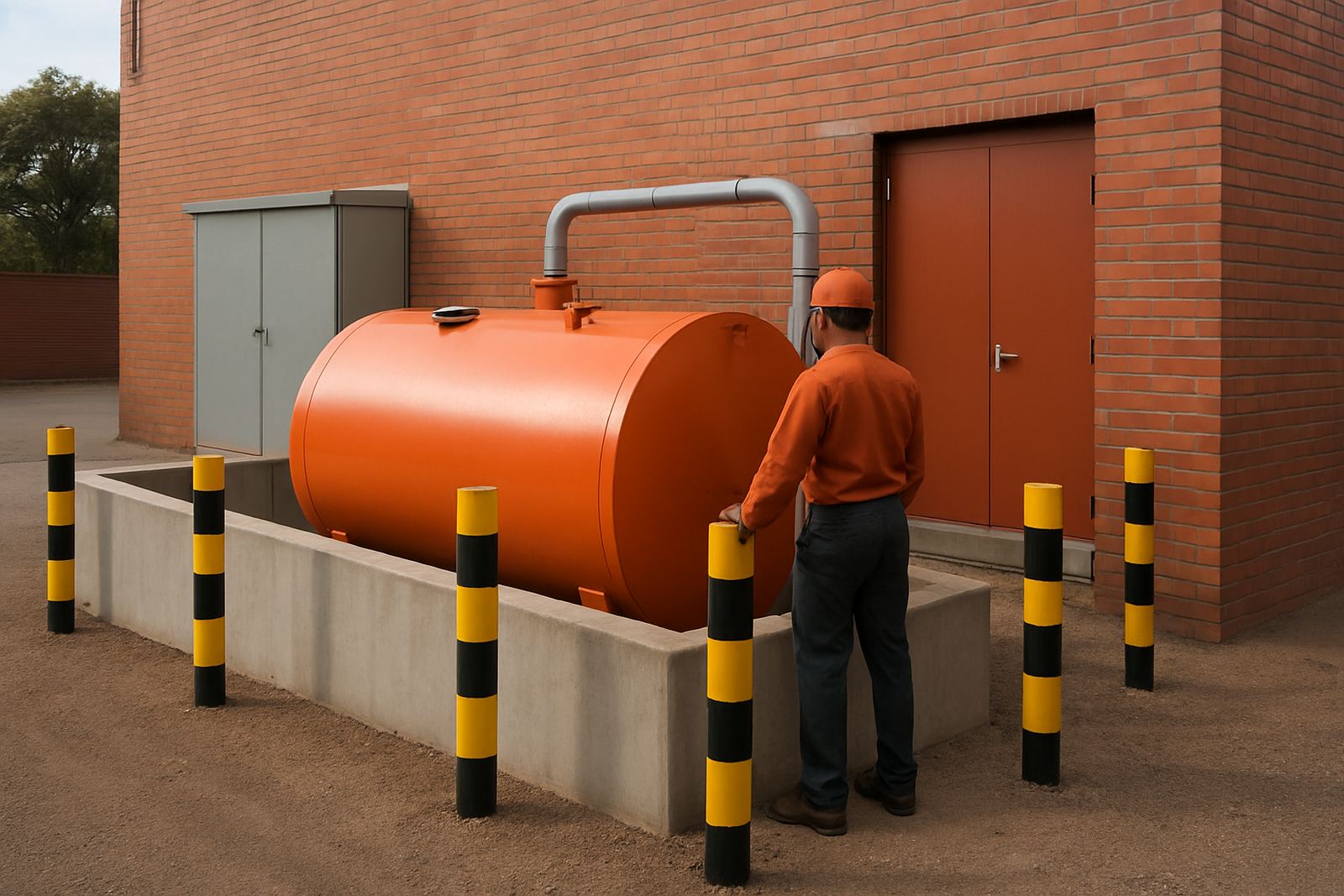
Good practice is to check for water bottom regularly, drain low points, and keep tank openings sealed. Outdoor tanks should have proper bunding and a finish that can handle heat, rain and chemical exposure. In some older plants we still find makeshift covers on vent points, which is asking for trouble. A small leak on a dirty floor can become a bigger incident very quickly, especialy during a night shift when fewer people are around.
- Test for water in the tank before every major delivery cycle.
- Inspect tank supports and bund walls for cracks or ponding.
- Use suitable strainers and replace them before they collapse under load.
- Keep rainwater away from fill areas by maintaining drainage.
Plan for safe refuelling and delivery access
Fuel delivery should be treated as a controlled task, not a casual drop-off. The site needs a clear process for who receives the truck, who confirms the volume, and who checks that the tank can take more fuel before pumping starts. Good communication avoids overfilling, which is a serious risk on any industrial site.
There should also be a proper route for the delivery vehicle. That means enough turning space, no overhead hazards, and no blocked access caused by pallets, scrap or parked staff cars. If your site is in Pretoria or Sandton, where access can already be tight, plan for busy roads and security checks. A delivery that arrives late and has to wait with a full load is not ideal for anyone.
Where a plant uses standby power or supports critical services, it helps to keep a written delivery contact list at the tank area and in the control room. If the main receiver is off site, somebody else must still know the fill sequence and emergency shut-off points.
Match storage design to the fuel system and burner setup
Different fuels behave differently, and the storage arrangement must suit the burner, heater or incinerator it feeds. The tank, pump set, filters and pipe sizes all need to match the duty of the plant. A poor match can cause low pressure, unstable combustion and premature wear on pumps and burner components.
For heavier fuels, trace heating, insulation and correct pipe gradients may be needed to keep flow consistent. For diesel systems, the priority is usually cleanliness, return flow control and reliable suction. If the plant runs after hours or during load-shedding, the fuel system should still deliver without manual intervention every few hours.
In many cases, the storage setup also needs to support annual inspections and water treatment checks. When the fuel side is neglected, the boiler side gets blamed for faults that started much earlier in the supply chain.
Build in continuity for outages, maintenance and emergencies
Storage is really about continuity. If your plant cannot stop, then your fuel system must carry the site through breakdowns, municipal interruptions and maintenance windows. This is where emergency callouts, planned servicing and spare parts all connect back to the storage decision.
A sensible continuity plan usually includes the following:
- Minimum stock levels based on actual daily burn rate.
- Emergency contact details for the fuel supplier and service team.
- Spare filters, seals and sight glass components kept on site.
- A clear shutdown procedure if contamination or leakage is found.
- Routine checks tied to boiler servicing, not left as a separate task.
At our Jet Park base, we often see plants that only think about fuel storage after a burner trips or a tank runs near empty. The better approach is to review the full arrangement during plant refurbishment or annual inspections, then correct weak points before they cost production time.
A practical Gauteng example: steady steam without the last-minute rush
A mid-sized site in Boksburg running process steam and hot water had enough tank capacity on paper, but the layout was the real issue. The fill point was awkward to reach, the level gauge was poor, and the team relied on memory to know when to order. During a cold week and a few power interruptions, the tank dropped faster than expected. The result was a rushed delivery, a late shift and unnecessary downtime.
After the storage setup was checked, the site improved the access to the fill area, added clearer level marking, and introduced a simple weekly fuel check. That small change reduced callouts and gave the maintenance team better control over planning. It was not a major rebuild, just practical adjustments that matched the way the plant actually worked.
That is the point with fuel storage. The best setup is the one that keeps the boiler running safely, lets the team inspect it without hassle, and gives enough cover when conditions are not perfect. On a busy South African site, that bit of planning matters more than most people think.