What feedwater does before the heat starts
Feedwater is the water that enters a boiler or heater before it is turned into steam or hot water. It should be clean, correctly treated and stable enough for the plant to run without scale, corrosion or foaming. When that water is poor, the damage does not stay in the water line. It shows up on tubes, shell surfaces, valves, pumps and eventually on the whole production process.
In practical terms, feedwater quality affects how much fuel you burn, how often you need to shut down and how long internal parts last. A plant in Boksburg using borehole water, for example, may see hard scale build up faster than a site on treated municipal supply. That extra scale acts like insulation, so the unit works harder to reach the same temperature and the boiler room bill starts climbing for no good reason.
The main problems hidden in ordinary water
Most feedwater issues come down to a few common fault lines. Hardness is one of the biggest. Calcium and magnesium salts settle out on hot surfaces and form a crust that is difficult to remove. Dissolved oxygen is another concern because it drives corrosion inside pipes, economisers and vessels. Then there are suspended solids, oil, process carry-over and poor chemical control, all of which can upset the plant very quickly.
- Hardness creates scale and reduces heat transfer.
- Oxygen causes pitting and rust inside the system.
- Solids block strainers, nozzles and control valves.
- Oil or process contamination affects steaming and level control.
- Over-treatment can be just as harmful as under-treatment.
The tricky part is that some of these faults do not show on a quick visual check. A drum may look fine from the outside while the internals are under attack. That is why routine testing matters, not only when there is a breakdown but through the year, especially in plants running long hours and during load-shedding recovery cycles.
Why efficiency drops before anyone notices
A clean heat surface transfers energy quickly. A fouled one does not. Even a thin layer of scale can force a boiler to use more gas, diesel or electric power to do the same job. The plant may still be producing, but it is doing so at a higher cost and with more stress on the equipment. That is where feedwater quality ties directly into operating expense.
There is also the issue of blowdown. If water quality is unstable, operators often increase blowdown to keep solids under control. That wastes treated water, heat and chemicals. In a busy commercial laundry or food plant around Midrand, the effect can be felt within days because the system cycles hard and every extra litre matters. The manager may only see the larger bill, not the water chemistry that caused it.
Another common sign is uneven heating. A calorifier may take longer to recover after peak use, or an inline heater may struggle to hold discharge temperature when demand rises. The root cause is not always the burner or the element. Sometimes the issue is fouling in the vessel or poor make-up water quality feeding the system.
What to test and watch every month
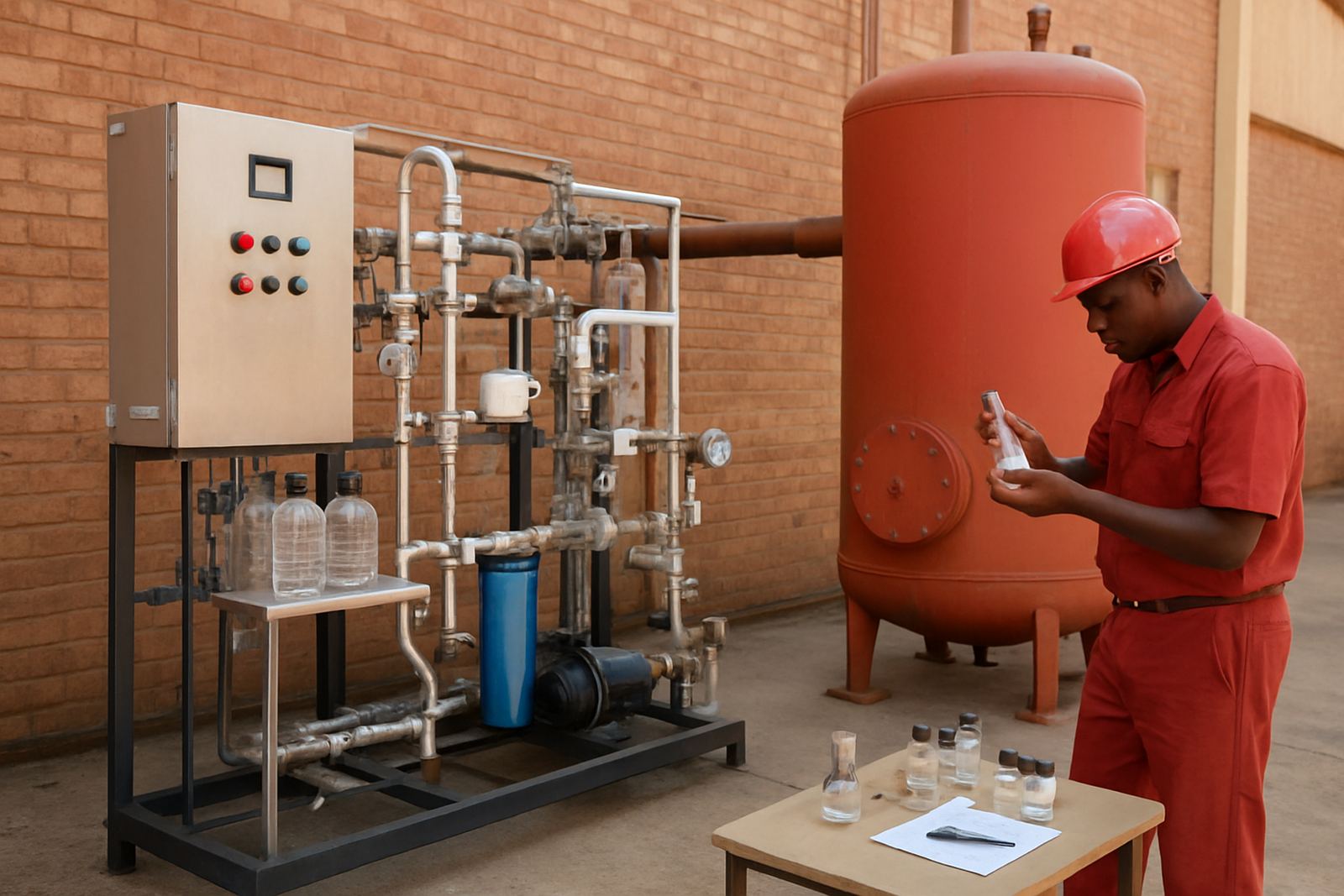
Feedwater management does not need to be complicated. It does need to be disciplined. A good routine test sheet, recorded properly, helps you catch drift before it becomes a shutdown. That is especially important in Gauteng where many plants use a mix of municipal supply, borehole water and recycled process water depending on the season.
- Check hardness, pH and conductivity on a regular schedule.
- Confirm oxygen scavenger or chemical dosing is staying within range.
- Inspect strainers, sight glasses and blowdown lines for carry-over.
- Look for signs of rust, white scale or black sludge during inspections.
- Review make-up water quality after any supply interruption or burst main.
It helps to link testing with maintenance visits rather than leaving it to memory. If the site has a night shift, make sure someone knows what normal readings look like and who to call when a figure moves out of range. Small delays can turn a manageable issue into tube cleaning, refractory work or emergency repairs.
A local example from a Jet Park plant
A plant near Jet Park was dealing with repeated warm-up delays and uneven hot water delivery to wash points. The burner was being adjusted often, yet the problem kept coming back. On inspection, the real issue was not combustion first, but feedwater quality. The make-up water had high hardness and the treatment dosing was drifting after a pump fault. Scale had started to form inside the calorifier and on the heat transfer surfaces.
Once the water treatment was corrected and the vessel cleaned, the recovery time improved and the burner stopped hunting as much. The maintenance team also picked up early corrosion on fittings that would have failed later. The lesson was simple. The equipment was not worn out, it was being fed badly. When feedwater is controlled, the plant behaves in a far more predictable way.
Practical habits that protect the plant over time
Good feedwater control comes from everyday habits, not just one big service. Keep records, compare readings against the previous month and act before the numbers become a problem. If the plant is coastal or uses stored water, check for extra corrosion risk after wet weather or long idle periods. If it is in a dusty industrial area, inspect for particulate ingress around tanks and vents.
For teams managing multiple sites, it is worth standardising the checks so no branch is working blind. A site in Sandton may have different usage patterns from a plant in Germiston, but the basics remain the same: know the water, treat the water and confirm that the treatment is actually doing its job. The cost of prevention is usually far less than a tube failure or a full shutdown.
For commercial and industrial operators, feedwater quality is not a side issue. It is part of plant condition, energy use and uptime. If the readings are steady, the equipment usually lasts longer and runs with fewer surprises.