A dairy plant that needed less fuel, not less heat
The client was a mid-sized dairy operation in Roodepoort, supplying chilled and processed products across Gauteng and into nearby provinces. Their plant ran on a fixed daily schedule with cleaning, process heating and hot water demand rising sharply in the early morning and again after afternoon changeovers. Fuel spend had climbed, yet the team could not simply reduce boiler output because the process still needed steady temperatures and reliable recovery between batches.
The brief was clear enough. Cut wasted heat, keep the same daily output, and avoid long shutdowns in a plant where even a few hours off line can affect deliveries and cleaning windows. The site also had the usual local pressure points: water quality changes, a mix of older pipework and newer vessels, and limited room to stage new equipment. In a dairy, that means every litre and every degree matter. The plant could not afford a clever theory, it needed practical kit that would work on Monday morning and still work in winter when the mornings are cold in Roodepoort.
- Site type: dairy processing and washdown plant
- Town: Roodepoort, Gauteng
- Main issue: high fuel use during daily hot water demand
- Constraint: no extended stoppage during production
What we found during the first site checks
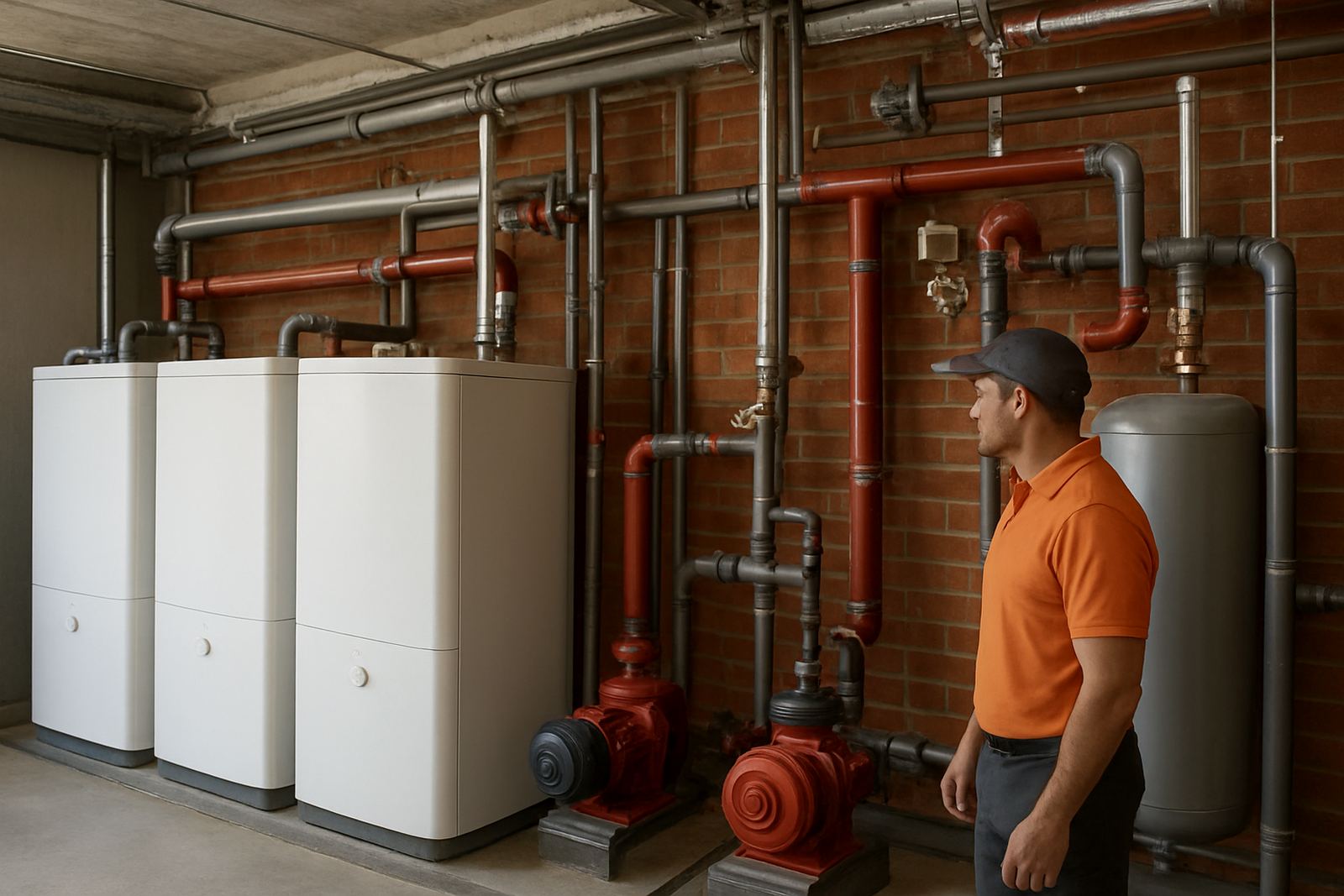
We started with a full plant review, checking existing boiler duty, return temperatures, hot water storage, condensate handling and the way the dairy drew heat during different parts of the day. There was useful waste heat leaving the plant, but it was not being recovered in a controlled way. The boiler was carrying more of the load than it should, especially during peak wash cycles. A few valves and controls were also working harder than necessary, which made the system slower to respond when demand changed quickly.
The biggest issue was the gap between what the plant needed and what the system was actually delivering. Water was often heated more than once, and the return temperature was not being lifted efficiently before it reached the boiler. That left the boiler to make up the shortfall with fresh fuel. We also found scaling risk in parts of the circuit, which is common on sites that run hard and have variable water treatment control. If that is not managed, efficiency drops and maintenance costs start climbing too.
- Boiler duty was carrying avoidable peak load
- Return temperatures were too low for best fuel economy
- Some controls were reacting slowly to batch changes
- Water treatment needed tighter follow-up to limit scale
The heat recovery package we supplied
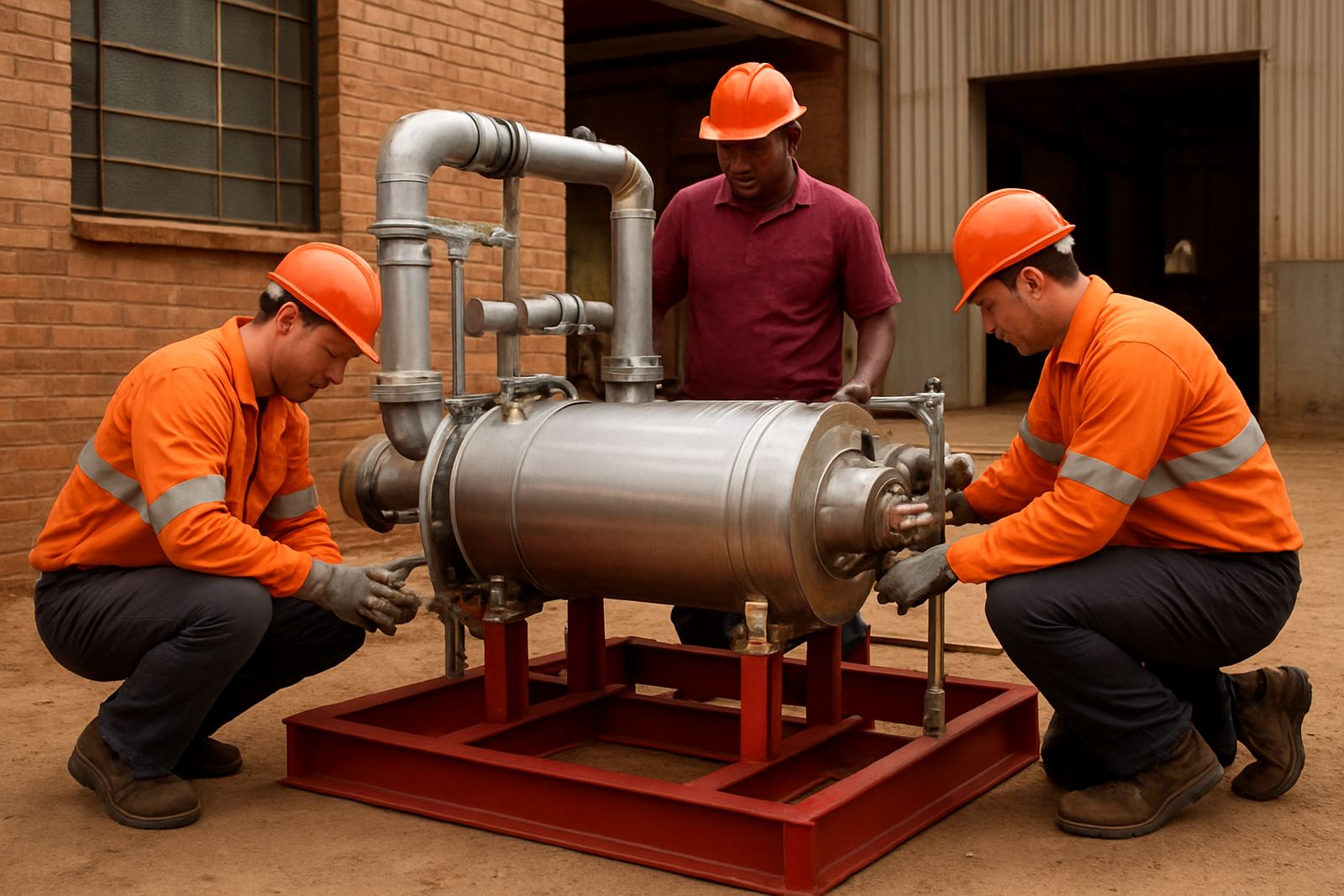
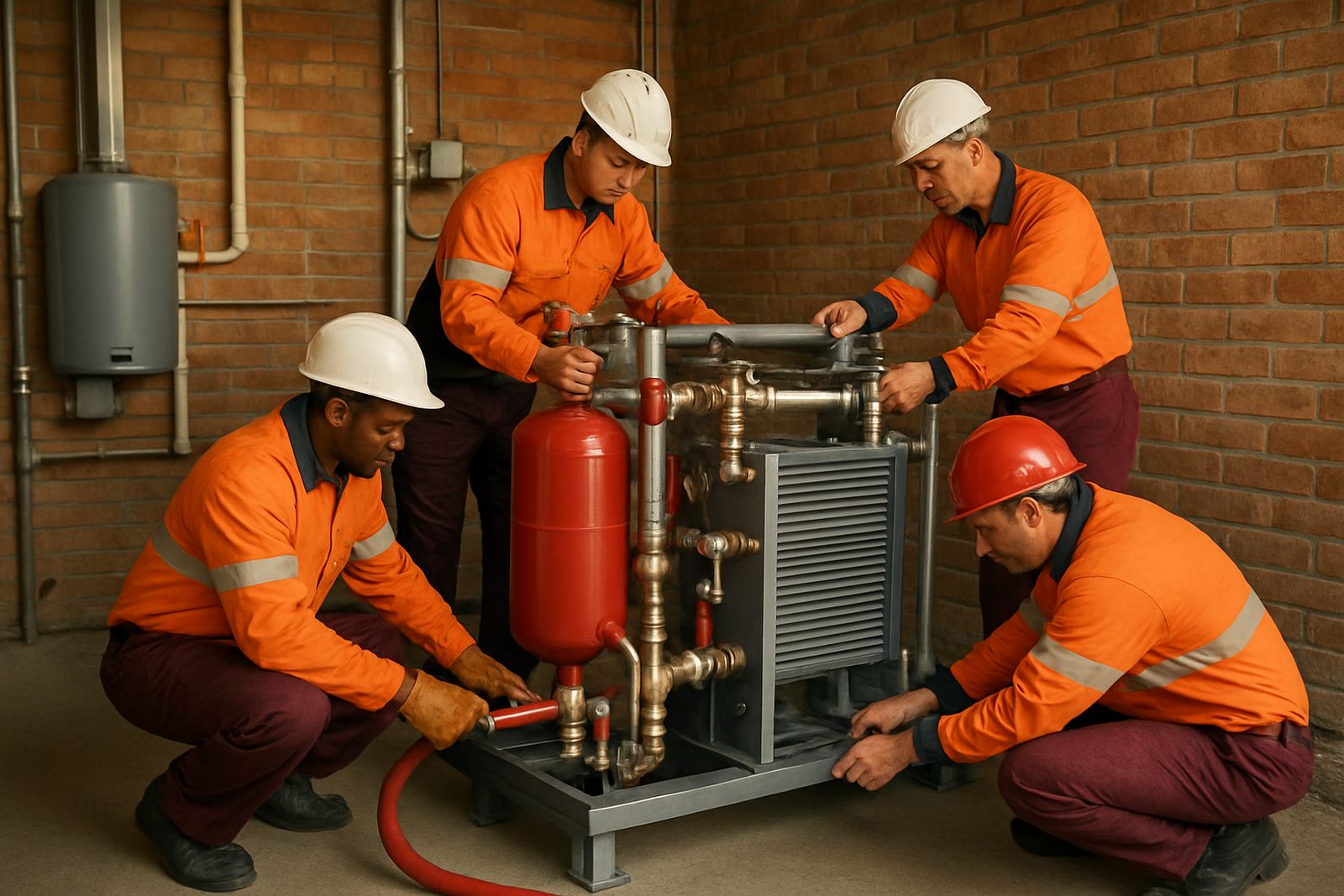
We supplied and installed a heat recovery addition sized to match the site’s actual process demand, not an off-the-shelf figure. The package included a compact heat exchanger arrangement, associated pumps, isolation valves, strainers, temperature controls and pipework tie-ins to the existing hot water circuit. We also upgraded the control logic so the recovered heat could be used first, with the boiler only stepping in when process demand exceeded recovered output.
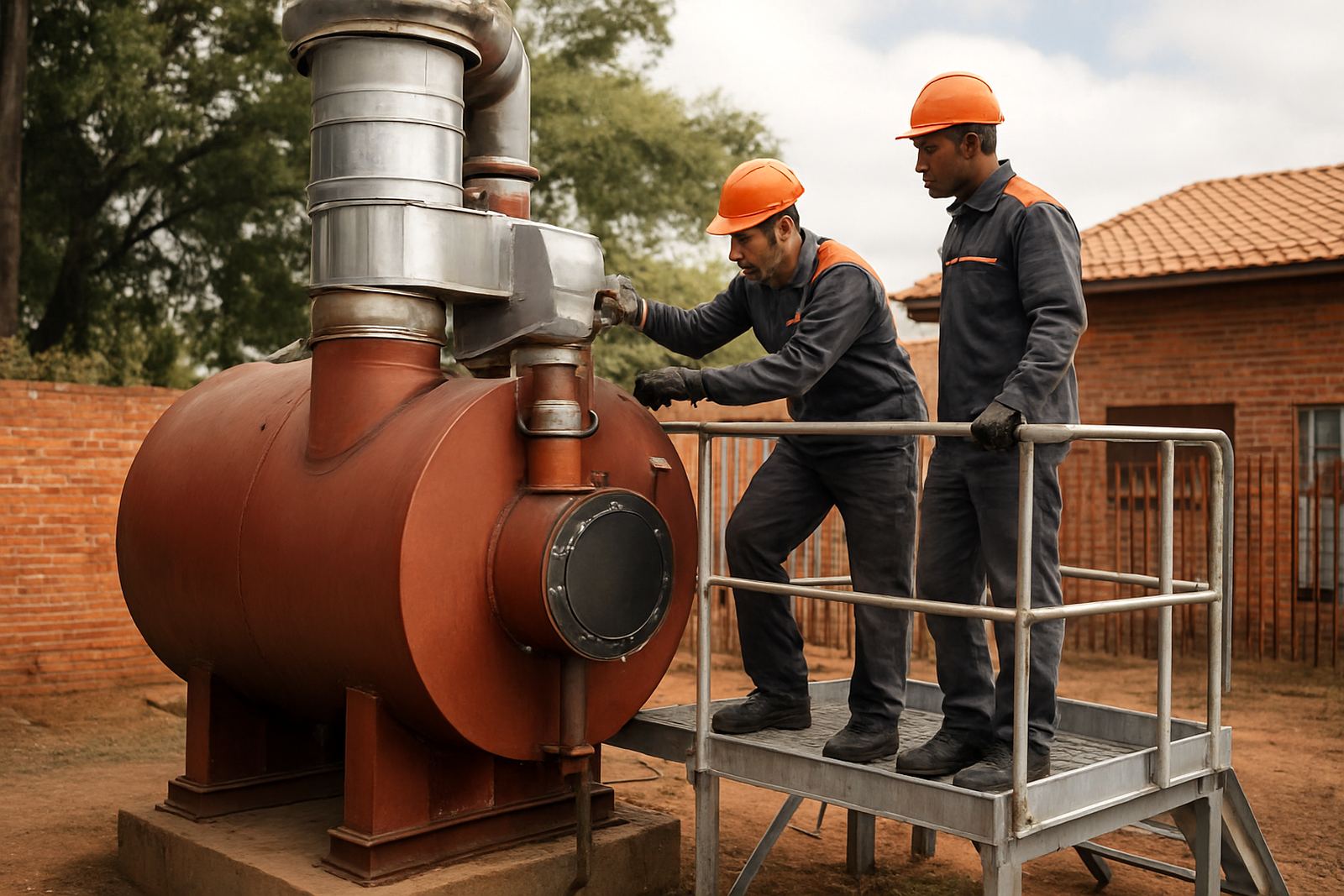
The work was coordinated around the plant schedule. We did the tie-ins in planned windows and kept the shutdowns short, which mattered because the dairy had cleaning and dispatch targets to meet every day. The fabrication team prepared sections off site where possible, then fitted them on the plant to reduce time on the floor. In parallel, the service team carried out combustion tuning and checked the boiler side so the new recovery section would support the whole system instead of just moving the problem elsewhere.
- Heat exchanger set matched to daily process load
- Variable speed pumping on the recovered heat circuit
- Control changes to prioritise recovered heat first
- Pipework modifications for cleaner flow and easier maintenance
How the job was carried out over four weeks
Week 1 covered measurements, final sizing and drawings. Week 2 was fabrication and material preparation at our Jet Park base, including supports and pipe sections for the new circuit. Week 3 was the main site installation in Roodepoort, with tie-ins, controls wiring and pressure testing. Week 4 was commissioning, tuning and operator handover. That sequence kept the plant under control and gave the client time to plan around cleaning cycles and production batches.
Because the site was in a busy industrial area, delivery timing and access had to be managed carefully. We also allowed for the reality of load-shedding, meaning the team had to confirm safe start-up points after power interruptions and make sure the controls would restart in the right sequence. The final handover included start-up checks, temperature verification and a practical run-through with the maintenance crew so they could see exactly how the new recovery loop behaved under load.
- Week 1: survey, measurements and final design
- Week 2: fabrication and pre-assembly
- Week 3: installation and tie-ins
- Week 4: commissioning, tuning and handover
What changed after commissioning
Once the system was running, the difference showed up in fuel use and stability. The boiler was no longer doing all the work on its own, and the plant could hold daily demand with less cycling and fewer hot-cold swings. That matters in a dairy, because a stable hot water supply helps cleaning routines and process consistency. The client also reported easier control during peak wash periods, with less manual intervention from operators.
The biggest result was the drop in fuel consumption while still meeting the same daily output. The plant kept its process demand intact, but the heat recovery section took enough load off the boiler to make a real difference in running cost. In practical terms, that meant better control over monthly fuel spend and less wear on the boiler side. The site also saw cleaner operation around the hot water circuit after the water treatment adjustments were aligned with the new flow pattern.
- Lower fuel use without reducing production demand
- Better temperature stability during wash cycles
- Less boiler cycling and less strain on the system
- Improved day-to-day control for the maintenance team
What we would repeat on a similar site
If we were doing the same type of upgrade again, we would still start with actual duty measurements, not assumptions. Dairy plants can look similar on paper, but their hot water peaks, cleaning routines and return temperatures vary more than people expect. We would also keep the installation approach modular, so the site can get back to work quickly and any future maintenance can be done without tearing half the plant apart.
On a second job like this, we would again check combustion, water treatment and control logic as one system. Heat recovery only pays properly when the boiler side, the water side and the operating routine all pull in the same direction. That is the part many sites miss. Ai-TEC’s role was not just to fit equipment, but to make sure the plant could use recovered heat day after day, even when demand changed and power supply was interrupted.
- Measure the real load before sizing equipment
- Keep tie-ins short and planned around production
- Commission controls with operators present
- Link recovery work to boiler tuning and water treatment
Key facts
| Project | Roodepoort Dairy Upgrade |
|---|---|
| Client type | Dairy processing plant |
| Town | Roodepoort, Gauteng |
| Scope | Heat recovery addition, pipework, controls, boiler tuning |
| Timeline | 4 weeks |
| Result | Lower fuel use while maintaining daily process demand |