

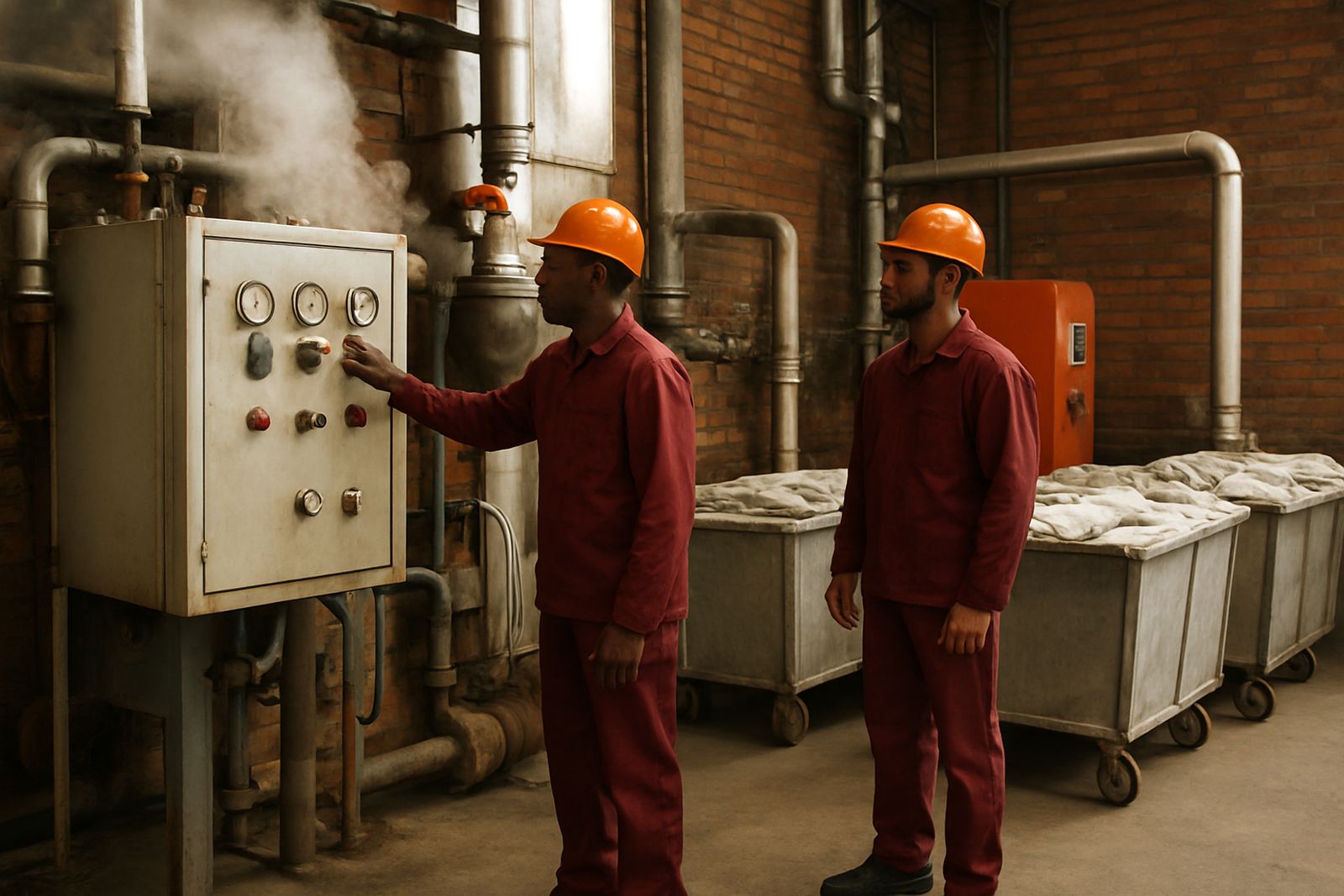
Where textile finishing plants usually lose time
In finishing rooms, small heat problems become production problems fast. A dyeing vessel waiting on pressure, a stenter running hot and cold, or a wash line with poor recovery can throw off shade, hand feel and drying times. We often find that the plant is not short on equipment, it is short on stable steam, correct controls and proper servicing.
Typical clients include garment finishers, fabric processors, commission dye houses and mills with a mixed steam and hot water demand. Some sites run one main boiler and a few local heaters, while larger plants use a boiler room with backup units, calorifiers and point of use heaters for wash bays and process tanks. In Gauteng, those systems also need to cope with winter mornings, summer dust and load-shedding interruptions that leave controls and pumps cycling badly if the installation is not planned properly.
Typical equipment in a textile finishing setup
Every plant is different, but most textile finishing operations rely on a similar heat package. The size of the unit depends on line speed, batch size, shift pattern and how much hot water the wash and rinse stages pull at peak load. Steam demand is usually highest during start-up and colour runs, while hot water demand stays steady through cleaning, scouring and after-wash cycles.
- Commercial or industrial boilers for process steam
- Calorifiers for stored hot water to wash and rinse points
- Inline heaters for local hot water demand at specific machines
- Condensate return and water treatment equipment to protect the plant
- Combustion controls, valves, gauges and safety devices
- Flue and venting arrangements that suit the building layout
We also look at water quality early. Textile plants often use borehole, municipal or blended supply, and hardness or scaling can destroy heat transfer long before the mechanical parts wear out. If the plant uses process water near stainless vessels or spray equipment, we factor in corrosion, chemical dosing and the pressure rating of the whole system.
Layout and planning for new or refurbished plant rooms
Good textile finishing plants are planned around access, not just capacity. The boiler room must allow for tube cleaning, burner access, valve removal and safe passage around hot surfaces. In a refurbishment, we first check the existing floor loading, ventilation, fuel route, drain points and whether there is space for future expansion. A cramped room might look fine on paper, but it becomes expensive every time a technician needs to reach a pump or refractory panel.
For plants in Boksburg, Germiston, Kempton Park and Midrand, we also check where steam and hot water lines run through the building. Long pipe runs without proper insulation waste energy and create condensate problems. On sites near the coast, humidity and salt air can attack mild steel and supports quicker than managers expect, so material selection matters. If the finish line sits in a separate bay, we will often suggest zoned distribution with isolation valves so one section can be taken offline without stopping the whole factory.
Plant rooms near dye houses need clean drainage, good lighting and enough space for annual inspection work. Municipal compliance matters too. Access, fire separation, flue routing and safe discharge points all need to be checked before a unit is installed or moved.
What a practical energy package looks like
Most textile finishing clients want lower running costs without risking shade consistency or production speed. The best savings usually come from a combination of tuning, maintenance and a few hard changes to the plant. A boiler that is burning too rich or too lean will waste fuel and increase soot, while poor water treatment shortens the life of tubes, valves and gauges.
We commonly scope the following work:
- Combustion tuning and efficiency checks
- Boiler servicing and annual inspections
- Calorifier maintenance and descaling
- Inline heater repairs for point of use demand
- Refractory relining where heat loss is visible
- Water treatment support to control scale and corrosion
Load-shedding changes the picture as well. If the plant must restart quickly after an outage, controls, burners and pumps need to come back in sequence without tripping on low water, flame failure or pressure delays. We design for that reality, not just normal running hours.
Common mistakes we see in textile plants
The most common mistake is buying heat capacity before checking the actual demand profile. A plant may need more hot water than steam for wash down and preparation, or it may need a smaller boiler with better controls instead of a larger unit burning extra fuel all day. Another mistake is ignoring condensate recovery. Good recovery can reduce waste and lower make-up water, but only if the pipework, traps and receiver are maintained.
Other problems show up during retrofits. Old insulation gets left in place after repairs, pipe supports are not replaced, and the plant keeps leaking energy through wet lagging or bypassed valves. We also see badly placed heaters that are difficult to service, which means faults are left until a breakdown forces a shutdown. In textile finishing, that can mean missed delivery dates and rework on fabric that already went through the line once.
Budget ranges for steam and hot water plant
Budgets depend on capacity, fuel type, control level and whether the project is a new installation or a plant refurbishment. For smaller textile finishers needing servicing, tuning and minor repairs, it is sensible to allow from R25 000 to R80 000 a year for planned maintenance and compliance work. A calorifier overhaul or inline heater repair package may sit in the R40 000 to R150 000 range, depending on parts and access.
For a mid-sized boiler room upgrade, including controls, pipework changes and supporting equipment, many sites budget from R350 000 to R1,2 million. Larger plant refurbishments, especially where a boiler, hot water storage, flue work and water treatment upgrades are all included, can move from R1,5 million upward. We prefer to scope in phases where possible, so the client can keep production moving and spread spend across the year instead of forcing one big shutdown.
Every site should also carry a small emergency reserve. In textile finishing, a failed pump, burst valve or tired burner can stop a line at short notice. A reserve for callouts, spares and temporary repairs is often cheaper than one lost production day.
How Ai-TEC supports textile finishing sites
Ai-TEC has worked with commercial and industrial heat systems since 2009, with a base in Jet Park, Boksburg and service teams covering Gauteng and other regions. Our team handles boiler servicing, calorifier maintenance, inline heater repairs, incinerator servicing, emergency callouts, combustion tuning, refractory relining, water treatment support, annual inspections and plant refurbishment. For textile finishing clients, that means one supplier can assess the whole heat chain instead of looking at each fault in isolation.
We work with operations managers, maintenance teams and production staff to keep the plant practical. If you are planning a new finishing line, struggling with steam instability or trying to reduce fuel use without affecting output, we can review the current setup and advise on the right next step. Our focus is simple: keep heat where it should be, keep downtime down and keep the plant within safe working limits.
- Jet Park, Boksburg base with national service coverage
- Support for planned maintenance and emergency faults
- Work suited to factories, mills and finishing rooms