Why the clinic needed on-site waste destruction
The client was a busy public healthcare facility in Soweto dealing with dressings, contaminated disposables and other clinical waste that could not sit around for long. Their main issue was transport delay. Waste had to be stored safely, moved off site in batches and kept within the rules, which created extra handling and pressure on the housekeeping team. They wanted on-site destruction so the waste stream could be reduced at source and managed more predictably.
The brief was practical rather than fancy. They needed a compact incinerator, reliable burner control, safe loading access and a layout that would work in a tight service yard with limited turning space. The unit also had to cope with load-shedding, because any stop-start utility supply in the area can disrupt heating cycles and create more downtime than most facilities can afford.
Site constraints in Soweto that shaped the job
The site had the usual constraints we see around older healthcare buildings in Gauteng. Access was narrow, the waste handling area was close to other service routes, and there was not much room for a large flue run or extra civil work. The installation also had to account for local noise sensitivity and the need to keep smoke and odour to a minimum during normal operation.
We planned the work around those limits and kept the footprint tight. The equipment had to be serviceable from the front and sides, with enough clearance for maintenance and refractory inspection. The client also needed clear operating instructions for the nursing and support staff, because a waste unit only performs properly when the team loading it understands temperature checks, batch size and safe start-up procedures.
- Restricted yard access with limited lifting space
- Need for low downtime during the cut-over period
- Stable operation during municipal power interruptions
- Simple, practical training for clinic staff
What Ai-TEC supplied and installed
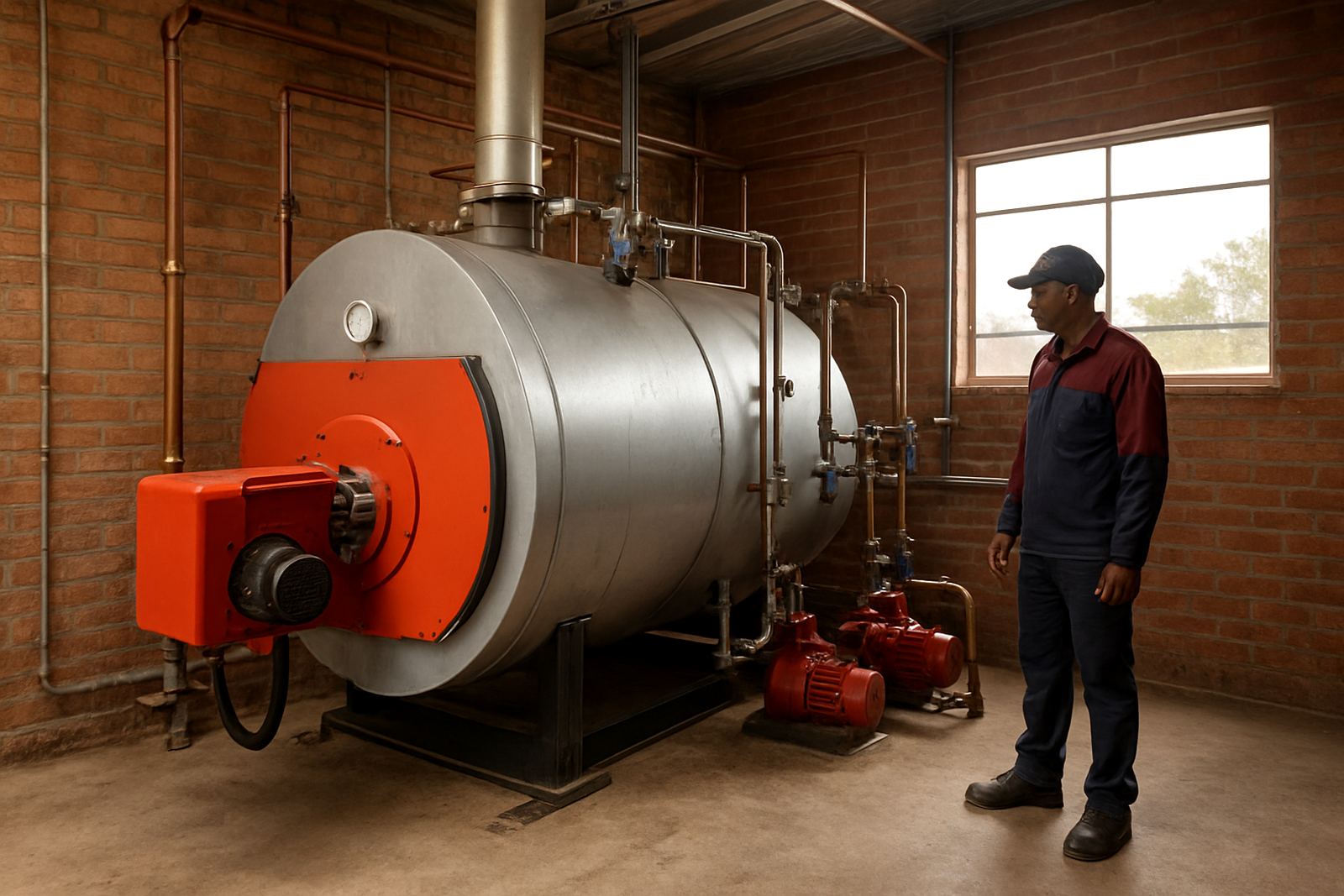
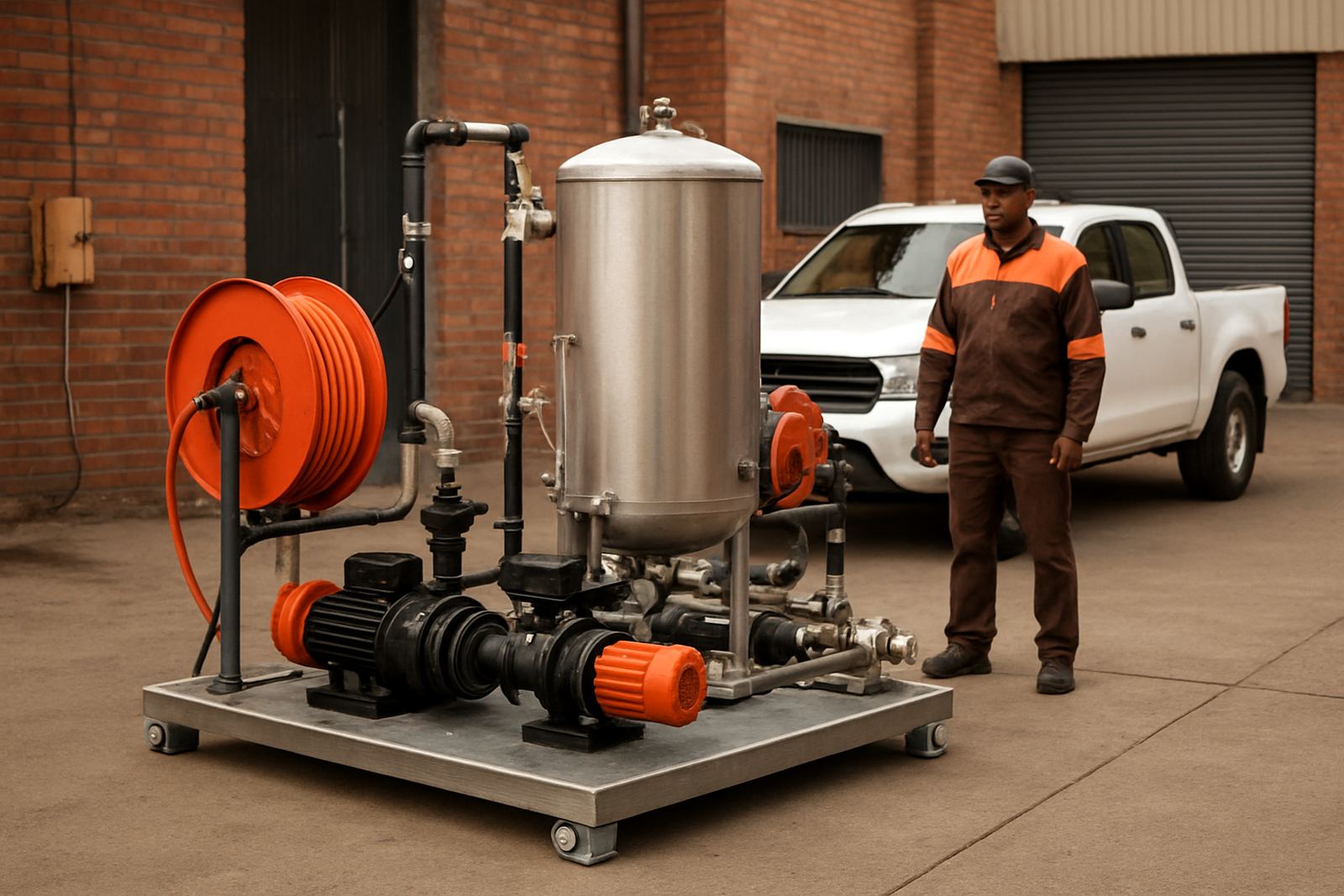
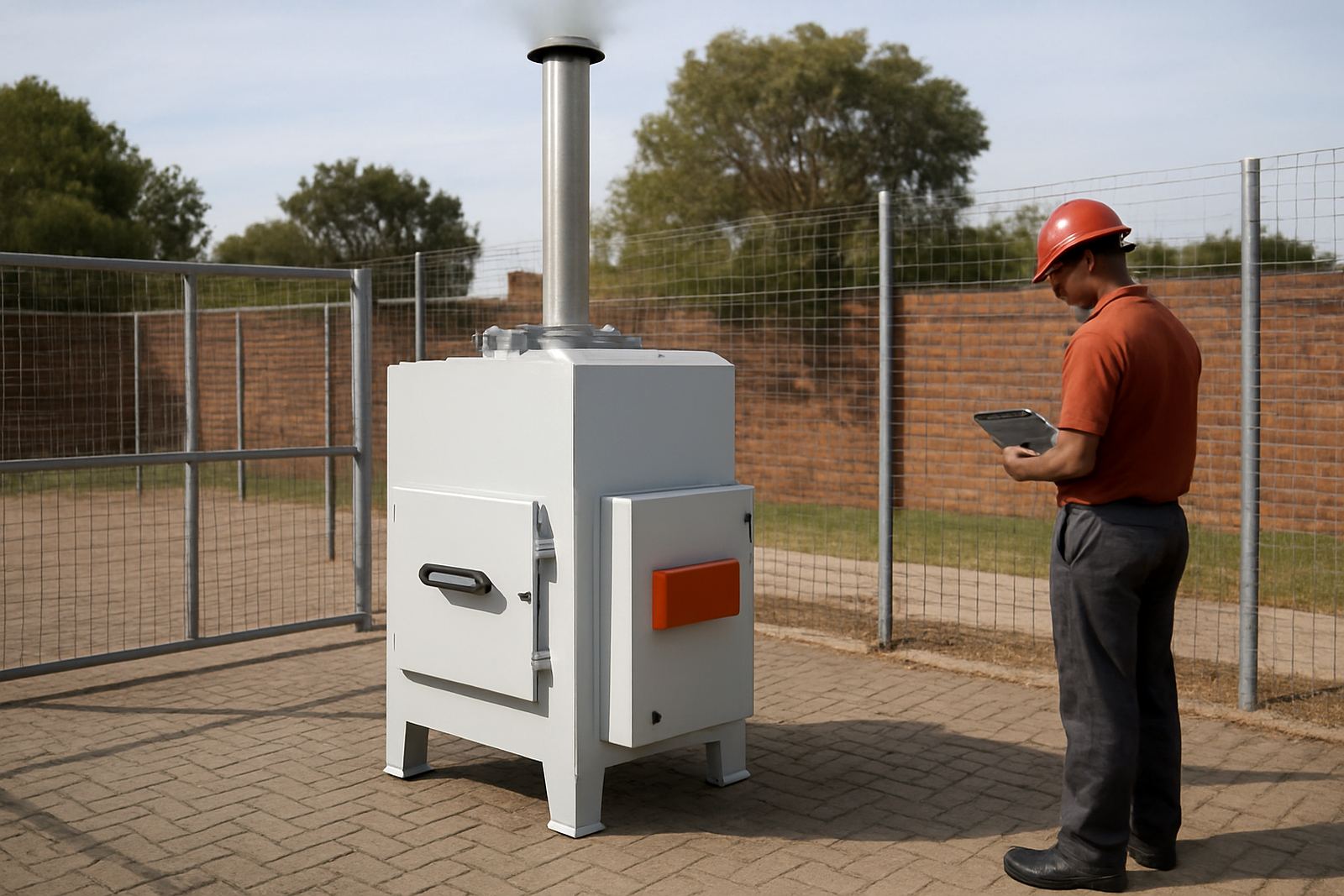
Ai-TEC supplied a compact healthcare waste incinerator package sized for the site load, together with the necessary ancillaries for safe operation. The system included a primary combustion chamber, secondary afterburning section, burner controls, flue arrangement, loading door assembly and the refractory lining specification needed for high-temperature cycling. We also provided the supporting pipework and control integration required to get the unit into working order.
The selected equipment was suited to controlled batch burning rather than high-volume industrial waste. In simple terms, that meant better fit for a clinic environment, where waste arrives in smaller quantities but still needs consistent destruction. We set the system up for steady temperature control, proper air management and straightforward maintenance access. The installation team was led from our Jet Park base in Boksburg, with project input from Pieter van der Merwe and service coordination from Zanele Dlamini.
- Compact incinerator with primary and secondary combustion stages
- High-temperature refractory lining for repeated heat cycles
- Flue and control setup matched to the available service space
- Safe access points for loading and routine inspection
Installation, commissioning and staff handover
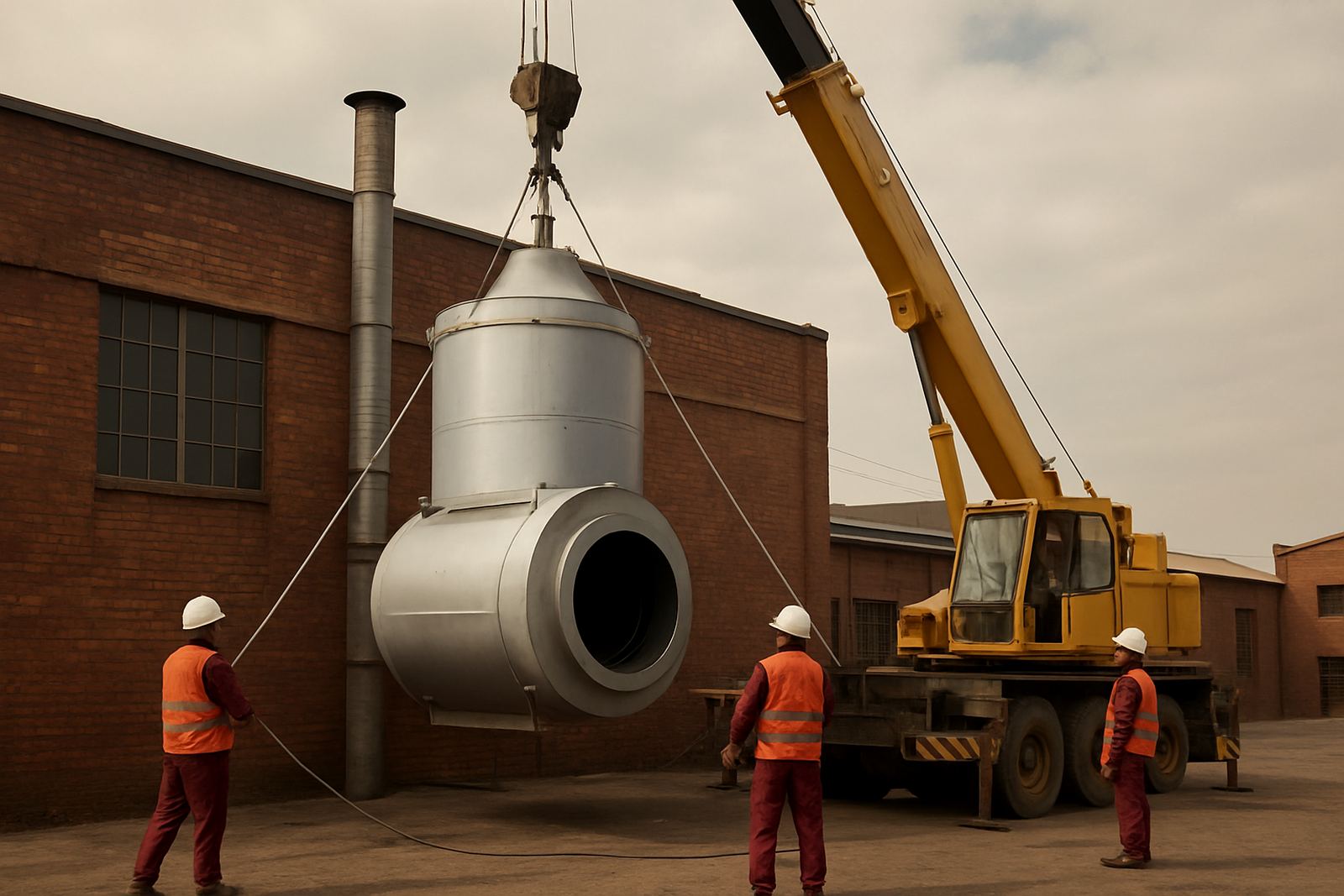
The project ran over three weeks from final site measure-up to commissioning. Week one covered verification of dimensions, utility checks and final setting-out. Week two covered delivery, positioning, flue connection and mechanical fit-off. Week three covered burner commissioning, combustion tuning, temperature checks and staff handover. We kept the process tight because healthcare facilities cannot afford long disruptions in the yard or service area.
Once the unit was in place, Musa Khumalo handled the commissioning checks and combustion tuning, while Ayesha Patel supported the commercial handover and scope alignment. We tested operation through start-up, steady burn and shutdown, then checked the unit for draft stability and consistent chamber temperature. The clinic team was shown how to load waste correctly, what not to burn and when to call for service. A small error at loading stage can cause big problems later, so the training covered the basics in plain language.
- Commissioning completed after installation and cold checks
- Combustion tuned for stable batch operation
- Operational training completed with clinic staff
- Maintenance points identified for future service visits
Compliance, safety and day to day operation
For a healthcare facility, compliance is not just a paper exercise. The unit had to support controlled destruction of waste, safe handling and cleaner day to day operations. We worked within the practical requirements expected for healthcare waste management, including clear separation of feedstock, safe storage before burning and proper record keeping by the facility team. The installation was arranged so the operating path stayed simple and the risk of accidental misuse stayed low.
The final setup improved the clinic's internal waste process because waste could be dealt with on site instead of waiting for longer collection cycles. That reduced build-up in the holding area and made the whole system easier to manage. It also meant fewer movements through busy parts of the facility, which matters when patient traffic and service traffic cross each other several times a day.
Results the facility could see from week one
The main result was control. The clinic now had a contained, practical way to destroy its own waste on site, without depending entirely on delayed removal schedules. The system reduced storage pressure, improved handling discipline and gave the facility a cleaner process flow. For the operations team, that meant fewer complaints about waste build-up and less time spent shuffling material between temporary holding points.
We would do the same approach again on another Soweto healthcare site where space is tight and the waste stream is manageable in batches. Keep the footprint small, keep the controls clear and make the maintenance access easy. That combination works well in Gauteng because service teams can get back to the site quickly, and because any unit that runs in a clinic must be easy to understand for the people using it every day.
- On-site waste destruction instead of delayed off-site holding
- Cleaner yard management and less manual moving of waste
- Simple operation for clinic staff
- Maintenance access designed in from the start
Key facts
| Project | Soweto Clinic Incinerator |
|---|---|
| Client type | Healthcare facility |
| Location | Soweto, Gauteng |
| Timeline | 3 weeks |
| System | Compact clinical waste incinerator package |
| Key scope | Supply, installation, commissioning and staff handover |